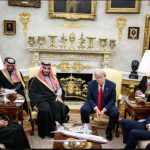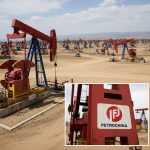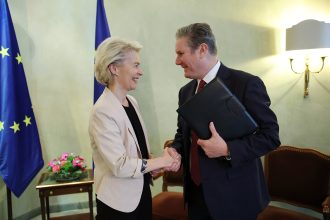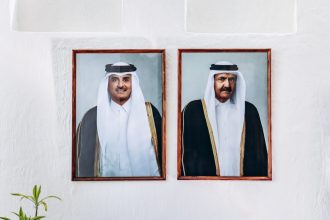



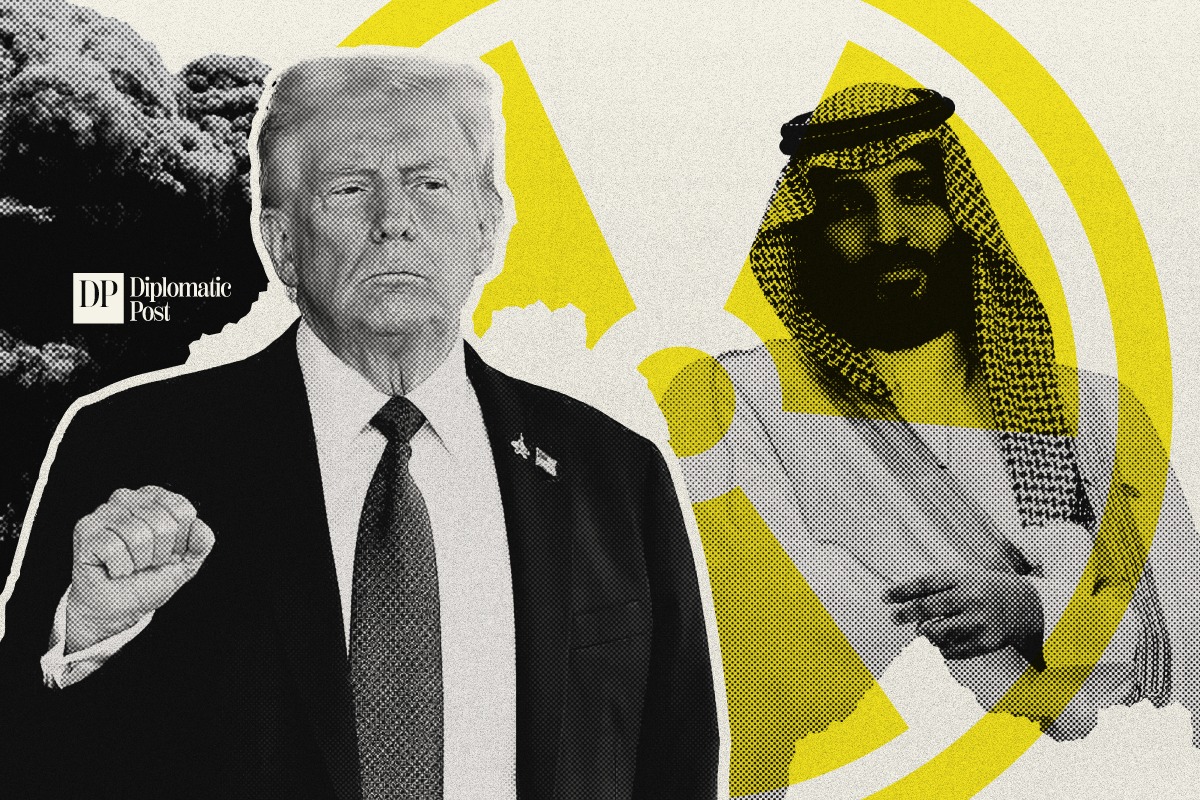
Washington has approved a 30-year nuclear pact with Riyadh that leaves the door to enrichment ajar in the middle of a war it says it is fighting to stop exactly that.
There is a question hanging over Washington this week, and it is disarmingly simple. The United States is at war with Iran for the stated purpose of preventing Tehran from acquiring a nuclear weapon. So why, at this precise moment, has President Trump approved a sweeping civil nuclear agreement with Saudi Arabia, one that does not rule out the kingdom one day enriching uranium on its own soil?
It is, as one American analyst put it on air within hours of the announcement, “the question of the day.” And the honest answer, pieced together from the text of the deal and the diplomacy that produced it, is more unsettling than reassuring.
Start with what was actually agreed. The pact, structured as a so-called 123 agreement under the US Atomic Energy Act, will run for 30 years and is expected to be worth tens of billions of dollars. It clears the way for American firms, Westinghouse chief among them, to build out the kingdom’s civilian nuclear infrastructure. Its most consequential provision permits Saudi Arabia to pursue domestic uranium enrichment following a joint US–Saudi study of the economics of fuel production, and even opens the door to an American-built enrichment facility inside the kingdom.
None of this appeared from nowhere. A US–Saudi nuclear deal has been under discussion for years, and as recently as the Biden administration it seemed close to happening. But the architecture then was fundamentally different.
The nuclear agreement was to be one leg of a grand bargain: America would deliver nuclear cooperation and security guarantees, and in exchange Saudi Arabia would deliver the great diplomatic prize of normalisation with Israel. The nuclear component was, in the language of negotiators, a big ask, something Riyadh wanted badly enough that Washington could demand something historic in return.
That bargain is gone. Saudi normalisation with Israel has been effectively off the table since the events of October 7, 2023, and nobody in Washington or Riyadh pretends it is coming back soon. Yet the nuclear deal has gone ahead anyway, the concession delivered, the price never collected.
Which sharpens the question of the day into something pointier: what, exactly, does the United States get?
The consolation prize of a bumpy friendship
The most charitable reading is that the deal buys warmth in a relationship that has grown conspicuously cold. US–Saudi ties have been bumpy since the start of the Iran war, pointedly so when Riyadh denied the United States use of its airspace, a snub that stung in Washington and signalled how far the kingdom had drifted from the role of reliable regional platform.
Seen through that lens, the agreement is less a strategic masterstroke than a very expensive fence-mending exercise: a way to re-anchor Saudi Arabia in the American orbit at a moment when Gulf states are hedging towards China and Russia.
A deal to ensure that when Riyadh does build reactors, as it insists it will, with or without Washington, they are American reactors, under American-influenced rules, rather than Chinese or Russian ones under nobody’s.
There is a commercial logic, too. A 30-year, multi-billion-dollar order book is a lifeline for a US nuclear industry that has spent two decades watching Rosatom and Chinese state firms sign up the world. The administration’s argument, in essence, is that the choice was never between a Saudi programme with American safeguards and no Saudi programme at all. It was between a programme Washington shapes and one it merely watches.
The trouble is that the safeguards Washington actually secured are strikingly thin.
Abandoning the gold standard
For decades, US nonproliferation policy has had a benchmark: the “gold standard,” under which a partner country forswears enrichment and reprocessing entirely in exchange for American nuclear technology. The United Arab Emirates accepted precisely those terms in 2009, and the UAE deal has been held up ever since as the template for the region.
At the other end of the spectrum sits Japan, a country permitted domestic enrichment, but under an inspections regime so stringent that its programme is among the most scrutinised on earth.
The Saudi agreement fits neither model. It does not foreclose domestic enrichment; it formalises a pathway to it. And its inspections regime is, by the standards of comparable agreements, light and governed bilaterally by Washington and Riyadh themselves rather than anchored in the International Atomic Energy Agency. Nonproliferation experts reviewing the text have not minced words: baked into the structure of the deal is a potential route, some years down the road, to a weapons capability. Not a straight line, but not a closed one either.
That matters because Saudi Arabia is not an ambiguous case. Crown Prince Mohammed bin Salman has said it himself, on American television, without a flicker of hedging: if Iran develops a nuclear bomb, Saudi Arabia will “without a doubt” do the same.
Credit to him, one might say, for saying the quiet part out loud. The United States has now signed a 30-year nuclear cooperation agreement with a government whose de facto ruler has publicly reserved the right to weaponise and has declined to write into that agreement the one clause that would make his promise technically impossible to keep.
The biggest problem – a gift to Tehran’s negotiators
The second-order effects may prove costlier still. Should meaningful nuclear talks ever resume between Washington and Tehran, Iranian negotiators now arrive with a talking point gift-wrapped for them. If Saudi Arabia may enrich uranium on its own territory under light inspection, on what principle is Iran denied the same?
The Iranians will absolutely raise it; every diplomat who has sat across a table from them knows it, and the American rebuttal will be awkward at best.
There is an answer, of a kind. Saudi Arabia does not run the rapacious regional foreign policy Iran does; it does not arm proxies pledged to America’s destruction. The current regime is, generally speaking, a good partner of the United States.
All true, and Washington’s officials have been rehearsing exactly these lines this week, insisting the comparison with Tehran is a category error. But it is an answer about intentions, not capabilities, and nonproliferation policy exists precisely because intentions are the least durable thing in international politics. The entire edifice of the Non-Proliferation Treaty rests on the premise that the world does not hand out enrichment capability based on who seems trustworthy this decade.
History is long
Which brings us to the deal’s deepest flaw, and it is not a technical one. This agreement runs for 30 years. The reactors it builds will run for 60 or more. The expertise, the fuel-cycle infrastructure, the cadre of trained nuclear engineers it creates, those are permanent acquisitions for the Saudi state.
The current regime might be a good partner now, although this is questionable given that a high delegation of Saudi Arabia went to the funeral of Kamnei. It has been clear for a while that MBS plays double games. But the bottom line is, life is long, and history is long, and it does not move in a straight line.
Nobody, not in Washington, not in Riyadh, possibly not even in the crown prince’s own palace, knows what the politics of Saudi Arabia will look like in ten or twenty years. We don’t know if MBS will have the same approach towards the US either. What stops him from changing his tone in 10 or 15 years with a nuclear weapon in his hands?
History offers no guarantees. The region’s modern record, Iran in 1979 being only the most pointed example, offers active warnings. Wars are raging, instability is the only constant.
What is guaranteed is this: whoever governs Saudi Arabia in 2046 or 2056, the nuclear programme will be there, one way or the other.
And so will the precedent. The kingdom that swore it would match an Iranian bomb now holds an American-sanctioned pathway to the technology that makes one. Israel’s officials have objected; it will be very interesting to follow up on their messaging on this issue.
Lawmakers in both American parties have demanded the gold standard be restored. Congress retains the power to vote a resolution of disapproval, but overriding a presidential veto requires a two-thirds majority nobody expects to materialise. The deal, in all likelihood, stands, objections duly noted, and duly overridden.
The Middle East already lives with one undeclared nuclear power in Israel and one threshold state in Iran. The prospect that haunted the interviewer who first drew out MBS’s promise, three nuclear-armed nations in the world’s most volatile region, has not arrived.
But this week, for the price of a warmer handshake and an order book for Westinghouse, it moved measurably closer. The United States went to war to stop proliferation in the Gulf. It may end up remembered as the power that signed the paperwork for it.