



Gas prices are high right now for Americans, noticeably so, about a dollar more per gallon than last year. You feel it every time you pull into a station, that slight hesitation before the pump starts ticking upward. And yet, if you zoom out a bit, the surprising thing is not that prices are highit’s that they aren’t much higher.
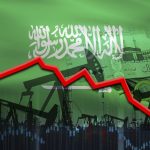
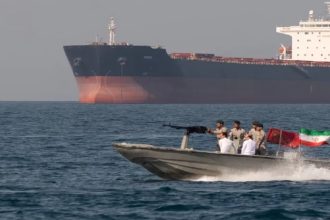
We’re still less than 100 days into the closure of the Strait of Hormuz, a disruption the International Energy Agency described as the most severe oil supply shock in history. In situations like this, history tends to rhyme loudly: markets panic, supply chains tighten, and prices spike hard. Analysts initially braced for crude oil to hit $200 a barrel. Some even quietly modeled scenarios where gasoline in the US could reach $6.50 or $7 per gallon.
Instead, oil is sitting below $90. It did climb at one point—briefly touching around $114 but even that is far from the extremes seen after Russia’s invasion of Ukraine in 2022. And interestingly, the kind of visible strain people often expect in these moments—long lines at gas stations, rationing, that almost cinematic “1970s crisis” feel—hasn’t materialized.
That absence is itself a clue.
So what’s keeping the system from snapping?
Part of it is straightforward supply resilience. More oil has continued flowing out of the Middle East than many expected, partly through alternative pipelines and partly through less transparent routes that still, somewhat surprisingly, keep moving crude through or around Hormuz. Global oil markets, for all their drama, have a habit of finding side doors when the main entrance is blocked.
Then there’s production elsewhere. The United States, in particular, has been steadily increasing output. It’s almost easy to miss this in the noise of geopolitics, but structurally it matters a lot. At the same time, some countries are still tapping strategic reserves those emergency stockpiles that are meant for exactly this kind of moment, even if governments rarely like admitting how much they’re using them.
But there’s a deeper twist here, and it’s not coming from the supply side at all. It’s coming from demand.
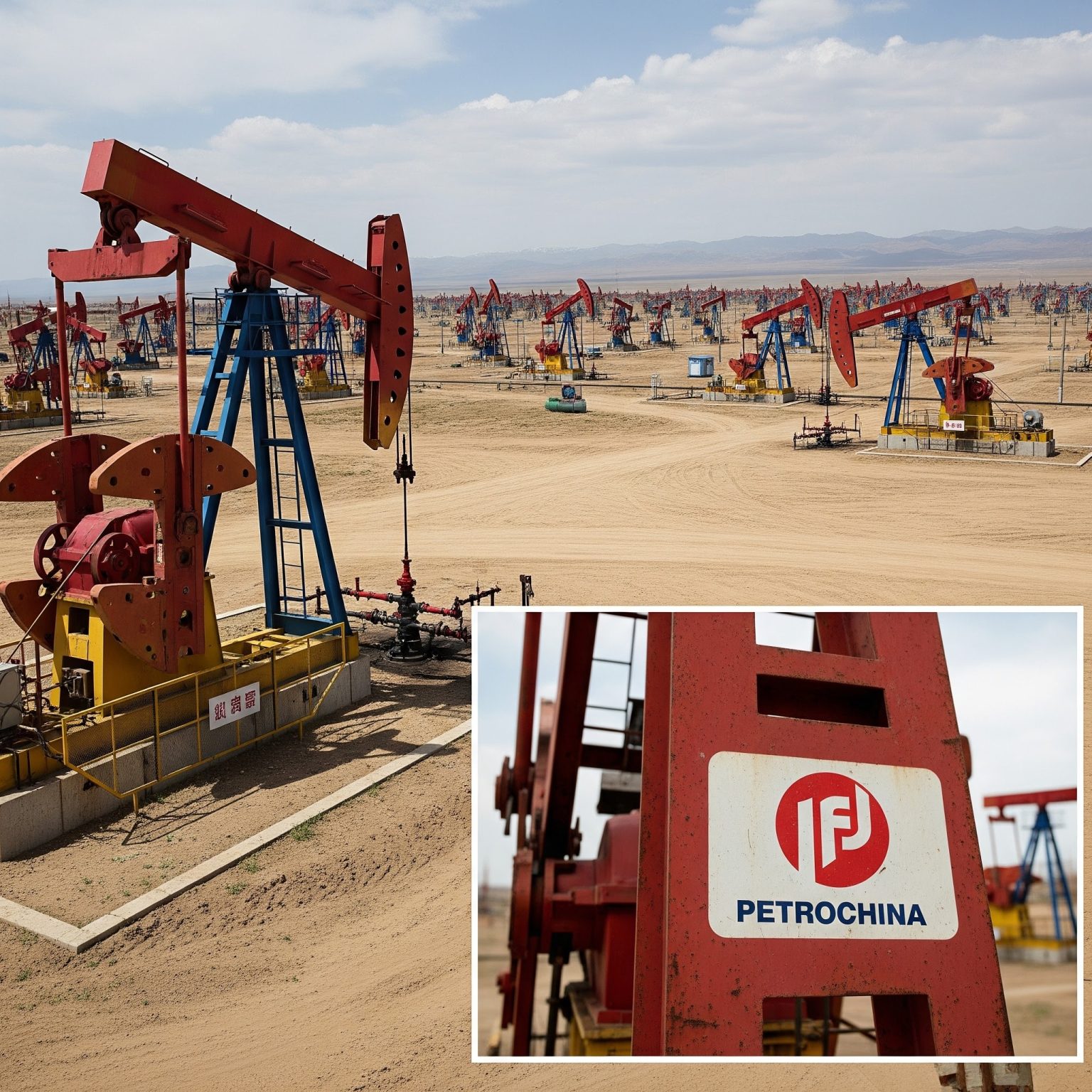
China—the world’s largest crude oil importer—has quietly pulled back in a way that’s hard to ignore once you notice it.
Its imports have dropped from roughly 11.6 million barrels per day to around 7.8 million, the lowest since 2017. That’s not a small adjustment. That’s millions of barrels per day suddenly not entering the system. To use a simple image: it’s as if one of the world’s biggest faucets has been turned down, and everyone else is suddenly discovering there’s more water pressure than expected.
What makes this even more puzzling is what’s not happening inside China. Normally, a drop like this would scream “economic slowdown.” But the usual signals aren’t there. Industrial output looks steady. Traffic patterns are normal. Pollution trends don’t show a dramatic collapse. It’s a bit like watching the fuel gauge drop without the engine sounding any different.
There’s even a small irony here—electric vehicles and renewables, which China has been aggressively investing in, may be part of the story, but they don’t fully account for the scale or speed of the change. They help at the margins, not at this magnitude. So something else is clearly going on underneath the surface.
And this is where things start to feel less like a short-term reaction and more like a long game.
Back in 2023, China was importing unusually large volumes of crude and refining more fuel than domestic demand seemed to justify. At the time, analysts scratched their heads. It looked almost wasteful on paper. But in hindsight, it resembles something more strategic—stockpiling during a quieter moment, like filling water tanks before a drought that hasn’t arrived yet but is clearly on the horizon.
Officials haven’t explained much. In fact, they’ve said very little at all. One of the few public hints came indirectly, when US Energy Secretary Chris Wright suggested China may be drawing down strategic reserves.
But even that raises a complication. Satellite data, which can track visible storage tanks, doesn’t show obvious depletion. In some places, levels look stable or even higher. So either the reserves are larger than what satellites can see, or the system is more layered than outside observers assumed. Underground storage, state-controlled reserves, commercial mandates none of these are fully visible from the outside, and together they form a kind of shadow buffer.
Which leads to the obvious question: how long can this continue?
Estimates vary wildly. Some suggest China’s stockpiles could be around 500 million barrels; others put it closer to 1.5 billion. That’s not a minor disagreement—it’s the difference between “a few months of cushioning” and “a much longer strategic runway.” And that uncertainty itself becomes part of the story, because markets don’t price what they understand—they price what they fear they might be missing.
Then there’s the political layer, which is always tempting to overinterpret.
Some have speculated that agreements between major leaders might be influencing import behavior, but that kind of explanation tends to collapse under its own weight. It assumes coordination that would be hard to hide and harder still to keep quiet.
A more grounded interpretation is also more interesting: China may simply be acting in its own long-term economic interest, trying to prevent extreme volatility in the countries that buy its exports. That’s not altruism so much as self-preservation—global stability as a form of domestic insurance.
Still, even if the intent is stabilizing, the effect is more complicated.
Lower oil prices ease pressure on the United States, giving Washington more breathing room in negotiations over reopening the Strait of Hormuz and managing broader geopolitical tensions. If prices were at $150 instead of hovering near $90, political urgency would feel very different. Elections, inflation concerns, consumer sentiment—all of it would tighten at once.
So there’s an odd feedback loop here: China’s behavior may be dampening prices, which in turn reduces pressure to resolve the very crisis that created the instability in the first place. It’s almost counterintuitive—like a thermostat that keeps the room just cool enough that no one feels compelled to fix the heating system.
And zooming out even further, this raises a more structural question.
Traditionally, the world had a “swing producer”—often Saudi Arabia—able to stabilize markets by adjusting output. But what we may be seeing now is something different: a “swing consumer.” A player whose buying decisions alone can tighten or loosen global supply conditions without firing a single barrel of production.
That’s a subtle but important shift. It means influence isn’t just about how much oil you can produce, but how much you can choose not to consume.
And that brings the story full circle.
Because while all eyes tend to focus on ships passing through chokepoints or missiles crossing borders, some of the most consequential moves in this crisis may be happening in storage tanks, shipping contracts, and import spreadsheets far from the front lines. Quiet decisions, long timelines, and a kind of strategic patience that doesn’t make headlines—but still shapes the price you see at the pump the next time you hesitate for half a second before filling your tank.
Why is Beijing doing this?
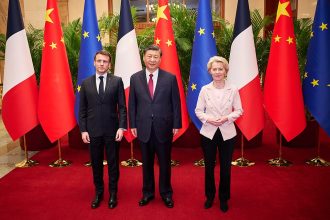
However In theory, it’s possible that when President Donald Trump and Chinese President Xi Jinping met in May, they reached some sort of agreement for China to reduce its imports. After all, Trump is benefiting politically from the choice.
But it seems unlikely that Xi would agree to a policy to underwrite a war against one of its allies, and as unlikely that Trump wouldn’t tell anyone he had extracted that big a concession. More likely, China sees the benefit in preventing an all-out crisis in the countries that are its most important export markets.
Intentionally or not, though, China’s policies may be prolonging the war. Trump is clearly eager to reach a deal to reopen Hormuz, but not desperate enough to agree to major concessions or Iran’s nuclear program or sanctions relief. His urgency might be different if oil were at $150 a barrel rather than $90, putting even more pressure on American consumers during a pivotal election year. For all the attention paid to how Chinese missiles and satellites might be helping Iran’s war effort, that assistance might be outweighed by how its energy policies are helping the US.
Beyond this conflict, China’s policy may have wider strategic implications for China’s growing ability to weaponize its role in the global economy — a field of competition the US long dominated. As Eurasia Group oil analyst Gregory Brew wrote on X, “The world doesn’t have a swing producer any more” — referring to how Saudi Arabia’s oil production capacity once allowed it to almost single-handedly swing global energy markets — “but it may have a swing consumer.”
In other words, China is intentionally keeping oil prices lower than they would be otherwise. It could in theory pull the rug out and jack up the world’s prices as well.
In part, China is simply also a country that’s traditionally inclined to stockpile stuff, whether it’s oil, strategic metals, or even pork. When it began its oil-buying spree a few years ago, there was some speculation it might be preparing for a major global crisis, namely an invasion of Taiwan.
There has long been an assumption that a conflict over Taiwan would create such severe disruption to global trade that it would amount to a form of mutually assured economic destruction, ultimately discouraging Beijing from taking action. However, what recent developments suggest is that China may, in fact, be more protected from those kinds of shocks than previously believed—and, at the same time, more capable of generating them.