




Saudi Arabia has spent a decade trying to free itself from dependence on oil. Now cheap
crude, a regional war and a mountain of debt are testing whether it ever really could.
Somewhere in the Saudi desert, a building project that was going to change the world has
quietly changed its ambitions instead. NEOM, the 500-billion-dollar futuristic megacity
announced with global fanfare by Crown Prince Mohammed bin Salman in 2017, was
supposed to house nine million people in a mirrored linear city stretching 170 kilometres
across the sand. By mid-2026, its flagship structure, known as The Line, has been scaled back
to a first phase of just 1.5 miles. Construction budgets have been slashed by as much as 60
per cent. The ski resort project Trojena, originally planned to host the Asian Winter Games, is
being downsized and will no longer stage them. The Public Investment Fund, Saudi Arabia’s
sovereign wealth fund and the engine of Vision 2030, has written down billions in giga-
project investments and quietly redirected capital toward food security, data centres and
missile production.
Nobody in Riyadh is using the word failure. Officials speak of “spending reprioritisation”, of
“optimal impact at the right cost”, of a strategic pivot toward projects with near-term
commercial returns. Finance Minister Mohammed al-Jadaan captured the new tone at the
World Economic Forum in Davos in January: “We are learning from the mistakes, rewriting
things that need to be rewritten. Adjust and move on.” The adjustment is real. But so is the
pressure that is forcing it. Saudi Arabia is navigating a convergence of fiscal stress, low oil
prices, regional conflict and structural dependency that has placed the kingdom’s grand
experiment in national transformation at its most difficult juncture since Vision 2030 was
announced.
The Numbers That Do Not Add Up
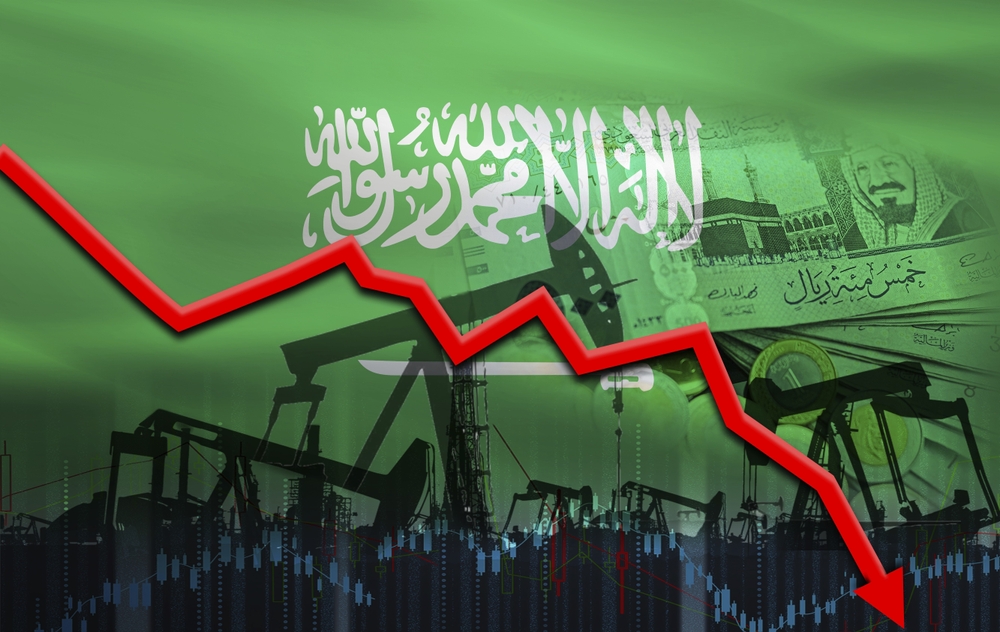
The core problem is arithmetical and unforgiving. Saudi Arabia’s budget requires an oil price
of roughly 88 dollars per barrel in 2026 to break even, down from 94 dollars in 2025. Oil is
trading at around 61 to 65 dollars. The gap between what the kingdom needs and what the
market is providing is not a temporary blip. It is a structural deficit that the IMF estimates
will run at approximately four per cent of GDP in 2026, following a five per cent deficit the
year before. The kingdom is projected to borrow roughly 57 billion dollars in 2026 against a
deficit of around 44 billion dollars, public debt has reached 35.4 per cent of GDP, and the
PIF’s cash position has fallen to approximately 15 billion dollars, representing just 1.6 per
cent of its total assets. Aramco, the state oil company and the primary funding mechanism for
the PIF and the national budget, cut its dividend by approximately 40 billion dollars for 2025.
Its quarterly dividend of 21.9 billion dollars now exceeds its own quarterly free cash flow of
18.6 billion dollars, meaning Aramco is partly financing the payment from its own balance
sheet rather than from operations.
This is the paradox at the heart of Saudi Arabia’s situation. Vision 2030 was designed to
reduce dependence on oil. But its flagship projects were funded almost entirely by oil
revenues, at a moment when those revenues were high and the Crown Prince’s ambitions
were expanding faster than caution recommended. When the oil price fell and stayed down,
the entire architecture of Vision 2030 began to show its foundations. Non-oil activities now
account for 55 per cent of real GDP by official measure, a genuine improvement on a decade
ago. But the non-oil economy is not decoupled from oil. Researchers who track the
relationship between Saudi fiscal spending and non-oil sector performance have found that a
ten per cent change in oil prices corresponds to roughly a 0.5 per cent change in non-oil GDP,
mediated through government spending, sovereign fund deployment and consumer
confidence. The diversification is real but partial. The umbilical cord is still attached.
The Iran War Accelerates the Reckoning
Saudi Arabia entered 2026 already under pressure. The Iran war made things significantly
worse. Operation Epic Fury, the American and Israeli campaign that began on 28 February,
transformed Saudi Arabia from a wealthy neutral into a front-line economic casualty virtually
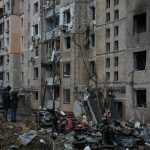
overnight. Iranian strikes targeted oil infrastructure, airport facilities and energy installations
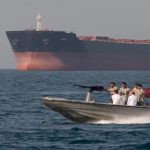
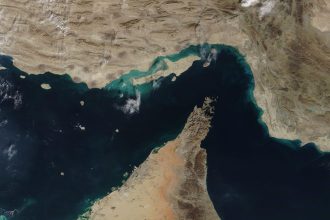
across the Gulf. The disruption to the Strait of Hormuz, through which a significant share of
Saudi crude exports flow, created immediate logistical and pricing complications. Aramco
rerouted crude through the East-West Pipeline to Yanbu, covering roughly three million of its
7.76 million barrels per day, but leaving the rest exposed to Hormuz uncertainty. The Aramco
chief executive stated publicly that the disruption could push oil market recovery into 2027.
Foreign direct investment, already falling far short of Vision 2030 targets, is expected to have
declined by between 60 and 70 per cent in the first quarter of 2026. Saudi Arabia’s FDI net
inflows reached only 19 billion dollars in nine months of 2025 against a stated target of 100
billion dollars annually by 2030. The war widened that gap further. Combined losses across
the PIF’s domestic holdings in the first week of the conflict were estimated by market
analysts at between 35 and 45 billion dollars. Saudi Arabia signed ten-year defence
cooperation agreements with Ukraine in exchange for counter-drone expertise, a telling
indication of the kingdom’s new security priorities, and the PIF redirected capital toward
missile production and food security in ways that would have been unthinkable in the pre-war
planning cycle.
Vision 2030 Meets Vision Reality
The question that matters, and that Saudi officials are working hardest to avoid answering
directly, is whether Vision 2030 remains achievable in any form that resembles the original
design. The honest answer is that it depends on which parts of Vision 2030 you mean. The
social and cultural elements — women in the workforce, entertainment liberalisation, sports
investment, the opening of a tourism sector that barely existed in 2016 — have advanced
substantially and are largely irreversible. Saudi Arabia is genuinely less oil-dependent as a
society than it was ten years ago, even if the fiscal position has not kept pace with the social
transformation.
The megaproject layer is a different story. NEOM was always the most spectacular and the
most financially precarious component of the Vision. Its omission from the 2026 pre-budget
statement, the drying up of new construction contracts by 2025, and the PIF’s write-down of
its giga-project portfolio tell a story that no official communiqué has been willing to state plainly.
The project is not cancelled. It is preserved as a brand, as a legal designation, as a
land entitlement covering territory the size of Belgium. But the physical construction that was
supposed to have been well under way by now has been suspended, scaled back, or
indefinitely deferred. Sindalah, the luxury island component and the only NEOM sub-project
still on anything resembling its original schedule, is reported to be three years late and three
times over initial budget, with total costs approaching four billion dollars.
The PIF has responded with a pragmatic repositioning that reveals more about Saudi
priorities than any policy document. Under its new 2026 to 2030 strategy, the fund is
directing roughly 80 per cent of its portfolio into domestic investments and scaling back
international exposure from 30 to 20 per cent. The focus is shifting toward logistics, mineral
extraction, religious tourism, AI infrastructure and data centres — sectors with near-term
commercial returns rather than decade-long construction cycles. The repositioning is a bet on
pragmatism over spectacle.
What the Coming Months Will Reveal
The IMF raised its GDP growth forecast for Saudi Arabia to 4.5 per cent for 2026, driven
primarily by a resilient non-oil economy. That figure is real and should not be dismissed.
Saudi Arabia is not in crisis in the way that the more pessimistic commentary suggests. Its
reserves remain substantial, its sovereign debt is manageable relative to comparable
economies, and the structural diversification achieved since 2016 has genuine depth. The
business environment has improved markedly and now rivals that of many advanced
economies by international benchmarks.
But the medium-term trajectory depends on variables that Riyadh cannot control. If oil prices
remain in the low to mid-sixties through 2027 and beyond, the fiscal arithmetic deteriorates
steadily. If the Iran war’s effects on FDI and supply chains persist, the private sector
investment that Vision 2030 needs to become self-sustaining will continue to lag. And if
Aramco is forced to maintain its dividend from balance sheet rather than free cash flow, the
funding mechanism for the PIF, and through it for the entire national transformation
programme becomes progressively less reliable.
Crown Prince Mohammed bin Salman built Vision 2030 on the assumption that Saudi Arabia
could reinvent itself fast enough to prosper beyond the oil age. That assumption was always
ambitious. The period ahead will determine whether it was ambitious in the way that
rewarded bold reformers, or ambitious in the way that built cities in the desert that nobody
came to fill.