




As Washington recalibrates its military role and Russia sustains long-term confrontation, Brussels is quietly debating the most profound shift in European sovereignty since Maastricht. Will non-EU nations join European defence?
- Europe’s strategic environment has fundamentally changed
- Article 42.7 is becoming something far more significant
- The real battle concerns decision-making
- A European Security Council would reshape the balance of power
- Defence integration is also an industrial project
- The next twelve months may determine Europe’s trajectory
- Europe’s geopolitical maturity is now being tested
For decades, Europe’s defence debate revolved around a familiar question: how much should governments spend? Today, the more consequential question is who should decide. Behind discussions over budgets, procurement and industrial capacity, the European Union is confronting a constitutional dilemma that could redefine its role as a geopolitical actor.
That debate has gained new momentum through proposals advanced by European Defence Commissioner Andrius Kubilius, who argues that Europe’s security architecture can no longer depend solely on political goodwill or improvised crisis responses. His vision reaches far beyond larger defence budgets or additional military projects. It challenges one of the EU’s oldest political principles by suggesting that collective defence should become a function of shared decision-making rather than unanimous national consent.
The implications extend well beyond Brussels. As the United States shifts strategic attention toward the Indo-Pacific and Russia continues to frame Europe as its primary geopolitical adversary, the continent faces mounting pressure to develop institutions capable not merely of coordinating defence policy but of exercising strategic leadership. What is emerging is not simply another institutional reform. It is the opening chapter of a debate over whether Europe is prepared to become a genuine security power.
Europe’s strategic environment has fundamentally changed
Three developments have converged to accelerate the debate.
Russia’s invasion of Ukraine destroyed assumptions that large-scale interstate war had become impossible on the European continent. Military deterrence, once viewed largely as NATO’s responsibility, has returned to the centre of European policymaking.
At the same time, Washington has made increasingly clear across successive administrations that European allies must assume greater responsibility for conventional defence. Although American commitments to NATO remain intact, US military planners increasingly envisage Europe providing the bulk of conventional capabilities while the United States concentrates on strategic enablers and nuclear deterrence. That trajectory has been reinforced through NATO’s evolving force posture and broader defence planning. It reflects less a withdrawal from Europe than a redistribution of responsibilities driven by intensifying competition with China.
The third factor is Europe’s own industrial reality. Despite announcing hundreds of billions of euros in defence investments since 2022, the continent continues to operate fragmented procurement systems, duplicated production lines and incompatible military standards. National defence industries remain protected by political interests that frequently override efficiency or interoperability.
Together, these trends expose a central weakness: Europe possesses significant economic resources but lacks institutions capable of translating them rapidly into military capability.
Article 42.7 is becoming something far more significant
At the heart of Kubilius’s proposals lies Article 42.7 of the Treaty on European Union—the mutual assistance clause requiring member states to aid another member subjected to armed aggression.
For years, the provision remained largely symbolic. It was invoked only once, after the 2015 terrorist attacks in Paris, and never developed into an operational framework comparable to NATO’s Article 5.
That may now change.
Rather than treating Article 42.7 as a legal obligation activated after conflict begins, European policymakers increasingly view it as the foundation for permanent defence coordination. Preparatory mechanisms, shared contingency planning, military mobility, logistics and hybrid threat responses could all become integrated under common protocols long before a formal invocation becomes necessary.
This reflects a broader evolution in European strategic thinking.
Modern conflict rarely begins with conventional invasion. Cyberattacks, disinformation campaigns, attacks on critical infrastructure, satellite disruption and economic coercion often precede military escalation. Waiting until tanks cross borders risks responding too late.
Operationalising Article 42.7 would therefore transform the clause from a political declaration into an instrument of strategic preparedness.
The real battle concerns decision-making
Yet the most controversial element of Kubilius’s vision concerns governance rather than defence itself.
European foreign and security policy remains constrained by unanimity. Any member state can block collective action regardless of the broader strategic consensus.
That system has increasingly frustrated policymakers confronting rapidly evolving security crises. Delays over sanctions, military assistance and defence initiatives have highlighted how national vetoes can slow responses precisely when speed matters most.
Kubilius therefore argues that a future European Defence Union should allow qualified majority voting in selected defence decisions.
Such a move would represent one of the largest transfers of sovereign authority since the creation of the euro.
Supporters argue that no military alliance can function effectively if every operational decision requires unanimous political approval. They point to NATO itself, where although consensus remains central, military planning and command structures operate with considerably greater institutional cohesion than within the EU.
Critics see substantial risks.
Smaller member states fear domination by larger powers such as France and Germany. Others worry that abandoning unanimity would erode democratic legitimacy by permitting governments to become involved in collective military decisions they opposed.
The debate ultimately reflects competing visions of European integration: is defence another area of intergovernmental cooperation, or should it evolve into a genuinely supranational policy?
A European Security Council would reshape the balance of power
The proposal for a European Security Council illustrates this institutional ambition.
Rather than replacing NATO, such a body would seek to provide continuous political direction for Europe’s defence priorities, bringing together major military powers alongside rotating member states and senior EU leadership.
The concept is not entirely new. Similar ideas circulated during the Merkel-Macron era but failed to gain sufficient political support. Today’s geopolitical circumstances make the proposal considerably more plausible.
Unlike existing European Council meetings, which address broad political agendas, a dedicated security council would focus exclusively on defence, strategic planning and crisis management. Its significance would extend beyond institutional efficiency.
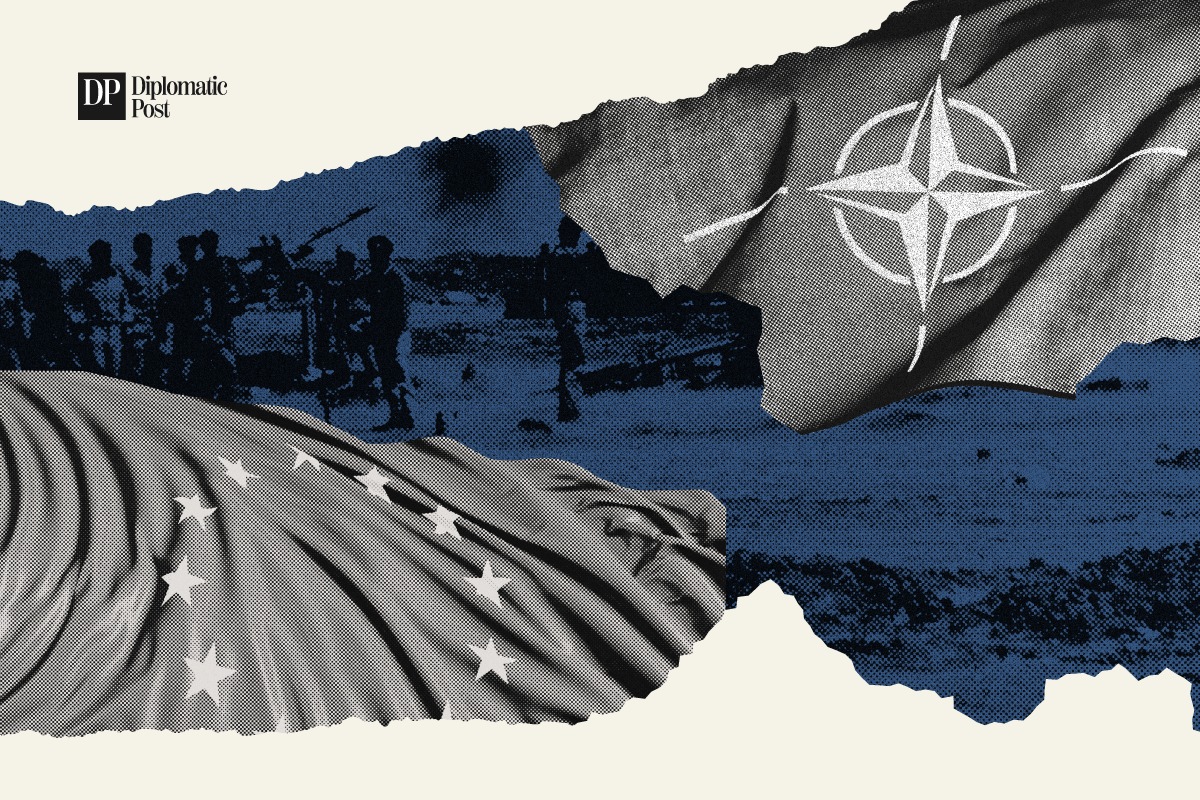
For the first time, countries outside the EU including the United Kingdom, Norway and potentially Ukraine—could participate in a structured European defence architecture without becoming full EU members.
That matters because Europe’s future security ecosystem increasingly extends beyond the Union itself. Britain’s military capabilities remain indispensable, Norway occupies a critical Arctic position, and Ukraine possesses perhaps the continent’s most experienced conventional armed forces.
A flexible security framework capable of incorporating these partners could strengthen Europe’s strategic depth while avoiding difficult institutional enlargement debates.
Defence integration is also an industrial project
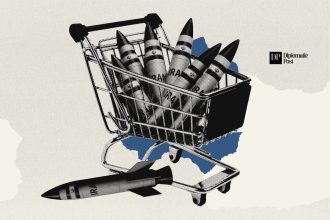
Military effectiveness ultimately depends on industrial capacity. European governments currently operate dozens of major weapons systems where the United States fields only a handful. Multiple tank platforms, fighter aircraft, artillery systems and ammunition standards fragment production and increase costs.
The European Commission’s emerging Defence Single Market strategy seeks to address precisely these inefficiencies.
Joint procurement, longer production contracts, common standards and integrated supply chains could significantly increase output while lowering costs. The objective is less about replacing national industries than creating economies of scale capable of sustaining prolonged military readiness.
Equally important are investments in innovation. Artificial intelligence, satellite communications, autonomous systems, cyber resilience and space infrastructure increasingly define military competitiveness. Programmes linking defence technology with Europe’s broader industrial strategy suggest Brussels increasingly views defence not simply as security policy but as economic policy.
The challenge remains political.
Governments continue to favour domestic manufacturers, national employment and sovereign procurement decisions. Without greater coordination, increased defence spending risks reinforcing fragmentation rather than solving it.
The next twelve months may determine Europe’s trajectory
Several developments will indicate whether this strategic transformation gains lasting momentum.
Implementation of the Defence Single Market proposals will test member states’ willingness to surrender elements of industrial sovereignty. Debates over qualified majority voting will reveal how far governments are prepared to reform existing treaty arrangements.
Meanwhile, NATO’s evolving force posture and continued American strategic rebalancing will increase pressure on European capitals to assume greater operational responsibility.
Ukraine’s future relationship with European defence institutions will also remain pivotal. Even without formal EU or NATO membership, deeper military integration appears increasingly likely. None of these changes will occur quickly.
European institutional reform has historically advanced through successive crises rather than grand constitutional moments. Defence integration is likely to follow the same pattern.
Europe’s geopolitical maturity is now being tested
The discussion initiated by Kubilius is ultimately less about creating another Brussels institution than confronting an uncomfortable strategic reality.
For decades, Europe could afford fragmented defence structures because American military leadership compensated for institutional weaknesses. That era is gradually fading. The question is no longer whether Europe needs stronger armed forces. Most governments already accept that premise. The harder question is whether Europeans are prepared to build political institutions capable of directing those forces collectively.
That requires choices extending beyond military budgets into questions of sovereignty, democratic legitimacy and strategic leadership.
Europe’s defence revolution, therefore, is not primarily about tanks, missiles or ammunition. It is about governance. If the Union succeeds in transforming its mutual assistance commitments into operational capability while overcoming the constraints of unanimity, it will move significantly closer to becoming an autonomous geopolitical actor.
If it fails, Europe may continue spending more on defence while remaining strategically dependent on institutions and decisions made elsewhere. In an increasingly volatile international order, that distinction could prove decisive.