




Businesses and consumers are struggling with a bizarre conflict that is simultaneously happening and not happening.
The International Monetary Fund cut its forecast for global growth this week, and the reason is not complicated. A war that was supposed to stay contained to missiles and oil tankers has quietly worked its way into supermarket aisles, gas pumps, and household budgets everywhere. Media reports on the new IMF outlook describe an economy that is bending under the weight of the conflict between the United States, Israel, and Iran, but has not broken. For the people actually paying higher prices at checkout, that distinction offers little comfort.
The fund now expects the world economy to grow just three per cent this year, down from three and a half per cent last year and below the number it projected back in April. Growth is expected to recover somewhat in 2027, but not before ordinary households absorb a year of pain.
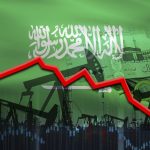
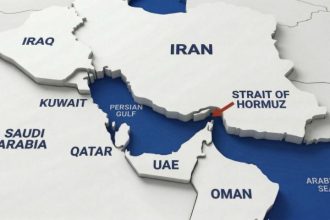
Reports on the outlook trace the slowdown directly to Iran’s decision to shut the Strait of Hormuz after American and Israeli strikes, a chokepoint that normally carries a fifth of the world’s crude oil and natural gas. Once that route closed, oil prices jumped, and the fund now projects they will finish the year up nearly thirty two percent. Consumer prices worldwide are expected to climb four point seven per cent in 2026, reversing two years of hard-won progress against inflation.
The strait that decides what things cost
It is worth remembering how much rides on a single waterway. Coverage of the conflict’s economic fallout notes that when the strait closed in early March, oil surged past one hundred twenty dollars a barrel and forced major exporters to declare force majeure on shipments they could no longer guarantee.
Gulf states, which depend on that same passage for the overwhelming majority of their food imports, faced what was described at the time as a grocery supply emergency, with retailers airlifting basic staples and prices on some goods spiking by well over one hundred per cent in a matter of weeks. Even materials with no obvious link to the Middle East felt the shock.
Reports describe tungsten prices, critical for semiconductors and precision manufacturing, as having more than tripled since December as China tightened export controls, while aluminium supply tied to Gulf production also tightened after Iranian strikes hit a major aluminium producer directly.
The fund’s own language is careful here, describing the global economy as having weathered the shock better than feared. Analysts point to one factor above all others: the continued boom in artificial intelligence investment.
Reports citing IMF officials note that AI-related spending has become large enough to offset a meaningful share of the drag from higher energy costs, with one estimate putting annualised sales across AI companies above one hundred seventy billion dollars, a pace that has outrun the growth of the early internet.
China’s economy is expected to grow four point six per cent this year, slower than last year but a touch better than the fund predicted in the spring, helped along by public works spending and a surge in high-tech exports even as its property market keeps sinking. India remains the fastest-growing major economy on the fund’s list, expanding at over six per cent on the strength of consumer spending at home.
Here is where the numbers get uncomfortable. The IMF built its entire outlook on the assumption that the Strait of Hormuz reopens later this month and that shipping through it returns to something normal by next spring. That assumption looked shaky within hours of the report’s release.
American strikes on Iran resumed, and the president publicly declared that the ceasefire negotiated weeks earlier was over. Both Washington and Tehran have accused each other of violating the framework agreement, and oil prices jumped again after the United States revoked its waiver on Iranian oil sanctions. In other words, the fund’s already gloomy forecast may prove to be the optimistic scenario.
Central bankers are stuck holding two problems at once
The fund’s researchers have urged policymakers to focus on price stability, central bank independence, and financial oversight in the months ahead, language that reads calm on paper but describes a genuinely difficult position. Central banks that spent years grinding inflation down now face a fresh energy-driven spike at the same time growth is slowing, a combination that leaves few good policy options.
Reports on Federal Reserve deliberations describe officials expressing concern over a short-term rise in inflation tied directly to gasoline prices, concern that European central bankers have echoed as they weigh how hard to lean against price pressures without choking off already fragile growth.
None of this is abstract for the people doing the shopping. Reports from grocery retailers describe consumers already stockpiling everyday items like toothpaste in anticipation of further price increases, a small but telling sign of how directly a war fought over a shipping lane has reached kitchen cabinets thousands of miles away.
The White House has continued to describe the economic pain as temporary, framing it as the cost of pursuing a longer-term settlement with Iran. Whether that framing holds depends entirely on whether the strait reopens on schedule, and this week gave the clearest sign yet that it might not.
Strip away the competing spin from Washington, Tehran, and the markets, and one fact remains settled. The IMF has confirmed, in its own official numbers, that global consumer prices are now expected to rise faster in 2026 than in 2025, breaking a two-year run of cooling inflation. That is not a projection about politics or intentions. It is a measured reversal, already built into the fund’s baseline, and it is the bill every household is now being asked to pay.