




Britain has not run out of politicians. It has run out of the conditions that allow politicians to succeed. Understanding why is the most urgent question in British public life.
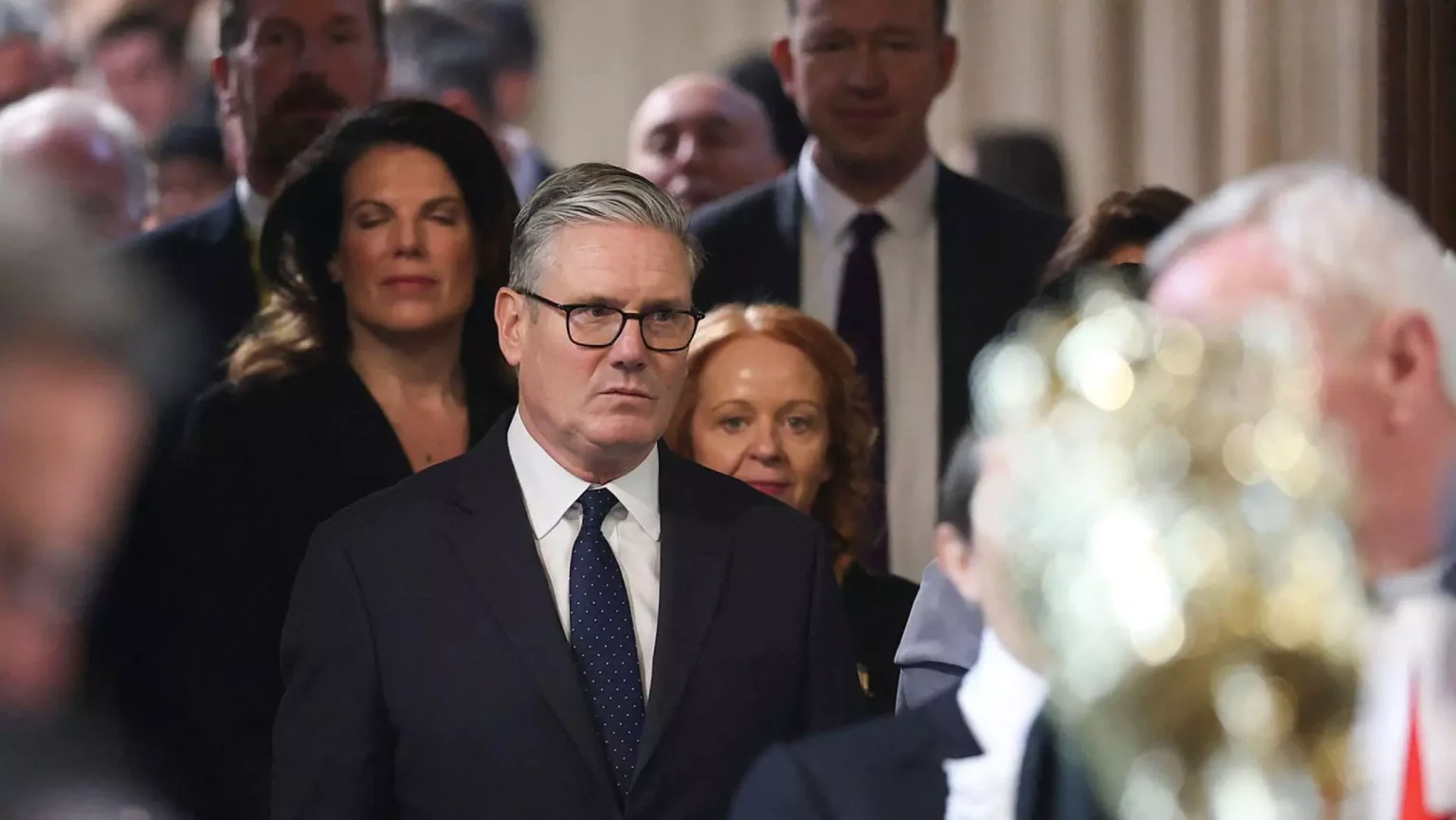
On a grey Monday morning outside 10 Downing Street, Keir Starmer stood before the cameras and read the verdict his own parliamentary party had delivered. Less than two years after the Labour Party swept to power with its largest election majority in generations, winning 411 out of 650 seats in the House of Commons, the prime minister announced he would resign. He spoke of putting his country first. He spoke of an orderly handover. He did not speak of what had actually happened, which was that a leader who entered office on a wave of relief after fourteen years of Conservative government had burned through his political capital faster than almost anyone predicted and joined a procession of departures that now stretches back a decade.
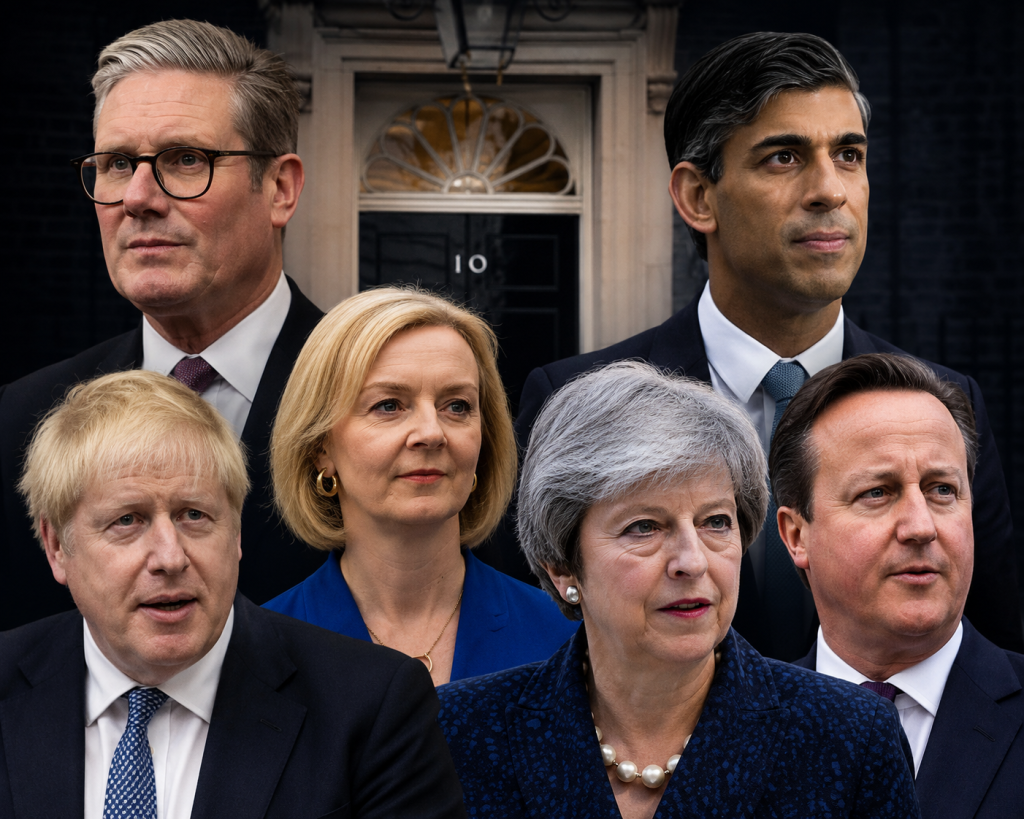
Seven prime ministers in ten years. David Cameron, Theresa May, Boris Johnson, Liz Truss, Rishi Sunak, Keir Starmer and whoever comes next. The last seven leaders before Cameron — going back to the mid-1970s — together account for a comparable span of British history. Something has changed in British politics, and the question of what that something is matters far beyond the Westminster bubble. The answer tells you whether Britain’s crisis is merely a problem of leadership, which can be solved by finding better leaders, or a problem of structure, which is considerably harder to fix and will not be resolved by replacing one incumbent with another.
The Mandate That Means Less Than It Looks
The superficial paradox of recent British politics is that the leaders who have fallen fastest have often been the ones who arrived with the largest mandates. Starmer’s 411 seats represented a parliamentary majority that most leaders would have considered impregnable. In practice it gave him a parliamentary majority and a political base that were two very different things. He won 33.7 per cent of the popular vote in a fragmented election. The electoral system translated that into an outsized share of seats, but it did not translate it into an outsized share of public consent for the painful choices that governing Britain in 2026 actually requires.
Political researchers who have examined the gap between British electoral outcomes and their real governing authority note that the first-past-the-post voting system has always had this distorting quality, but that its effects become particularly destabilising when the electorate is fragmented across four or five parties rather than two. A party that wins a landslide in seats without reaching forty per cent of the vote has not won a mandate for anything painful. It has won an opportunity. The difference between those two things is what has consumed every prime minister in the current era.
Starmer’s fall was accelerated by a cascade of specific failures: a net approval rating that had collapsed to minus 46 by November 2025, the worst in recorded polling history for a prime minister of his length of service; heavy losses in the May 2026 local elections, where Labour surrendered 1,496 council seats while the anti-immigration Reform UK party gained 1,453 — a near-perfect transfer that analysts described as a referendum on Starmer personally; and a welfare rebellion within his own parliamentary party that exposed the fundamental vulnerability of any prime minister who must choose between the demands of the public finances and the instincts of their own backbenchers. Cutting benefits is fiscally unavoidable and politically toxic. Leaving them untouched is politically safe and fiscally reckless. This is not a problem that better leadership resolves. It is a problem that better leadership merely manages more gracefully before it becomes unmanageable.
The Trap That Does Not Change
Whoever arrives in Downing Street after Starmer — and Andy Burnham, the former mayor of Greater Manchester, entered Parliament in June following a decisive by-election victory and is the overwhelming favourite to succeed him — will inherit the same set of unavoidable choices that have broken every prime minister since Gordon Brown. These choices are not the products of bad luck or poor judgement. They are the products of structural conditions that have accumulated over nearly two decades and that no single leader, however skilled, can dissolve in a parliamentary term.
Britain’s public debt stands at approximately 94 per cent of GDP. The state spends around 1.37 trillion pounds annually, equivalent to roughly 44.8 per cent of national income, while running a deficit of 133 billion pounds. Net interest payments on the national debt are expected to reach 110 billion pounds in the current financial year alone, money that cannot be spent on public services, infrastructure or the tax cuts that might restore growth. The Office for Budget Responsibility has noted that the state’s capacity to absorb future shocks has significantly eroded. Taxes are already at or near historic highs. Every major spending decision now requires either borrowing, which risks the kind of market reaction that ended Liz Truss’s chancellorship in 49 days, or cuts, which risk the parliamentary rebellions that ended Starmer’s.
Economic optimism among British voters stood at its lowest level since polling on the question began in 1978, according to survey data collected in 2025. As of January 2026, nearly three-quarters of British voters believed things were getting worse, while only eight per cent believed they were getting better. These are not the numbers of a temporarily discontented electorate that a more compelling prime minister might reassure. They are the numbers of a public that has watched successive governments promise change and deliver stagnation for the better part of two decades, and has drawn rational conclusions about the credibility of political promises.
The Hollow Centre
Researchers who study how the British state actually operates have described a paradox at its heart. Britain is highly centralised as a constitutional matter: power is concentrated in Westminster, the executive is dominant, the Prime Minister commands enormous formal authority. And yet the centre has repeatedly proved incapable of converting that formal authority into actual policy delivery. An assessment by one of Britain’s most respected public administration research bodies described the country as a highly centralised state without enough capacity to organise itself from the centre outwards — a diagnosis that explains why prime ministers can announce bold agendas and then watch them dissolve in the gap between announcement and implementation.
The machinery of British government is not set up to deliver the kind of transformative change the country needs. The Treasury has a powerful and well-exercised veto over spending proposals, often more effective at stopping things than the Prime Minister is at driving them through. Whitehall departments operate with significant autonomy and their own institutional interests. Devolved governments in Scotland, Wales and Northern Ireland add further layers of complexity to any policy that touches areas where competence is divided. Local authorities, hollowed out by years of funding cuts, lack the capacity to implement nationally designed programmes even when they want to. And regulators whose independence is the point of their existence are nonetheless in the firing line whenever policy fails to produce visible results quickly enough to satisfy political timetables.
The result is what analysts have called a carousel of caretaker governments. In the last thirty years, Britain has had eighteen different housing ministers. In a policy area where decisions made today produce results only after years of planning permissions, construction and completed homes, this level of churn means that almost no minister has served long enough to oversee the delivery of anything they announced. This pattern applies not just to housing but to nearly every major reform domain: health, energy, infrastructure, immigration. The state announces ambitions in years one and two, encounters the first wave of political resistance in years two and three, pivots or retreats under pressure, and then changes leadership before the original programme could possibly have produced visible results.
What Brexit Was and Was Not
Britain’s political commentary has spent the years since 2016 arguing about whether Brexit caused the country’s difficulties or merely reflected them. The evidence points towards something less satisfying than either conclusion. The vote to leave the European Union was, in important respects, a symptom of a dissatisfaction that predated it. The 2008 financial crisis, the decade of austerity that followed, the collapse of wage growth for working people, the widening gap between a prosperous metropolitan professional class and the former industrial communities that felt left behind by four decades of economic change — all of these preceded and produced the political conditions in which a majority voted for an option that mainstream economists uniformly warned against.
Brexit did not cause this underlying malaise. But its implementation compounded it. The OBR has estimated that Britain’s departure from the European Union has reduced potential GDP by approximately four to five per cent relative to a counterfactual in which the UK remained a member. Labour shortages in sectors from hospitality to healthcare worsened. Regulatory divergence added costs. The administrative burden of managing a new trading relationship consumed enormous civil service capacity. Starmer’s fall came, almost to the day, on the tenth anniversary of the Brexit referendum — a coincidence that focused attention on what a decade of compounding shocks, from the financial crisis through austerity, Brexit, the pandemic, the Ukraine war’s energy consequences and now fresh geopolitical pressures from the Iran conflict, has actually done to the state’s resilience and the public’s patience.
The Leaders the System Does Not Produce
The final dimension of Britain’s prime ministerial crisis is the one that is hardest to measure but may be the most important. The people who reach the top of British politics are selected by processes that systematically filter out the qualities that governing Britain in this moment would actually require. To reach Downing Street, a politician must survive years of party selection committees, factional warfare, media scrutiny, donor cultivation, activist management, internal leadership contests and constant short-term polling. Each of these processes rewards a particular kind of politician: cautious, ambiguous, ideologically flexible, adept at managing competing coalitions and skilled at avoiding the kind of clear statement that creates enemies before power is secured.
The statements that would actually be necessary to build public consent for the difficult choices ahead — that public services cannot be funded at Nordic levels on sub-Nordic taxes, that homes must be built where existing communities do not want them, that some programmes need fundamental redesign rather than more money — are precisely the kinds of statements that poison leadership contests, shatter party coalitions and destroy careers before a politician comes anywhere near power. The system produces technocratic managers who can hold coalitions together: people like Sunak and Starmer, competent stewards of a ship they cannot redirect. It does not produce the kind of politician who could articulate a genuinely different national project and maintain public consent for its inevitable short-term costs.
This is not a counsel of despair. Britain managed it twice in the period between 1945 and 1979, electing leaders who reshaped the entire architecture of national life, one building a welfare state in the wreckage of the Second World War, the other restructuring a sclerotic post-war economy, however painful the process. But both Clement Attlee and Margaret Thatcher operated in conditions — clear post-war national purpose in one case, a genuine economic emergency with a discernible alternative in the other — that gave radical programmes a political coherence that is much harder to construct in the more diffuse dissatisfactions of 2026.
What Burnham Will Face
Burnham enters the contest with genuine advantages that Starmer lacked. He has a record of visible delivery from his decade running Greater Manchester, a kind of direct executive experience that Westminster politicians rarely accumulate. He beat Reform UK in Makerfield, a signal to anxious Labour MPs that he can hold the red wall communities where the party’s traditional coalition is most threatened. He carries less of the technocratic, metropolitan associations that made Starmer’s communication with working-class voters so persistently difficult.
But the Eurasia Group, which has tracked the leadership race closely, predicts he could take office in late July — and the political risk consultancy notes plainly that whoever becomes prime minister will face many of the same underlying issues that stymied Starmer: expensive borrowing, difficult spending choices, a fractured electorate and the need to find a path to growth in an economy that has delivered almost none for the better part of two decades.
The question the next months will begin to answer is whether the arrival of a different leader can break a pattern that the arrival of different leaders has, so far, only deepened. If Britain’s problem is primarily about personnel — about finding someone with clearer communication, stronger political instincts and a more compelling national project — then a change of leadership might change the trajectory. If it is primarily about structure — about the fiscal constraints, institutional weaknesses, electoral fragmentation and accumulated public disillusionment that have consumed every prime minister since Brown — then the seventh leader in a decade will eventually join the list of the others. Not ungovernable, but a long way from governed.