


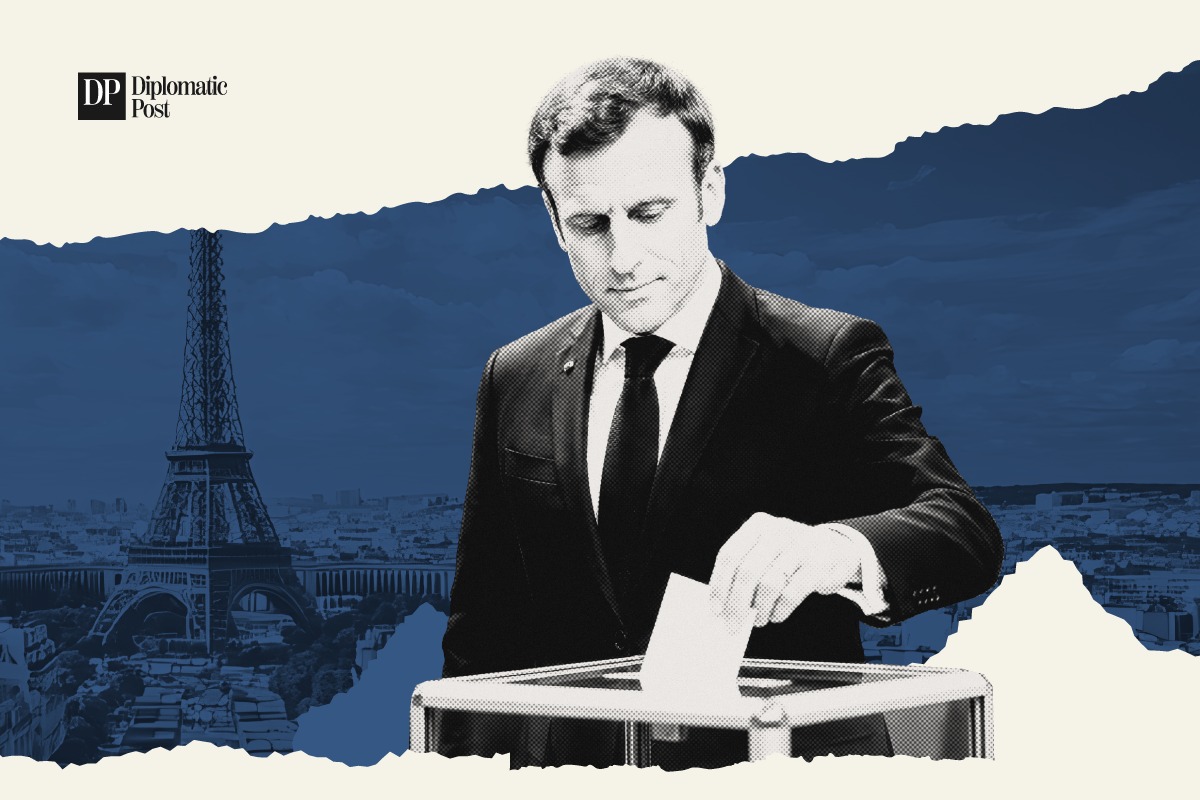


France’s constitution bars Emmanuel Macron from seeking a third consecutive term, leaving a crowded field, a 29-year-old frontrunner and a looming court decision to shape the race for the Élysée.
France confirmed this week that the first round of its presidential election will be held on 18 April 2027, with a runoff on 2 May if no candidate secures an outright majority in the first round. The announcement was expected. What was less expected, when the race began taking shape eighteen months ago, was the character of the contest it has become.
Emmanuel Macron departs with an approval rating of 11 per cent, matching the lowest ever recorded for a French president. His constitutional prohibition on seeking a third consecutive term has opened the largest field of serious presidential candidates in the Fifth Republic’s history, with 18 confirmed so far. And the party best positioned to win, the far-right National Rally, has not yet named its candidate because the answer depends on a court decision expected on 7 July, five days from now.
The question before the Paris Court of Appeal is whether Marine Le Pen’s five-year ban from public office, imposed in March 2025 after her conviction for embezzling European Parliament funds to pay party employees, will be upheld or overturned.
Le Pen has spent three decades building toward a fourth presidential run, having finished third in 2012 and reached the runoff against Macron in both 2017 and 2022. She remains the National Rally’s most recognisable figure and the candidate who, in combined polling scenarios, draws the higher first-round ceiling. If the court restores her eligibility, she runs. If it does not, her 29-year-old protégé Jordan Bardella steps forward, already leading first-round projections at between 34 and 37.5 per cent of the vote.
A Crowded Centre, a Fragmented Left, and a Far Right That Cannot Lose the First Round
The structural reality of the 2027 race has been clear in the polls for months. The National Rally will win the first round regardless of whether it is Le Pen or Bardella on the ballot. Every scenario modelled by French pollsters produces the same result: the far right qualifies for the runoff comfortably. The question that will determine whether France installs a National Rally president for the first time in its history is what the second round looks like and who stands across from the RN candidate when it arrives.
The centrist case rests primarily on Édouard Philippe, the former prime minister and current leader of the Horizons party. He polls in the high teens to low twenties in first-round scenarios and is, in current head-to-head polling, the only candidate who consistently beats the National Rally in a runoff.
His challenge is twofold. He must distance himself convincingly from Macronism, which is radioactive with an electorate that has watched five years of political instability, four prime ministers and an approval rating that bottomed out at 11 per cent. And he must hold off Gabriel Attal, his fellow Macron-era prime minister, who is drawing similar voters without yet formally declaring his candidacy.
If Philippe and Attal split the centrist vote, neither reaches the runoff, and France faces the prospect of a second round between the National Rally and Jean-Luc Mélenchon, the radical left leader polling at roughly 13 per cent.
Political analysts who have studied this scenario are frank about its implications. Mélenchon is both the most popular figure on the left among younger voters and the most disliked politician in France across the broader electorate.
In a Bardella-Mélenchon runoff, the traditional Republican Front, the alliance of all parties against the far right, fractures because many moderate voters would refuse to back Mélenchon even to keep the National Rally out. The far right wins. A Bardella or Le Pen presidency would be the most consequential shift in French domestic and European politics since de Gaulle.
What the 7 July Ruling Changes and What It Does Not
The court decision due on 7 July will determine Le Pen’s eligibility but not the fundamental dynamics of the race. The National Rally leads with or without her. Bardella, though young and conspicuously inexperienced, polls almost identically to Le Pen in first-round scenarios and is currently projected to beat Philippe in a runoff.
One analyst who studies the far right’s European trajectory was direct: for some within the movement, the question of a National Rally presidency is not whether but when. The firewall that kept the far right from the Élysée in 2017 and 2022, the Republican Front and the two-round system, has been weakening with every election cycle. It may not be strong enough to hold in 2027.
For Europe, the stakes are immediate and concrete. France is a founding member of the European Union, a permanent member of the UN Security Council and one of only two nuclear-armed powers within NATO. A National Rally president committed to reducing French engagement in European institutions, restructuring France’s relationship with Ukraine support and pursuing economic nationalism would reshape the strategic environment of the continent from its institutional centre.
The Ankara NATO summit this week has been dominated by questions about American commitment and European rearmament. The question nobody is asking quite yet, but that every European government is quietly calculating, is what happens to that rearmament effort if France’s next president is the candidate currently leading the polls at 37.5 per cent.