




A widening political divide over Gaza, Iran and Benjamin Netanyahu is transforming one of Washington’s most enduring strategic partnerships, with implications that extend far beyond the Middle East.
- A partnership built for a different era
- Diverging strategic interests
- Domestic politics are changing faster than diplomacy
- Netanyahu has become part of the problem
- Regional calculations are also evolving
- Unconditional support is becoming harder to sustain
- The next administration will inherit a different debate
- A strategic partnership entering a new phase
For more than half a century, support for Israel has been one of the few constants in American foreign policy. Democratic and Republican administrations disagreed on settlements, peace negotiations and regional diplomacy, but few questioned the underlying assumption that Israel represented America’s closest and most reliable ally in the Middle East. That bipartisan consensus now faces its greatest test in decades.
The change is not the result of a single military campaign or diplomatic dispute. Rather, it reflects the convergence of three profound shifts: Israel’s conduct during the Gaza war, the political fallout from the confrontation with Iran, and a generational transformation in American public opinion. Together, these forces are reshaping the domestic politics surrounding Israel in ways that may prove more consequential than any disagreement between Washington and Jerusalem.
The debate is no longer simply about military aid or ceasefire negotiations. It is about whether the strategic logic that has underpinned the US-Israel alliance since the Cold War still reflects America’s political realities and regional interests. While the alliance remains robust at the institutional level, the assumptions sustaining it are beginning to fracture.
A partnership built for a different era
The US-Israel relationship was never solely about shared democratic values. It evolved into a strategic partnership during the Cold War, when Israel was viewed as a dependable regional partner capable of containing Soviet influence and projecting Western power in an unstable Middle East.
That logic survived the collapse of the Soviet Union because new threats emerged. Iran’s regional ambitions, Islamist militancy after the September 11 attacks, and concerns over terrorism reinforced Israel’s strategic value in Washington.
Yet the geopolitical environment has changed again.
The United States now identifies China—not the Middle East—as its primary long-term strategic competitor. Successive administrations have sought to reduce America’s military footprint across the region while encouraging regional partners to assume greater responsibility for their own security.
Against that backdrop, prolonged regional conflicts increasingly represent strategic distractions rather than essential theatres of competition.
The Gaza war and subsequent tensions with Iran have accelerated this reassessment, exposing growing divergence between Israeli and American priorities.
Diverging strategic interests
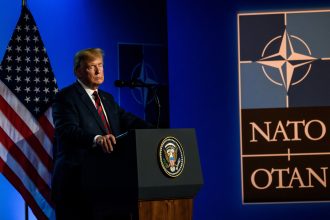
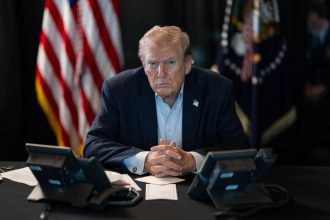
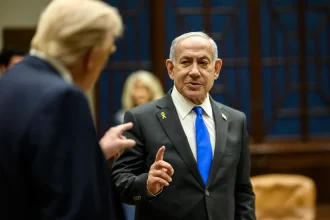
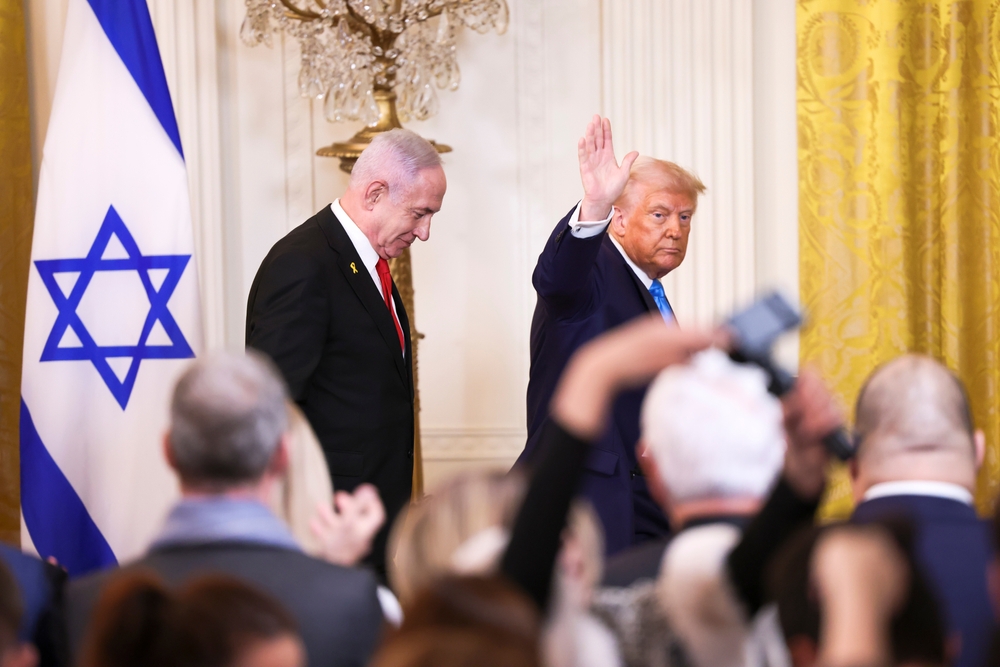
Recent disagreements between Prime Minister Benjamin Netanyahu and President Donald Trump illustrate this emerging gap.
Washington’s overriding objective has become preventing wider regional escalation while preserving freedom to pursue broader diplomatic and economic priorities, particularly in the Gulf and Indo-Pacific. Israel’s current government, by contrast, continues to prioritise military pressure against Iran and its regional network of allied groups.
These are not necessarily incompatible goals, but they increasingly produce different policy prescriptions.
The reported tensions surrounding US diplomacy with Iran highlighted this divergence, suggesting that American policymakers are becoming less willing to subordinate broader regional strategy to Israeli security calculations.
This does not signal an imminent breakdown of the alliance.
Rather, it suggests Washington increasingly views support for Israel through the prism of broader American national interests rather than treating alignment as an objective in itself.
Domestic politics are changing faster than diplomacy
The more significant transformation may be occurring inside the United States itself.
Public opinion has shifted dramatically since the beginning of the Gaza conflict.
According to recent polling by the Pew Research Center, 60% of Americans now hold an unfavourable opinion of Israel, up sharply from previous years. Among Democrats and Democratic-leaning independents, negative views have reached 80%, while even younger Republicans increasingly express scepticism toward Israeli policies.
These numbers do not imply declining American support for Israel’s existence or security.
They instead indicate growing dissatisfaction with the policies of Israel’s current government and its conduct during recent conflicts.
The generational dimension may prove especially significant.
Older Republicans remain overwhelmingly supportive of Israel, reflecting decades of Cold War political culture and evangelical religious engagement. Younger conservatives, however, are increasingly influenced by the broader “America First” emphasis on limiting overseas military commitments.
Within the Democratic Party, progressive criticism of Israeli policy has moved from the political margins toward the mainstream.
This evolution suggests that future American administrations—regardless of party—may face stronger domestic incentives to place conditions on military assistance or demand greater diplomatic flexibility from Israeli governments.
Netanyahu has become part of the problem
Historically, Benjamin Netanyahu cultivated exceptionally close relationships with American political leaders, particularly within the Republican Party.
That political asset increasingly appears to have become a liability.
His highly personalised approach to US politics blurred traditional bipartisan boundaries, tying Israel’s image more closely to partisan competition than at any point in recent history.
The result has been the erosion of bipartisan consensus.
Rather than symbolising continuity, Netanyahu increasingly embodies the political divisions surrounding American Middle East policy.
Even among Republican voters, polling suggests confidence in Netanyahu has weakened considerably compared with previous years.
The challenge extends beyond one individual.
Should Israeli governments continue pursuing policies perceived internationally as obstructing diplomacy or prolonging conflict, political criticism in Washington is unlikely to disappear simply through leadership change.
Regional calculations are also evolving
America’s Gulf partners have also recalibrated their strategic priorities.
Countries such as Saudi Arabia, the United Arab Emirates and Qatar increasingly prioritise economic diversification, investment and regional stability over prolonged geopolitical confrontation.
That makes sustained military escalation with Iran less attractive than diplomatic management.
The Abraham Accords demonstrated that Arab governments can deepen relations with Israel under favourable circumstances.
However, the Gaza conflict has complicated further normalisation by increasing domestic political pressure across the Arab world.
Washington therefore finds itself balancing two competing regional objectives: preserving Israel’s qualitative military advantage while maintaining productive partnerships with Gulf states essential for broader American economic and strategic interests.
This balancing act has become considerably more difficult.
Unconditional support is becoming harder to sustain
None of this suggests that American military support for Israel is about to disappear. Congress remains broadly supportive, intelligence cooperation remains exceptionally close, and shared technological and defence partnerships continue expanding.
Nevertheless, unconditional political backing appears increasingly difficult to sustain.
Future administrations may retain strong security commitments while attaching greater diplomatic expectations regarding humanitarian access, settlement expansion or post-conflict governance.
Such an evolution would mirror broader trends in American alliance management, where strategic partnerships increasingly involve reciprocal expectations rather than automatic endorsement. For Israel, adapting to this environment may prove essential.
For decades, overwhelming bipartisan support insulated successive Israeli governments from significant external political pressure. That political environment can no longer be assumed.
The next administration will inherit a different debate
The trajectory over the coming years will depend on several factors. The outcome of Israel’s next elections could reshape bilateral dynamics, particularly if a new government adopts a different approach toward Gaza, regional diplomacy or relations with Washington.
Equally important will be developments inside American politics.
The Democratic Party’s foreign policy debate continues evolving, while younger Republican voters increasingly question traditional interventionist assumptions. Together, these trends suggest future debates over military assistance may become more contentious than at any time since the alliance reached its modern form. Events on the ground will also matter.
A credible diplomatic process involving Palestinians could ease political tensions in Washington. Renewed regional escalation, by contrast, would almost certainly deepen existing divisions.
A strategic partnership entering a new phase
The United States and Israel remain close allies with deep military, intelligence and technological ties that will endure regardless of temporary political disagreements. But alliances evolve alongside the strategic environments that sustain them.
The consensus forged during the Cold War, reinforced after September 11 and maintained through successive regional crises, is confronting new political realities shaped by changing demographics, shifting global priorities and divergent assessments of Middle Eastern security.
Whether this produces a more balanced partnership or a more strained one will depend less on the durability of historical ties than on the willingness of leaders in both Washington and Jerusalem to adapt to a rapidly changing geopolitical landscape.
The era of unquestioned consensus is fading. What replaces it may define not only the future of the US-Israel relationship but also America’s wider role in an increasingly multipolar Middle East.