




Critics say Netanyahu’s Iran war strengthened Tehran, strained US ties, and left Israel weaker
The latest U.S.–Iran framework agreement combining a fragile ceasefire architecture with a 60-day negotiation window on Iran’s nuclear programme has not ended the confrontation between Washington and Tehran so much as restructured it. Emerging in the aftermath of a short but intense conflict involving U.S. and Israeli strikes on Iranian targets, the deal marks a decisive shift from military escalation toward managed containment. It also signals a recalibration of American priorities: stabilising the Strait of Hormuz, preventing energy-market shocks, and avoiding open-ended regional entanglement.
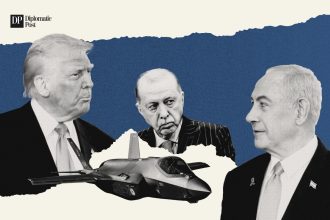
For Israel, however, the diplomatic pivot has been far more disorienting. Prime Minister Benjamin Netanyahu, who had framed the confrontation with Iran as an existential strategic opportunity, now faces the political and strategic consequences of a war whose end-state was negotiated largely without Israeli authorship. Israeli officials have privately expressed frustration that key provisions were finalised without prior consultation, while domestic critics accuse the government of overestimating both the military and diplomatic payoff of escalation .
At the same time, Washington’s willingness to proceed with sanctions waivers, maritime security arrangements, and indirect economic openings for Iran suggests a broader strategic shift: deterrence through engagement rather than regime pressure. The result is a Middle East where Israel’s military primacy remains intact, but its ability to shape diplomatic outcomes is increasingly constrained.
A Strategic Reversal in U.S. Crisis Management
The most consequential feature of the emerging U.S. approach is not the content of the Iran framework itself, but its sequencing. Military escalation was not followed by regime collapse or coercive capitulation, as some planners had anticipated, but by rapid diplomatic consolidation.
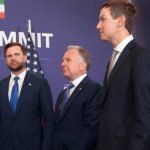
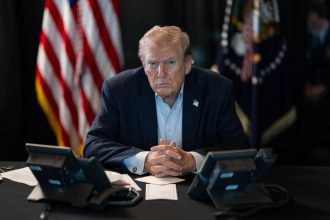
Recent reporting indicates that U.S. officials, including Vice President J.D. Vance, have framed the talks as establishing a “good foundation” for ending hostilities, with interim mechanisms on maritime security in the Strait of Hormuz and limited sanctions relief emerging as early confidence-building measures . This reflects a familiar American pattern: escalation followed by containment, and then negotiation under economic pressure rather than battlefield dominance.
The strategic logic is shaped by three constraints. First, energy security: even partial disruption in the Strait of Hormuz carries global inflationary risks. Second, alliance management: prolonged war risked fracturing coordination with Gulf partners. Third, military limits: despite tactical success against Iranian infrastructure, assessments suggest Tehran retained sufficient capacity to threaten regional shipping lanes and sustain missile pressure .
The resulting policy shift is not a retreat from power but a redefinition of its purpose—prioritising system stability over transformational objectives such as regime change or strategic reordering.
Israel’s Strategic Discounting
For Israel, the implications are structurally more severe than any single diplomatic clause. The Netanyahu government entered the confrontation with an ambitious set of assumptions: that coordinated U.S.-Israeli strikes would significantly degrade Iran’s regional capabilities, potentially open pathways to internal destabilisation, and reset deterrence in Israel’s favour.
While Israeli and U.S. strikes did inflict damage on Iranian infrastructure and military systems, they fell short of strategic collapse. Iran retained the ability to disrupt maritime traffic and maintain a residual missile deterrent . More importantly, the war’s political endpoint was defined not in Jerusalem but in Washington’s negotiations with Tehran.
This divergence has triggered what analysts describe as a “strategic discounting” of Israel’s preferences within U.S. crisis management. The memorandum of understanding signed with Iran reportedly excluded key Israeli demands, including more comprehensive constraints on missile programmes and regional proxy activity .
The political consequences in Israel have been immediate. Netanyahu has faced criticism from across the political spectrum, including accusations that the government misjudged both U.S. commitment and Iran’s resilience . Domestically, the war has become less a demonstration of strength than a contested political assetone that delivered tactical achievements but not strategic transformation.
More structurally, the episode exposes a longstanding tension in U.S.–Israeli relations: convergence in military planning but divergence in end-state diplomacy.
Iran’s Resilience and Strategic Recovery
If Israel’s position has been weakened, Iran’s has counterintuitively stabilised. Despite sustained strikes, sanctions pressure, and internal economic stress, Tehran has emerged from the conflict with its state structure intact and its negotiating leverage arguably enhanced.
Reporting suggests that Iran’s leadership has consolidated around a wartime narrative of survival, while also engaging in cautious diplomatic signalling through intermediaries such as Qatar and Pakistan . Crucially, even limited sanctions relief and oil export flexibility have provided Tehran with breathing space at a moment of acute economic pressure.
This outcome reflects a broader pattern in Middle Eastern conflicts: states with high tolerance for economic hardship and centralised coercive systems often outlast expectations shaped by conventional deterrence theory. Iran’s ability to sustain internal control under pressure—despite inflation, unemployment, and social dissatisfaction has reinforced its position as a structurally resilient actor rather than a system on the verge of collapse .
From a strategic perspective, Iran’s achievement is not victory in a conventional sense, but denial: it has prevented adversaries from converting military pressure into political transformation.
Regional and International Rebalancing
The broader regional implications extend beyond the immediate U.S.–Israel–Iran triangle.
For Gulf states, the framework introduces both relief and anxiety. Stability in the Strait of Hormuz reduces immediate energy risk, but the precedent of U.S.–Iran direct negotiation over Gulf security architecture underscores the diminishing monopoly of Gulf capitals over their own security agenda.
For Europe, the episode reinforces a familiar vulnerability: exposure to Middle Eastern energy shocks without commensurate influence over crisis resolution. European governments, while supportive of de-escalation, remain largely reactive to U.S. diplomatic sequencing.
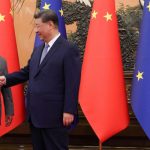
China, meanwhile, benefits indirectly. Any framework that stabilises Iranian oil flows without regime disruption supports Beijing’s energy security while reinforcing its narrative of a multipolar order where U.S. coercive leverage is increasingly constrained.
Russia, similarly, gains from energy-market stabilisation dynamics that sustain elevated but predictable oil prices, even as direct Iranian alignment remains limited.
Three Scenarios, over the next 6–12 months
Over the next 6–12 months, three broad trajectories are plausible.
1. Managed Containment (baseline scenario):
The most likely outcome is a fragile but functional continuation of the current framework, with incremental sanctions adjustments, limited nuclear oversight, and ongoing maritime de-escalation. This would institutionalise the current diplomatic architecture without resolving underlying disputes.
2. Diplomatic Breakdown and Renewed Escalation:
A collapse of talks—triggered by verification disputes or proxy escalations in Lebanon or the Gulf—could rapidly re-militarise the confrontation. In this scenario, Israel would likely push for renewed strikes, while the U.S. would face pressure to reassert deterrence, risking fragmentation within the Western coalition.
3. Gradual Normalisation of U.S.–Iran Engagement:
A more ambitious trajectory would involve structured sanctions relief in exchange for verifiable nuclear constraints. While politically difficult in Washington and deeply controversial in Israel, this scenario would mark a fundamental shift from containment to conditional reintegration.
Across all scenarios, three risk factors dominate: maritime security in the Strait of Hormuz, the status of Iran’s nuclear threshold capability, and the durability of U.S.–Israel strategic alignment.
Conclusion
The emerging U.S.–Iran framework does not end the Middle Eastern balance of power contest; it reorganises it. By privileging managed stability over maximalist outcomes, Washington has signalled a preference for containment over transformation even at the cost of unsettling key allies. Israel, once central to shaping escalation dynamics, now finds itself increasingly dependent on diplomatic decisions made elsewhere.
Iran, for its part, has demonstrated that survival under pressure remains a strategic asset in a region where collapse scenarios are often overestimated. And the United States, acting as both enforcer and negotiator, is once again attempting to convert military leverage into diplomatic equilibrium.
The deeper story is not about a single deal, but about the limits of coercive strategy in a multipolar environment. In that sense, the Iran framework is less a resolution than a reflection of a new strategic reality: wars in the Middle East no longer end when one side wins they end when all sides run out of viable alternatives.
In the meantime whether Netanyahu’s strategic failures are enough to oust him in parliamentary elections this year remains to be seen. A poll released earlier this month shows Netanyahu’s governing coalition falling 11 seats short of the 61 seats needed for a majority in the Knesset. Still, the opposition is splintered among several parties, and Netanyahu, the longest-serving prime minister in the nation’s history, has an uncanny knack for survival.
But whatever happens electorally to one Israeli politician, what should be painfully clear is that Netanyahu’s partisanship and militarism only led to pyrrhic military victories over Hamas and Hezbollah, while strengthening Iran, weakening the American relationship, alienating global opinion, and leaving everyday Israelis less safe.
Trump’s foreign policy has been narcissistic, impulsive, and strategically shambolic. But at least his love of the ribbon-cutting keeps him from sinking into endless military quagmires and from embracing Netanyahu’s dark worldview. The biggest loser of the Iran War is Bibi. His vision of a Middle East where peace is not possible, but Israel reigns supreme, has faltered.