


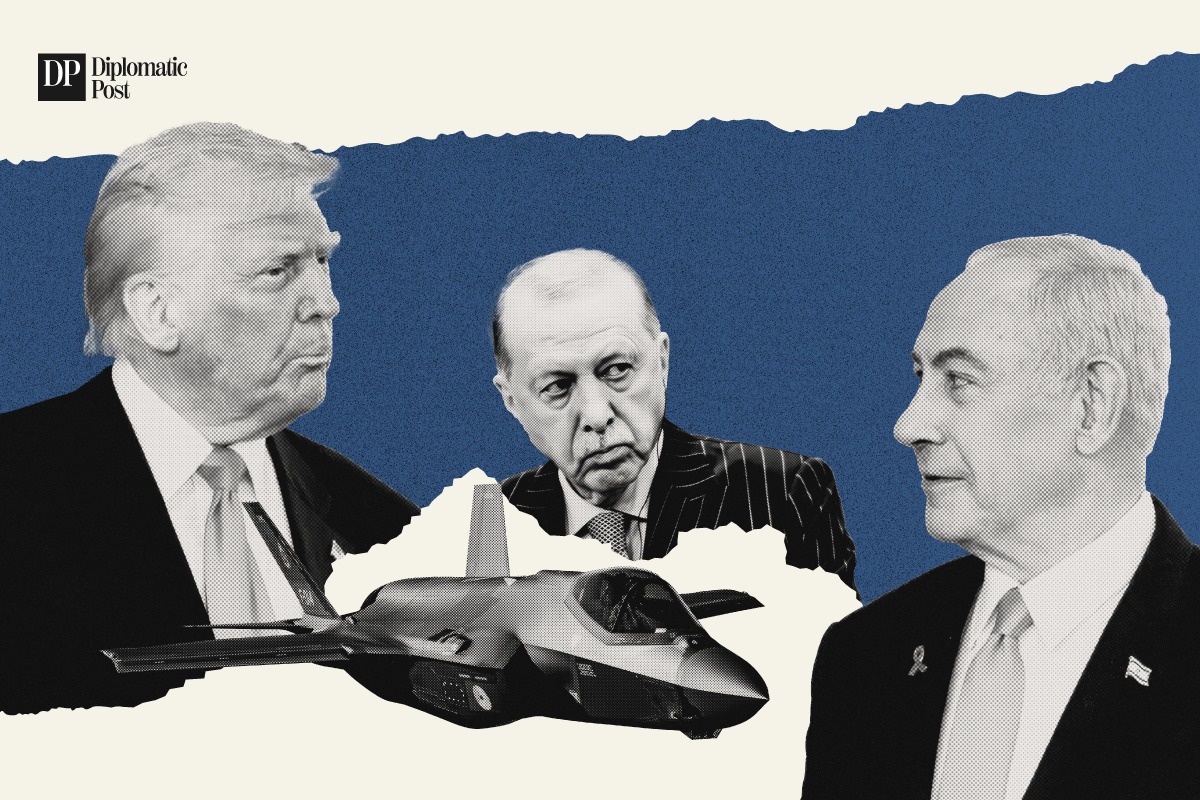


The battle over the F 35 fighter jet has become far more than a dispute over military hardware. It is now a struggle over who will shape the balance of power across the Middle East for the next decade. Israeli Prime Minister Benjamin Netanyahu’s public appeal to President Donald Trump to block the sale of the fifth generation aircraft to Turkey reflects a much wider geopolitical contest that stretches from Syria to the Eastern Mediterranean and from energy corridors to regional influence.
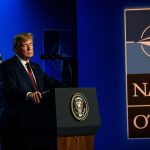
Trump’s recent signal that he is willing to reconsider Turkey’s return to the F 35 programme has reopened one of the most sensitive debates in American foreign policy. Israel sees the possibility of Ankara operating one of the world’s most advanced combat aircraft as a direct challenge to its long standing military advantage. Turkey argues that it remains a key NATO ally whose air force needs modernisation after years of political disagreement with Washington. The dispute highlights how rapidly the strategic landscape has changed since Turkey was removed from the programme after purchasing the Russian S 400 air defence system in 2019.
For Israel, however, the issue is no longer limited to the aircraft itself. It is about Turkey’s expanding regional ambitions and the fear that a stronger Turkish military could complicate Israeli freedom of action across several theatres at once.
Syria has become the central battlefield
The sharpest disagreement between Israel and Turkey is unfolding in Syria. Following the collapse of the Assad government, Ankara has sought to increase its military influence across northern parts of the country while maintaining close links with opposition groups and expanding security cooperation with Syria’s new authorities.
According to official statements and analysis by defence experts, Turkey has examined opportunities to strengthen its military infrastructure inside Syria, including the possible use of air bases and expanded air defence coverage. Although several reported deployments remain unconfirmed, Israeli officials have repeatedly warned that any permanent Turkish military presence capable of restricting Israeli air operations would fundamentally change the strategic environment.
For years, Israel has conducted hundreds of air strikes inside Syria targeting Iranian military infrastructure, weapons transfers and allied militia positions. Israeli planners have largely enjoyed uncontested access to Syrian airspace because Syrian air defence capabilities have been weakened by years of war.
The arrival of modern Turkish air defence systems backed by F 35 aircraft would complicate that picture considerably. Israeli security officials increasingly view Turkey not simply as another regional power but as a state capable of limiting Israel’s operational freedom close to its northern border.
Netanyahu has therefore framed the debate as one involving regional stability rather than bilateral rivalry. He argues that supplying Turkey with advanced stealth aircraft could weaken Israel’s ability to respond rapidly to future threats emerging from Syria or elsewhere in the region.
Beyond Syria lies a wider struggle for regional leadership
Syria represents only one part of a much broader strategic competition.
The Eastern Mediterranean has become an increasingly contested geopolitical space where energy resources, maritime boundaries and transport corridors overlap with military rivalry. Turkey has repeatedly challenged maritime arrangements involving Greece and Cyprus while promoting its own interpretation of maritime jurisdiction. At the same time Israel has worked closely with Greece and Cyprus on regional security cooperation and energy development.
Although several proposed natural gas export projects have advanced slowly for commercial reasons, security cooperation among these countries has steadily deepened over the past decade. Joint military exercises, intelligence cooperation and diplomatic coordination have become regular features of their relationship.
From Ankara’s perspective, these partnerships risk excluding Turkey from emerging economic and strategic networks in the Eastern Mediterranean. Turkish officials argue that regional energy projects should include Turkey because of its geographical position and existing infrastructure.
Israel views the situation differently. Many Israeli decision makers increasingly see Turkey’s foreign policy under President Recep Tayyip Erdoğan as more assertive and more willing to project military power beyond its borders.
The competition extends well beyond energy.
Turkey has invested heavily in becoming a transport hub linking Asia, the Middle East and Europe through railways, highways and logistics corridors. Projects connecting the Gulf through Iraq into Turkey are intended to strengthen Ankara’s role as a gateway between continents.
For Israel, alternative transport initiatives linking Gulf states through Israel towards Europe remain strategically important because they reduce dependence on longer maritime routes and reinforce new regional partnerships established in recent years.
These competing visions reflect two different models of regional integration. One places Turkey at the centre of east west connectivity. The other seeks to build commercial and strategic networks that reduce Ankara’s influence.
Against that background, advanced military capability becomes an important political instrument as much as a defence asset.
Israel’s concerns also extend to Turkey’s increasingly independent foreign policy. Ankara has maintained dialogue with a wide range of actors including Gulf states, Pakistan and several governments across Africa and Central Asia while continuing to position itself as an influential voice within the Muslim world.
Although Turkey remains a NATO member, its diplomatic approach often differs from that of Washington and several European allies. Disagreements over Gaza, Syria, Libya and relations with Russia have repeatedly highlighted these differences.
According to recent official statements, Netanyahu has directly urged Trump not to approve any F 35 transfer to Turkey, arguing that Ankara’s increasingly confrontational rhetoric towards Israel raises serious security concerns. Trump has nevertheless suggested that restoring defence ties with Turkey deserves consideration, while emphasising Ankara’s importance within NATO.
Yet the White House is only one obstacle.
Congress continues to hold significant reservations about allowing Turkey back into the F 35 programme because of the unresolved S 400 issue. American legislation still places conditions on any future transfer, and bipartisan concern remains strong among many lawmakers who argue that the Russian air defence system presents unacceptable intelligence risks for NATO technology.
Even if Trump were determined to move forward, political resistance in Washington could slow or even prevent such a decision.
For Turkey, however, the issue extends beyond acquiring a new fighter aircraft. Rejoining the F 35 programme would represent political rehabilitation after years of strained relations with Washington. It would also restore access to technology that Turkish defence planners consider essential for maintaining long term air superiority.
For Israel, the stakes are equally significant.
Since its creation, Israel has relied on maintaining a qualitative military edge over potential regional rivals. That principle has guided American arms export policy for decades. Israeli officials therefore argue that introducing F 35 aircraft into Turkey’s arsenal would reduce that advantage and create new uncertainty across multiple theatres.
Whether those fears ultimately prove justified remains open to debate. Turkey remains a NATO ally rather than an adversary of the United States, while Israeli and Turkish officials continue to maintain channels of communication despite profound political disagreements.
Nevertheless, the dispute illustrates how alliances across the Middle East are becoming increasingly fluid. Traditional partnerships are being tested by new conflicts, changing trade routes and shifting military balances.
Over the coming months the argument over the F 35 will become a test not only of American defence policy but also of Washington’s wider vision for the region. Any decision will send a powerful signal about which partners the United States intends to strengthen, how it intends to balance competing allies and whether it believes Turkey should be encouraged back into the Western security framework or kept at strategic distance. Whatever the outcome, the debate has already revealed that control of Middle Eastern airspace is becoming inseparable from the larger contest over regional leadership, economic influence and the future political order emerging after years of conflict.