




After the US-Iran framework agreement, Gulf states are replacing hopes of reconciliation with a doctrine of conditional engagement, deterrence and economic pragmatism—laying the foundations for a new regional order.
For years, the Gulf monarchies have found themselves trapped between two competing strategic realities. On one hand, they depend on the United States for their security and the protection of vital maritime trade routes. On the other, geography dictates that Iran will remain a permanent neighbour, regardless of military campaigns, sanctions or diplomatic isolation. The recent US-Iran framework agreement intended to halt hostilities has not resolved this dilemma. Instead, it has exposed the contours of a new Gulf strategy one defined less by trust than by managed coexistence.
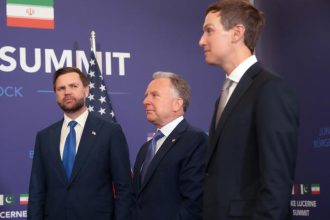
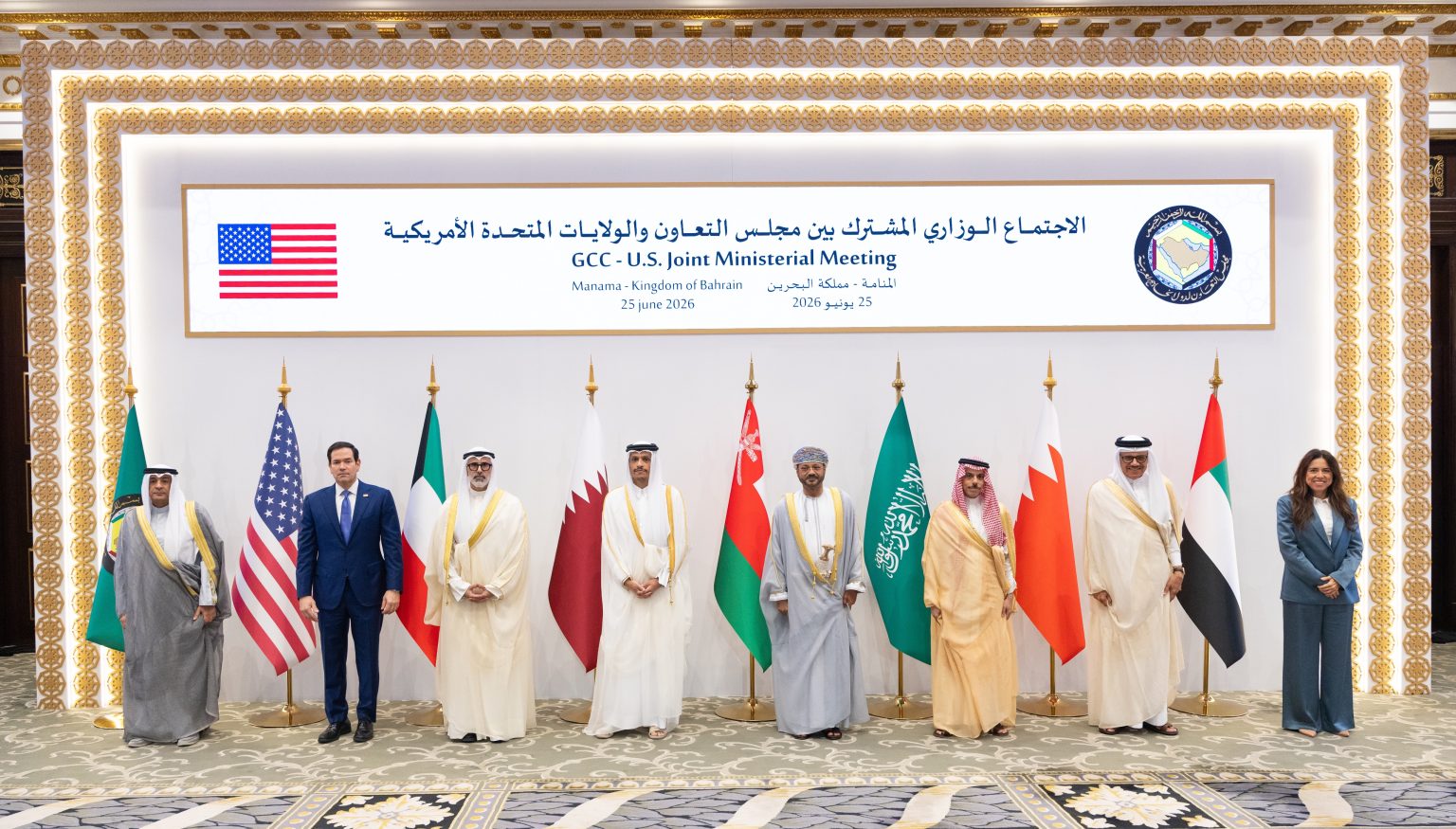
The meeting between US Secretary of State Marco Rubio and the Gulf Cooperation Council (GCC) foreign ministers in Bahrain underscored that the post-war Middle East is entering a new phase. Publicly, Washington and its Arab partners reaffirmed their shared commitment to preventing Iran from acquiring a nuclear weapon, preserving freedom of navigation through the Strait of Hormuz and countering Tehran’s missile programme and regional proxy networks. Yet beneath these familiar talking points lies a more consequential shift: the Gulf states are no longer debating whether relations with Iran can be repaired. They are instead determining the conditions under which coexistence remains economically and strategically sustainable.
This marks a significant evolution in Gulf diplomacy. The period of cautious rapprochement initiated by Saudi Arabia and Iran’s Chinese-brokered diplomatic restoration in 2023 was built on the assumption that dialogue could reduce regional tensions without fundamentally altering Iran’s strategic behaviour. The recent conflict has weakened that assumption. Missile and drone attacks, combined with renewed threats to commercial shipping, have reinforced a perception among Gulf capitals that Tehran continues to view coercion as an integral component of its regional strategy.
Consequently, the GCC is beginning to replace optimism with conditionality.
Rather than pursuing engagement as an end in itself, Gulf governments increasingly view economic cooperation as leverage. Future investment, trade integration and broader regional connectivity are becoming contingent upon verifiable Iranian restraint. The language emerging from recent GCC statements reflects this recalibration. Economic engagement is no longer framed as a confidence-building measure but as a reward for compliance with agreed security commitments.
This represents more than diplomatic semantics. It signals the emergence of a regional security doctrine that combines deterrence with selective engagement.
From détente to conditional coexistence
The Gulf states have reached an uncomfortable but unavoidable conclusion: Iran cannot simply be isolated from the regional system. It controls one side of the Gulf, possesses extensive missile capabilities and maintains networks of allied armed groups stretching from Lebanon and Iraq to Yemen. Geography ensures Tehran will remain a central actor regardless of changes in leadership or fluctuations in international pressure.
At the same time, Gulf leaders have become increasingly unwilling to accept a regional order in which Iran can leverage military escalation while simultaneously benefiting from economic normalization.
The result is a doctrine of conditional coexistence. Dialogue will continue, but only alongside strengthened deterrence, closer security coordination with Washington and stricter expectations regarding Iranian behaviour.
This differs markedly from previous attempts at regional accommodation. Earlier initiatives often treated confidence-building as the starting point for improved relations. The new approach reverses that sequence: confidence must first be earned through demonstrable restraint.
For policymakers in Riyadh, Abu Dhabi, Doha and Manama, the objective is not reconciliation but predictability.
Hormuz remains Tehran’s most powerful bargaining chip
Nothing illustrates Iran’s enduring strategic leverage more clearly than the Strait of Hormuz. Roughly one-fifth of globally traded oil and a significant share of liquefied natural gas exports transit this narrow maritime corridor. For Gulf economies pursuing ambitious diversification programmes, uninterrupted shipping is no longer merely a security issue—it is an economic necessity.
That is precisely why Iranian signalling over Hormuz continues to resonate.
Even if Tehran stops short of attempting a complete closure, periodic threats, harassment of commercial shipping or assertions of greater control impose tangible economic costs. Insurance premiums rise, shipping routes become less predictable and investor confidence weakens. Iran does not need to blockade the Strait permanently to exploit its strategic value; sustained uncertainty alone can generate leverage.
The Gulf states recognise this dynamic. Their insistence on unrestricted freedom of navigation reflects not only adherence to international law but also a determination to prevent maritime security from becoming a recurring instrument of political coercion.
Yet Gulf governments are equally aware that ensuring maritime stability cannot rely indefinitely on external military guarantees. While the United States remains the dominant naval power in the region, Washington’s broader strategic focus has shifted toward competition with China and long-term commitments in the Indo-Pacific. Successive US administrations have encouraged regional partners to assume greater responsibility for their own security.
This expectation is accelerating deeper GCC security coordination.
A more united—but not identical Gulf
The recent crisis has strengthened Gulf unity, but it has not eliminated differences in strategic outlook.
Saudi Arabia remains focused on protecting Vision 2030, whose success depends upon long-term regional stability and sustained foreign investment. The United Arab Emirates continues to prioritise its position as a global commercial and logistics hub, making uninterrupted maritime trade a national strategic imperative. Qatar retains its preference for mediation and maintaining communication channels with all regional actors, while Oman continues to position itself as an indispensable diplomatic intermediary.
These differing priorities do not necessarily weaken the GCC. Instead, they create a division of labour within a broader strategic consensus.
Prime Minister and Minister of Foreign Affairs @MBA_AlThani_ Participates in GCC-US Joint Ministerial Meeting
— Ministry of Foreign Affairs – Qatar (@MofaQatar_EN) June 25, 2026
Manama | June 25, 2026
HE Prime Minister and Minister of Foreign Affairs Sheikh Mohammed bin Abdulrahman bin Jassim Al-Thani participated on Thursday in Manama in the… pic.twitter.com/kxZc105lIw
Collectively, Gulf governments appear increasingly aligned around three principles: preserving close security cooperation with the United States, preventing Iranian military coercion and maintaining diplomatic channels that reduce the risk of uncontrolled escalation.
That balancing act is likely to define Gulf diplomacy over the coming decade.
Washington’s balancing act
For Washington, the challenge has become equally complex.
The framework agreement with Tehran may have reduced the immediate risk of wider conflict, but it has also created expectations among Gulf allies that any future accommodation with Iran must not come at their expense. American officials therefore face the delicate task of reassuring regional partners while preserving diplomatic space with Tehran.
This balancing act extends beyond the nuclear issue. Gulf capitals are increasingly pressing Washington to address Iran’s ballistic missile programme, drone capabilities and support for regional proxy groups as integral components of any lasting security architecture. From their perspective, limiting uranium enrichment alone would leave the principal drivers of regional instability untouched.
The United States therefore confronts a familiar dilemma: how to prevent escalation while avoiding the perception that it is accepting a regional order shaped through Iranian coercion.
The regional order is being rewritten
The broader significance of the current moment lies in the gradual emergence of a more autonomous Gulf foreign policy.
For decades, regional security was largely structured around American military predominance and bilateral defence relationships. Today, Gulf states are becoming more proactive architects of regional diplomacy, pursuing simultaneous partnerships with Washington, China, India and European powers while expanding intra-regional coordination.
This reflects a broader trend toward strategic hedging rather than exclusive alignment.
The Gulf is no longer waiting for outside powers to define its security environment. Instead, it is seeking to shape that environment through a combination of economic leverage, diplomatic engagement and collective deterrence.
Iran, meanwhile, faces its own strategic calculation. Continued reliance on maritime coercion and proxy networks may preserve short-term leverage but risks further delaying the economic reintegration that Tehran urgently requires. Conversely, sustained compliance with future agreements could gradually reopen opportunities for investment and regional commerce. Whether Iran chooses restraint or continued pressure will largely determine the durability of the emerging regional framework.
Policy outlook
Over the next six to twelve months, three developments will determine whether the current framework evolves into lasting stability.
First, the implementation of maritime security arrangements around the Strait of Hormuz will serve as the earliest indicator of Iranian intentions. Any renewed interference with commercial shipping would quickly erode confidence in the broader diplomatic process.
Second, negotiations over Iran’s missile capabilities and support for regional armed groups are likely to become increasingly central. These issues, rather than the nuclear file alone, will shape Gulf perceptions of whether Tehran has fundamentally altered its strategic behaviour.
Third, the cohesion of the GCC itself will be tested. While member states broadly agree on strategic objectives, differences over the pace and scope of future engagement with Iran could re-emerge if diplomatic momentum stalls or new security incidents occur.
The success of the post-war order will therefore depend not on a single agreement but on the ability of regional actors to institutionalise mechanisms that reduce the incentives for coercion while preserving channels for dialogue.
How to make it work
The most consequential outcome of the recent conflict may not be the ceasefire itself but the transformation of Gulf strategic thinking. The era in which engagement with Iran was pursued largely as an act of diplomatic optimism has given way to one of calculated pragmatism. Gulf leaders have accepted that Iran cannot be excluded from the regional order, but neither can it be accommodated without conditions.
This emerging doctrine conditional coexistence backed by deterrence, economic leverage and closer regional coordination reflects a Middle East adapting to a world in which security is increasingly shaped by regional actors rather than external powers alone. Trust has become a scarce commodity. Geography, however, remains immutable. Managing that contradiction, rather than resolving it, is likely to define Gulf diplomacy for years to come.