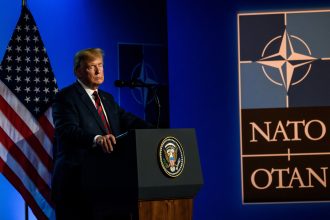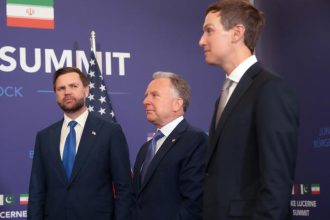



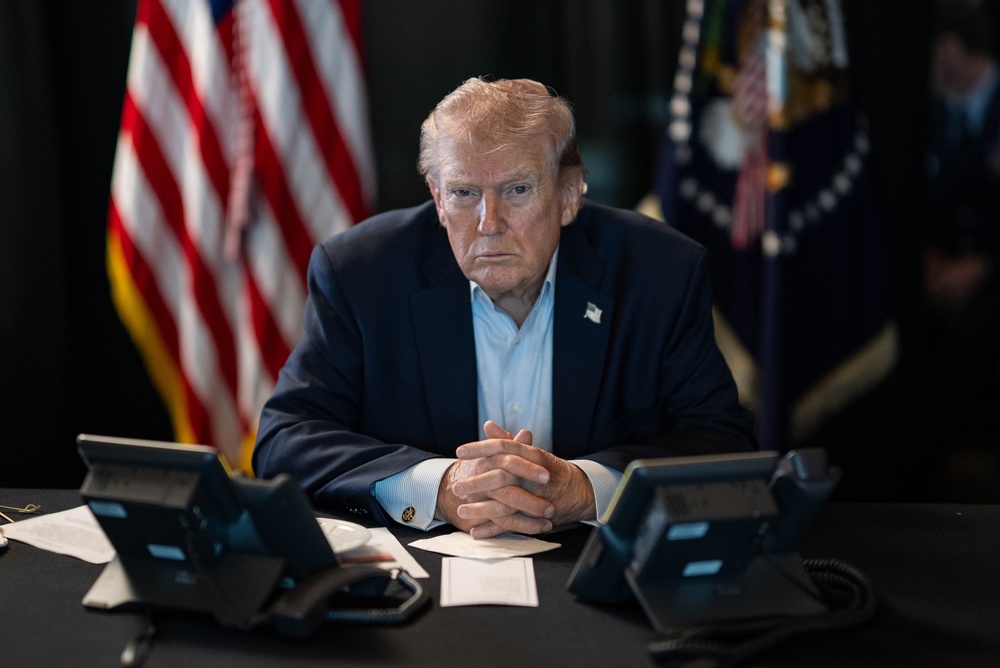


The fragile architecture of Middle Eastern diplomacy, already buckling under the weight of regional instability, appears to have fully collapsed. On the sidelines of the NATO summit in Ankara, U.S. President Donald Trump delivered a blunt assessment of the state of play between Washington and Tehran, declaring the Memorandum of Understanding (MoU) that aimed to end the conflict with Iran effectively “over”
The announcement, delivered with characteristic bluntness, marks a dramatic pivot from previous attempts at de-escalation. Speaking to reporters ahead of meetings with alliance leaders, Trump dismissed the prospect of further diplomatic engagement, signalling a return to a strategy defined by military force rather than negotiation.
“As far as I’m concerned, it’s over,” Trump said when questioned on the status of the accord. “I don’t want to deal with them anymore. They’re scum. They’re sick people”.
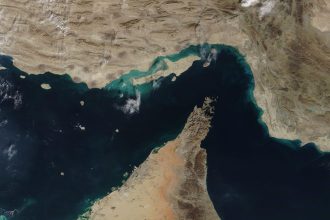
A Cycle of Escalation. The dissolution of the agreement comes following a violent 48-hour period that saw renewed military engagement in the Strait of Hormuz. According to U.S. Central Command, American forces launched a series of “powerful strikes” against Iranian air defence systems, coastal surveillance sites, and missile launch platforms in southern Iran.
These strikes were described as a direct response to Iranian attacks on commercial shipping vessels crewed by civilians, a move the U.S. and its allies deemed an unacceptable provocation.
The collapse of the MoU, which was signed only three weeks ago, highlights the volatility of the current situation.
The accord was intended to act as a ceasefire, a pause in the hostilities that had intensified since the assassination of Iranian Supreme Leader Ali Khamenei at the onset of the current war. However, the ceasefire proved to be more of a tactical pause than a lasting diplomatic breakthrough.
NATO Secretary General Mark Rutte, present in Ankara for the summit, offered strong backing for the U.S. military’s latest intervention.
“When you have a ceasefire and Iran is basically violating the ceasefire, I think it is totally crucial that the U.S. forcefully react,” Rutte told reporters, reinforcing the alliance’s alignment with Washington’s shift in policy
The Rhetoric of “No Return”
Trump’s language during his press conference in Ankara was notably incendiary, reflecting a deep-seated frustration with the Iranian leadership that appears to have reached a breaking point. Beyond labelling them “scum,” the President accused the Iranian regime of harbouring violent intentions toward him personally, claiming to be on an Iranian “assassination list”.
While the President noted that U.S. negotiators were technically free to continue discussions if they saw fit, he made his personal stance clear: he no longer believes diplomacy with the current regime is a viable path. He further alleged that Iran had been responsible for the deaths of 54,000 protesters, a figure provided without corroborating evidence, casting the Iranian leadership as not only an adversary in the geopolitical sense but a moral failing that must be “cut out” like a “cancer”.
Regional Shockwaves
The disintegration of the MoU has sent shockwaves through the Gulf, where nations find themselves caught in the crossfire of escalating U.S.-Iran hostilities. For Arab Gulf states, the news is particularly alarming. Kuwait’s Ministry of Foreign Affairs issued a strong condemnation of Iranian aggression, characterizing Tehran’s behaviour as a systematic undermining of international efforts to de-escalate tensions.
1Dr. Anwar Gargash, a senior diplomatic advisor to the president of the UAE, echoed this sentiment on social media, arguing that the recent attacks in the Strait of Hormuz demonstrate that Iran is fundamentally unable to commit to the requirements of peace. The narrative across the region is shifting from cautious optimism to a grim expectation of protracted conflict.
For observers of the conflict, the Ankara summit serves as a stark reminder of the limitations of recent diplomatic efforts.
The “diplomatic whiplash” described by analysts, where threats of strikes are quickly followed by talk of deals, only to be punctuated by further violence, has left both sides trapped in a cycle of misunderstanding and hostility.
The U.S. military is now seemingly operating under a new mandate: one that prioritises the use of force over the pursuit of an agreement that the President himself has deemed a “waste of time”.
4As the NATO summit concludes, the international community is left to grapple with a new reality. The path to a sustainable ceasefire, once outlined in a memorandum now gathering dust, has been replaced by the roar of jets and the silence of broken diplomatic channels. With both Washington and Tehran seemingly committed to harder lines, the prospect of a peaceful resolution appears more distant than it has been in months.
The question now for policymakers is not how to revive the MoU, but how to manage a confrontation that shows no sign of yielding to diplomacy