

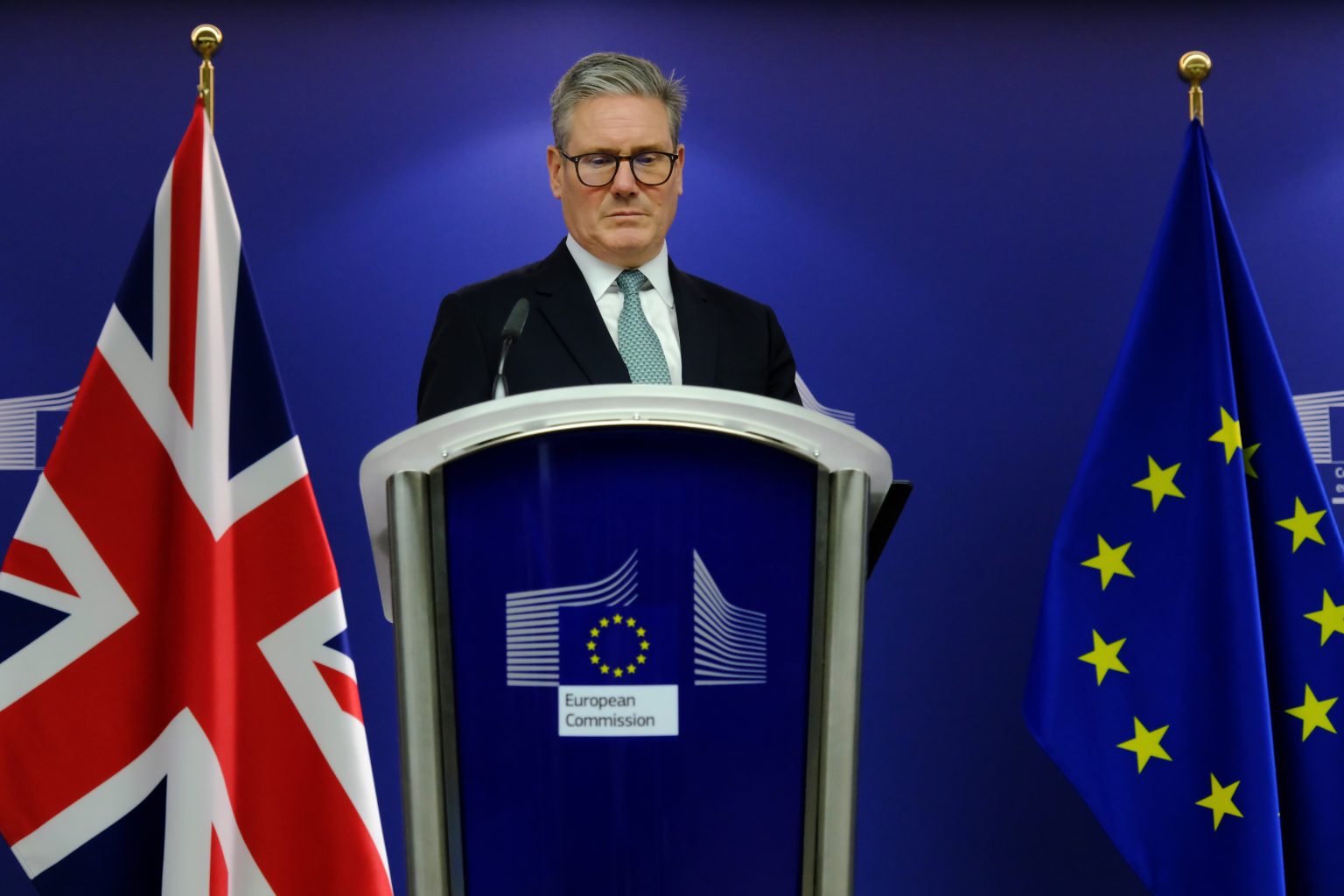

Keir Starmer has barely left office. Reports that he is already considering a bid for the top job at NATO say something important, not just about one man’s ambitions, but about the alliance he wants to lead.
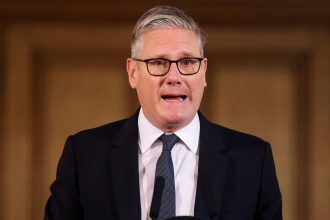
The ink on Keir Starmer’s resignation letter had barely dried when a new story began circulating in London. According to a report in a British Sunday newspaper, the outgoing prime minister is eyeing the role of NATO secretary general when the position is expected to become vacant in 2028. Sources close to Starmer reportedly point to his standing among European leaders, his unusually close relationship with Ukrainian President Volodymyr Zelenskyy and his commitment to collective security as the qualities that could make him a credible candidate. In Westminster, where the wounds of a brutal parliamentary revolt are still fresh and where Andy Burnham is preparing to move into Downing Street, the revelation was greeted with a mixture of surprise and a certain grim logic. Where else does a former British prime minister go when his domestic political career is effectively over?
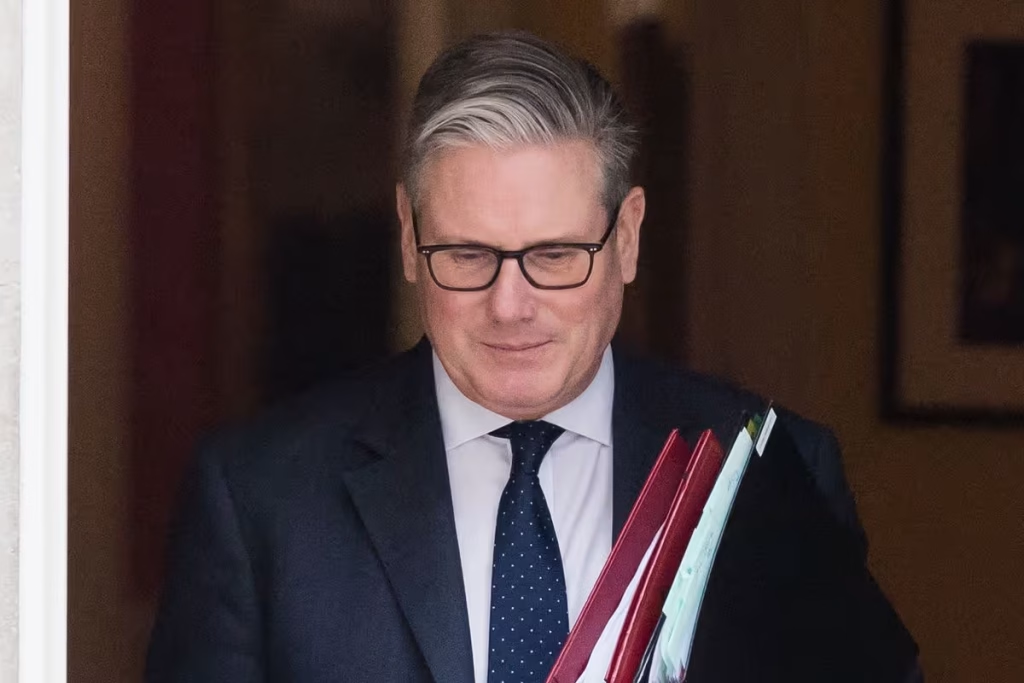
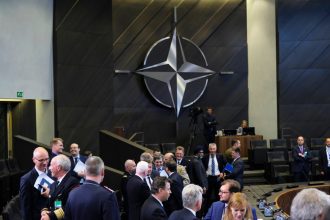
The question of who leads NATO matters enormously and not only to the career prospects of one departing politician. The secretary general of the alliance is the individual who must hold together 32 member states, each with its own political pressures and defence priorities, while managing a relationship with Washington that has become more fraught, more conditional and more unpredictable than at any point in the alliance’s history. The timing of Starmer’s reported interest could not be more pointed. It arrives one week before NATO leaders gather in Ankara for a summit that its current secretary general, Mark Rutte, has described as potentially more important than any in recent memory.
The Summit That Must Deliver
Rutte has spent the weeks before Ankara making one argument with unusual persistence. He told an audience at the Atlantic Council in Washington that the July summit is not about making new commitments, it is about proving that the alliance can keep the ones it has already made. At The Hague last year, all 32 NATO members except Spain agreed to work toward spending five per cent of their gross domestic product on defence and security. They agreed to ramp up defence production. They agreed to sustain support for Ukraine. The Ankara summit, Rutte has been saying, is where words become evidence.
The headline announcement he previewed was striking. Tens of billions of dollars in new defence contracts, memoranda of understanding and letters of intent will be signed at the summit, Rutte said, describing what he called a defence industrial revolution that is beginning to take shape across the alliance. He singled out Turkey, the host nation, as a notable contributor, noting that the country has approximately 3,000 defence companies operating across NATO territory. He praised engineers at Turkey’s largest defence electronics company as part of a broader push to convert allied economic weight into real military capacity. Addressing Russia directly, he said plainly that what Vladimir Putin feared was not the alliance’s promises but its ability to keep them. “Putin is not afraid of commitments. He is afraid of us implementing commitments. And that’s exactly what we are doing, Vladimir.”
The scale of the spending numbers matters beyond the headline figures. NATO members collectively increased defence expenditure by almost 20 per cent last year alone. Allied spending now totals more than 1.5 trillion dollars annually across the 32 members. Every ally has now reached the original two per cent of GDP spending benchmark, a milestone that would have seemed unreachable five years ago. Yet the gap from two per cent to five per cent is vast, and the industrial capacity required to translate that spending into real military hardware, trained soldiers and deployable capabilities requires years of sustained investment before it changes the facts on the ground. Rutte has been explicit that the Ankara summit is the moment to demonstrate that the trajectory is credible, not merely aspirational.
Ukrainian President Zelenskyy will attend, a detail that carries its own symbolism. Ukraine is the country whose soldiers have, for more than four years, been field-testing the military doctrines and technologies that NATO is now scrambling to replicate and scale. Rutte acknowledged this directly, noting that Ukraine continues to lead Russia in drone and counter-drone innovation and in its ability to strike deep into Russian energy infrastructure. The relationship between NATO’s institutional ambitions and Ukraine’s operational realities has become the defining dynamic of the alliance’s current phase.
A Vacancy, a Candidate and a Problem
Into this picture steps Starmer, with his informal expressions of interest and his very formal collection of obstacles. The NATO secretary general is not elected. The position is filled through consensus among member states, meaning that a candidacy lives or dies on the ability to build quiet support across 32 governments, each of which holds an effective veto. Rutte himself, before taking the role last year, spent months in careful diplomatic groundwork, navigating the concerns of allies ranging from Hungary to the United States before the path was clear.
Starmer begins this process from a complicated position. His supporters cite the G7 summit in June as evidence of his standing among European leaders, and his relationship with Zelenskyy is described as genuinely warm, reportedly close enough for accidental calls between the two leaders. But a successful candidacy for the NATO role requires precisely the quality that observers, even sympathetic ones, have identified as his political weakness: the capacity to build consensus through patient, flexible deal-making across a wide range of governments with different priorities. The Observer’s own reporting noted that dealmaking is not considered Starmer’s strong suit.
His relationship with Washington adds a further complication. The NATO secretary general must maintain a workable relationship with the American president, who holds the alliance’s most consequential membership. Trump publicly dismissed Starmer during his tenure and criticised his refusal to back the US-Israeli strikes on Iran, comparing him unfavourably to Winston Churchill. By contrast, Trump has repeatedly praised Rutte, describing him as an effective leader and a friend. The contrast is not irrelevant. Any candidate for the secretary general role who cannot point to a functional relationship with the sitting American president enters the field with a significant handicap.
Starmer would also need sustained backing from the incoming British government. Andy Burnham, preparing to take over in Downing Street, has not publicly committed to supporting a Starmer bid, and the new prime minister’s own foreign policy priorities, including a desire to reset relations with the European Union, may or may not align with an active campaign to install his predecessor in Brussels. The political geometry is delicate.
What the Coming Months Will Reveal
The Ankara summit on 7 and 8 July will generate its own answers to some of the most pressing questions about NATO’s direction. Whether the tens of billions in contracts materialise as described, whether Zelenskyy extracts new commitments on air defence and munitions supply, and whether the five per cent spending trajectory produces visible consensus rather than polite disagreement will all become clearer within days. A summit that Rutte has staked his reputation on describing as a moment of delivery will be judged on whether it actually delivers.
The Starmer story will unfold more slowly. Two years remain before the secretary general role formally opens, assuming Rutte’s term is not extended. In the interim, the candidacy will be tested not by announcements but by relationships quietly cultivated, bilateral conversations held at the margins of multilateral meetings and the accumulation of small gestures of support from governments that will eventually need to reach consensus on a name. Starmer has the profile that the role historically demands, a former head of government with genuine credentials in foreign and security policy. Whether he has the diplomatic temperament, the political backing and, crucially, the American relationship that the role actually requires is a question whose answer has not yet been written. The men and women who will write it are already watching.