


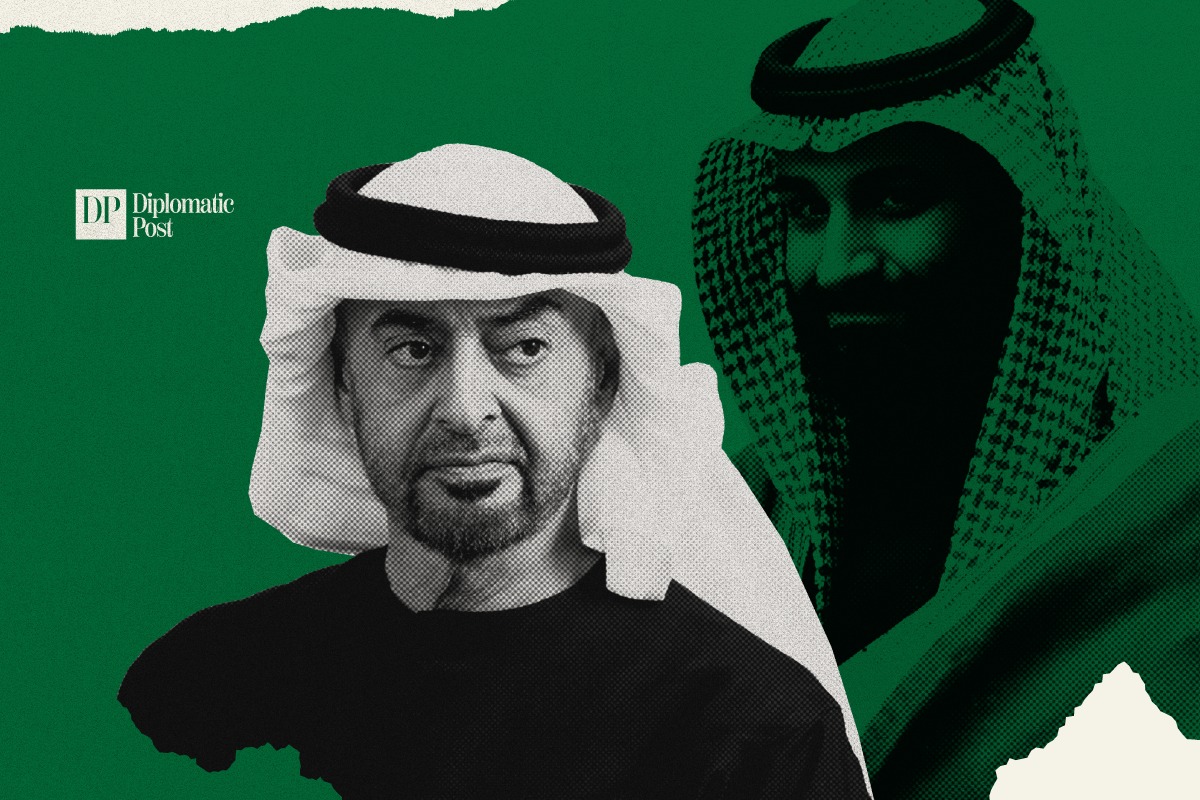
Coordinated messages of Gulf brotherhood cannot hide the imbalance underneath. Riyadh badly misjudged how many rivalries it could sustain at once, and this week’s scramble to patch things up with Abu Dhabi is the proof
Saudi Arabia miscalculated, and this week it is paying for it. Pressed by a war footing against Iran, renewed Houthi threats, and the staggering cost of its own economic ambitions, Riyadh scrambled to repair a rupture with the United Arab Emirates that it had allowed to fester for months, publishing coordinated messages of unity that read less like reconciliation and more like damage control. Senior officials from both countries posted nearly identical statements within an hour of each other, praising “wise leadership” and a shared destiny between the two Gulf monarchies, according to a media report.
When two governments need matching posts to prove their friendship, the performance is usually covering for something. Here, it is covering for a Saudi strategy that overreached badly.
Saudi Minister of Media Salman Al-Dosary and Abdulla bin Mohamed Alhamed, chairman of the UAE National Media Authority, both posted at 7 pm Riyadh time. Alhamed wrote that “Emirati-Saudi relations are an extension of a shared history and deep-rooted fraternal ties.” Al-Dosary used almost the same language. Both urged the media to reflect that friendship rather than undermine it, a request that only makes sense if the media had, in fact, been reflecting something rather less brotherly for months.
Nothing about the posts settled anything real. There was no announcement on Yemen, no shift on oil, no change to how either country runs its own foreign policy. The timing exposes exactly what this is. Riyadh did not arrive at reconciliation because the underlying disputes were resolved. It arrived here because it picked a fight with the UAE at precisely the moment it could least afford one, and has now been forced into an undignified climbdown to fix its own mistake.
A self-inflicted crisis
Saudi Arabia let tension with Abu Dhabi curdle into open confrontation for months, while simultaneously fighting a war footing against Iran, absorbing renewed Houthi threats in Yemen, and pouring enormous sums into Crown Prince Mohammed bin Salman’s Vision 2030. Opening a fifth front, against a fellow Gulf monarchy it desperately needed on its side, was not strategic patience. It was a failure of judgment that Riyadh is now scrambling to reverse before it costs even more.
Riyadh did not suddenly rediscover Gulf brotherhood. It rediscovered, far too late, the limits of fighting too many rivals at once.
Saudi Arabia remains the Gulf’s largest Arab economy and military power, but that scale did not protect it from a basic strategic error, allowing ambition and grievance to pile up across too many fronts simultaneously, until reality forced a retreat.
Yemen is where that error became impossible to hide. Saudi Arabia and the UAE entered that war as partners, but Riyadh let the relationship deteriorate as their goals diverged, Saudi Arabia chasing border security and a political settlement, Abu Dhabi quietly building its own network of southern Yemeni allies and port influence. Rather than manage that divergence carefully, Riyadh let it explode.
It ended in a Saudi airstrike on what Riyadh itself said was a shipment of UAE military equipment headed to the Yemeni faction Abu Dhabi backs, according to the same report. This was not a disagreement between allies. It was Saudi Arabia attacking material belonging to a fellow Gulf monarchy, an act of genuine recklessness given everything else Riyadh already had on its plate, and one that has cost months of diplomatic energy to walk back.
Afterwards, Saudi and Emirati commentators tore into each other publicly, and in March the UAE simply blocked the X accounts of Saudi broadcaster Al-Arabiya, according to the report, a humiliating signal that Abu Dhabi felt no need to tread carefully around its larger neighbour. Abu Dhabi’s local partnerships in southern Yemen gave it influence wildly disproportionate to its size, proof that Saudi wealth and military spending bought Riyadh far less control than it assumed.
A reckoning Riyadh brought on itself
Renewed Houthi pressure on Saudi territory and shipping is what finally forced Riyadh to confront its own overreach. The Houthis did not deliberately engineer this reconciliation, but their renewed threat exposed, brutally, just how badly Saudi Arabia had overextended itself by keeping a needless second Gulf feud alive on top of a war with Iran.
Another serious flare-up in Yemen threatens Saudi oil infrastructure and Red Sea shipping, the very stability Vision 2030 depends on. Faced with that risk, continuing to bleed energy into a rivalry with Abu Dhabi became indefensible. This was not strategic recalculation. It was Riyadh finally admitting it could not afford the mess it had made.
And the mess is entirely one-sided. Did the UAE abandon its independent foreign policy, retreat from Yemen, or distance itself from Israel to earn this reconciliation? No. The smaller state gave up nothing. The larger state came crawling back to the table, having apparently realised its confrontational posture toward Abu Dhabi was a strategic blunder it could no longer sustain.
One prominent Gulf commentator did not mince words, calling the reconciliation “a huge win that cannot be overstated” for the UAE, and “a humiliating climbdown for Riyadh,” arguing that the UAE’s relationship with Israel let it “resist (and even bully) the larger neighbour.” That is one analyst’s blunt reading rather than a confirmed fact, and Saudi officials tellingly refused to answer questions about what actually prompted the posts, according to the same report. But the visible facts support the harsh version. Abu Dhabi conceded nothing publicly. Riyadh blinked first.
The UAE’s cooperation with Israel across technology, intelligence and investment gave Abu Dhabi a layer of protection Saudi Arabia clearly failed to account for when it picked this fight. Israel did not build Emirati power, but the relationship let the UAE simply wait Riyadh out, absorbing pressure without conceding an inch, while Saudi Arabia’s own position steadily weakened.
Neither Qatar nor Türkiye lifted a finger to help Riyadh during the standoff, and their silence now looks less like neutrality and more like a verdict. Both countries have their own history of friction with Saudi Arabia and clearly judged, correctly, that Riyadh could not actually force the UAE to back down. Watching Saudi Arabia flail against a smaller neighbour and lose was, for Doha and Ankara, simply confirmation of something they already suspected.
An expensive lesson in overreach
This was never a purely political dispute, which is exactly why Riyadh’s handling of it was so costly. Its own push to become the Gulf’s leading financial, aviation and investment hub directly threatens Dubai and Abu Dhabi’s dominance, a rivalry Saudi Arabia chose to inflame with military confrontation rather than manage through competition. The UAE’s exit from OPEC in May, the oil group Riyadh nominally leads, was one more consequence of a strategy that alienated a partner Saudi Arabia needed, according to the report.
One Gulf policy expert tried to downplay the whole affair as “a storm in a cup,” insisting “what we have in common far outweighs our divergences,” according to the report. That framing is generous to the point of being misleading. A storm in a cup does not usually involve one government bombing another’s weapons shipment. Even accepting that cooperation remains sensible, the sequence here is damning on its own terms: Saudi Arabia opened an unnecessary front against a partner while already overstretched elsewhere, then was forced into a public, one-sided reconciliation the moment the Houthi threat made its own recklessness too expensive to continue.
Saudi Arabia remains the Gulf’s largest power on paper. But this episode is a genuine embarrassment, evidence that Riyadh’s ambitions have outrun its judgment, and that Mohammed bin Salman picked a fight he could not win, against a neighbour who did not need to give up anything to make him regret it.