




A Widening Religious Split Over Israel Just Reached Capitol Hill’s Front Door
Senate staffers in at least one office this week got an unusual heads-up before the lobbyists arrived. You may get a visit later on from people from Christians United for Israel, a pastor with the United Church of Christ told them, before handing over a flyer accusing the group of pushing an agenda that would deepen American military entanglement in the Middle East. The moment captured a fight that has been building for years and finally reached the Capitol’s hallways in the open this week.
A marathon lobbying day meets an organised counter push.
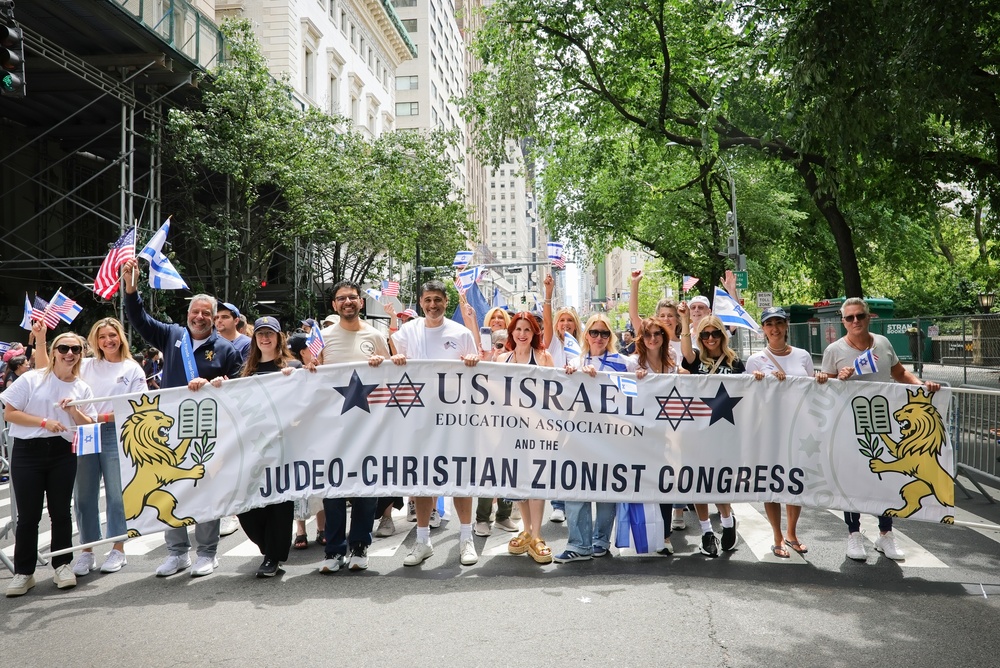
Christians United for Israel, known widely by its acronym CUFI, sends hundreds of activists to Washington each year for a day of concentrated lobbying, and reports describe it as one of the largest annual displays of pro-Israel advocacy in the country. This year, staffers in numerous offices were pre-warned by a rival coalition, Interfaith Action for Palestine, a group representing an estimated one million Americans across multiple faith traditions. Members of that group, including the same pastor and a progressive rabbi working alongside her, moved office to office ahead of CUFI’s activists, delivering their own message about what they see as the human cost of unconditional support for Israeli government policy.
CUFI is not a marginal player. The group claims a self-declared membership of over ten million people and has drawn a long list of prominent conservative speakers to its annual conference since relaunching in 2006, including sitting members of Congress. This year’s gathering featured conservative radio hosts, Israel’s ambassador to Washington, and a video address from Prime Minister Benjamin Netanyahu himself. Reports tracking the group’s influence note that evangelical Zionist activism, CUFI’s among them, has been credited with helping push the Trump administration toward military action against Iran and toward relocating the American embassy in Israel to Jerusalem.
The pastor delivering warnings to Senate staffers this week did not arrive at her position from the outside. She grew up in an evangelical Zionist household and attended a church that donated regularly to CUFI, and has said she was taught as a child that a true follower of Christ could not fail to support the modern state of Israel, and that Israel could do no wrong. After leaving evangelicalism for a mainline Protestant church, she came to see criticism of the current Israeli government as, in her words, a more faithful reading of scripture, framing her current advocacy around the idea that loving one’s neighbour is incompatible with killing them.
The numbers behind the argument
The generational divide she represents shows up clearly in recent polling. A University of Maryland survey from last year found just twenty four percent of evangelicals under thirty five said they favoured Israel over the Palestinians, compared with fifty one percent of older evangelicals.
Separate polling this spring found only thirty five percent of American Catholics and thirty three percent of Black Protestants held a favourable view of Israel, and a Pew survey from April found sixty per cent of American adults overall now hold an unfavourable view, with unfavourable sentiment even rising among white evangelicals themselves, up to thirty two percent this year from twenty six percent last year.
Separate research has found that only thirty seven percent of American Jews currently identify as Zionist.
Pastor John Hagee, who founded and still leads CUFI, has remained a fixture of the Christian right despite past controversies, including a since-recanted claim that the Holocaust was part of a divine plan to return Jews to Israel. He continues to argue publicly that American solidarity with Israel has never been more important, and that Israel’s enemies are America’s enemies, framing the position as a matter of biblical obligation rather than ordinary foreign policy.
This year’s confrontation was notably calmer than in previous rounds, when Interfaith Action for Palestine activists verbally clashed with CUFI’s delegation and even physically blocked buses carrying CUFI members to the Capitol. Congress happened to be in recess during this year’s CUFI lobbying push, leaving the halls largely empty of the members these activists had hoped to reach directly.
Where this fight may be headed next.
Loud protest is no longer the only tool available to pro-Palestine advocates, and organisers on that side increasingly describe finding allies already inside government rather than only outside its doors. One of the activists working alongside the pastor this week served on the transition team of a New York City mayor who ran openly on a pro-Palestine platform and maintains close ties to several progressive candidates who won congressional primaries in New York this year on similar messaging. Organisers on that side of the debate say they expect a meaningfully different Congress if Democrats secure a narrow House majority later this year, giving a growing bloc of progressive lawmakers real leverage on the issue for the first time.
Strip away the competing predictions about where American opinion is headed, and a few facts are already settled. Polling from multiple independent research organisations, not just one, shows measurable and growing generational splits over Israel among the very religious communities CUFI has depended on for decades. CUFI itself remains large, well-funded, and capable of drawing sitting senators, ambassadors, and a foreign prime minister to its stage. Both of those things are true at once, and this week’s duelling lobbying campaign on Capitol Hill was simply the latest place where that tension played out in public.