


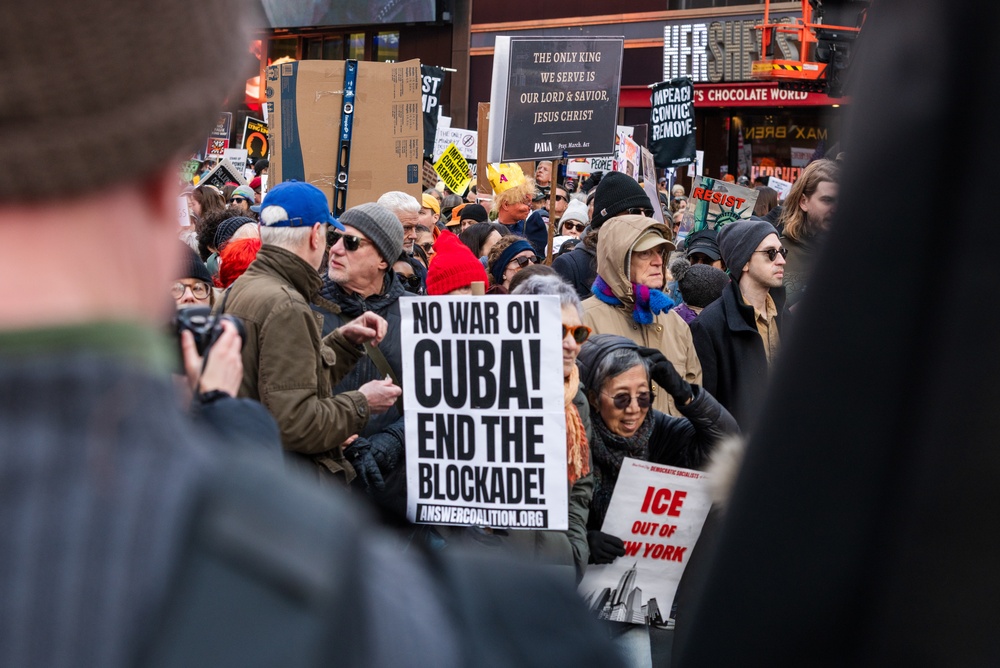


Washington got what it wanted in Cuba. Then it kept squeezing. Now it risks turning a historic opening into a generation of chaos, mass emigration and strategic vulnerability on its own doorstep.
The biggest strategic shift in Cuba since the revolution did not come from a change of leadership or a popular uprising. It came from a government that had spent more than six decades resisting market economics, deciding that its economic model could no longer survive unchanged.
On 18 June, Cuba’s National Assembly approved around 175 reforms that would have been politically unthinkable only a few years ago. Private banks were legalised for the first time since 1959. Foreign and domestic private capital was allowed into state-owned enterprises and the property market.
Cubans living abroad gained the right to invest in the island, while most state price controls were abolished. It was not a retreat from socialism, but it was the most significant economic liberalisation since Fidel Castro came to power.
The irony is that these reforms arrived at the precise moment Washington appeared closest to achieving what generations of American policymakers had sought. Years of sanctions, followed by an aggressive campaign of maximum economic pressure in 2026, had pushed Cuba into its deepest economic crisis in decades.
Faced with collapsing fuel supplies, chronic shortages, rising emigration and mounting public frustration, Havana accepted reforms that previous leaders had repeatedly rejected. Yet instead of treating this as evidence that pressure had produced results, the United States responded by imposing another round of sanctions, targeting five Cuban entities, including the financial institution through which much of the island’s foreign business is conducted.
That decision exposes a contradiction that has long haunted American policy towards Cuba. If sanctions exist to change behaviour, then there must come a point when changed behaviour is met with a different response. Instead, Washington appears to have entered a cycle in which every concession is answered with additional punishment.
The very reforms that could reduce Cuba’s dependence on the state, attract foreign investment, and gradually reshape the country’s economy now face new barriers created by the same policy that helped force them into existence.
Washington’s pressure campaign may therefore have reached its moment of greatest success just as it risks becoming self-defeating. The challenge is no longer persuading Havana to reform. It is deciding whether the objective was to encourage change or simply to continue applying pressure regardless of the outcome.
That distinction will determine whether Cuba’s unprecedented economic opening becomes the beginning of a new chapter or another missed opportunity in one of the world’s longest-running geopolitical confrontations.
A Humanitarian Crisis That America Owns
The human cost of the fuel blockade is not in dispute. The United Nations High Commissioner for Human Rights, Volker Türk, has stated directly and publicly that the Trump administration bears responsibility for what he described as a humanitarian emergency.
His office reported that the survival rate for children with cancer in Cuba has fallen from approximately 85 per cent to 65 per cent since the United States imposed fuel restrictions in January.
Cuba suspended refuelling for airliners at its airports, including José Martí International Airport in Havana, after exhausting fuel reserves. Rolling blackouts of up to 30 hours have become a feature of daily life across the country. Hospitals cannot maintain consistent electricity for intensive care units.
Water pumping systems have failed across entire districts. In eastern Cuba, which is significantly poorer than the capital, journalists who have reported from the region describe the situation as harrowing.
Only one Russian oil tanker carrying approximately 700,000 barrels has reached Cuba in the months since the blockade took effect. China’s response has included 80 million dollars in financial assistance and 60,000 tonnes of rice.
Canada has allocated over 13 million Canadian dollars to food and nutrition programmes. Brazil, Mexico and Chile have condemned the blockade. The UN Secretary-General António Guterres has stated that the humanitarian situation could worsen or collapse entirely without oil.
Thousands of Italian medical professionals, the International Association of Democratic Lawyers and the UN High Commissioner have all called for the sanctions to be lifted. The chorus of international condemnation is nearly universal. Washington’s position has become almost entirely isolated.
The geopolitical logic that the Trump administration offers in justification is set out in the executive order issued on 29 January 2026. Cuba hosts Russia’s largest overseas signals intelligence facility. It has deepened defence and intelligence cooperation with China.
It has assisted American adversaries in the Western Hemisphere, including Venezuela and Nicaragua. These are legitimate strategic concerns. What they do not explain, and what the administration has not explained, is how starving Cuban children of cancer treatment addresses any of them.
The Russian intelligence facility is not being dismantled by the fuel blockade. China’s cooperation with Cuba is not being reduced. If anything, both Russia and China are presented by the crisis with an opportunity that a wealthier Cuba at peace with its geography could not so easily offer them.
When Pressure Eats Its Own Results
The reforms Cuba passed on 18 June were extracted by pressure, and much of Washington’s calculation has proved correct. Sixty-five years of embargo did not produce them. Six months of fuel blockade did. But the same pressure that extracted the reforms is now destroying the infrastructure, the human capital and the economic confidence on which any reform could actually build.
Private banks cannot function in an economy with no fuel. Real estate markets cannot attract foreign investment from a country that is simultaneously being sanctioned by the financial system. Visa and Mastercard have been warned off the island.
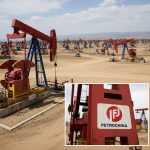
The state oil company, Union Cuba-Petroleo, was sanctioned directly this month. The bank handling most foreign business was sanctioned. Every mechanism that would allow Cuba’s economic opening to generate actual economic activity has been targeted by the same administration that demanded the opening.
Analysts who study Cuba’s political economy have identified the fundamental trap this creates. When a government makes painful ideological concessions and then watches those concessions produce nothing because the external pressure continues regardless, the domestic legitimacy of the concession evaporates.
The argument that reform brings relief is destroyed by the evidence that reform brings more sanctions. Whatever political space existed within the Cuban leadership for those willing to accept liberalisation is narrowed by every fresh executive order. The more Washington tightens after Cuba bends, the stronger the position of those inside the system who argued that bending was pointless.
The emigration dimension compounds this logic. Cuba is currently haemorrhaging population at a rate not seen since the Special Period that followed the Soviet collapse. Since 2022, more than 700,000 Cubans have left the country, many crossing through Central America and Mexico to reach the United States, where most have eventually been turned away under the current administration’s immigration policy. The fuel crisis is accelerating departures.
The people most likely to leave under such conditions are precisely the educated professionals, medical workers, engineers and entrepreneurs who would be the human capital base on which any economic transition depends. Washington is simultaneously destroying Cuba’s capacity to reform and driving away the people who would carry out the reform it claims to want.
What the Strategy Reveals
The question that Washington’s Cuba policy forces into the open is whether the stated objective of democratic transition is the real objective at all. The reforms of June 2026 were the most significant opening in Cuban history. They were met with more pressure.
The survival rates of children with cancer have collapsed. They have produced more sanctions. A UN High Commissioner has named the Trump administration directly responsible for a humanitarian emergency. The administration has responded with additional executive orders.
One explanation is that this is simply maximalist pressure applied without strategic discipline, a sanctions regime that has acquired its own institutional momentum and cannot be redirected even when it begins undermining its own goals.
Another is that the real goal is not reform but collapse, the deliberate destruction of the Cuban state’s capacity to function until it either falls or produces a successor government so weakened and dependent that it can be shaped entirely from Washington. President Trump told journalists in the Oval Office that he thought a diplomatic deal with Cuba was possible and that he was very fond of Cuban Americans. Days later, his administration sanctioned the Cuban oil company.
The gap between the words and the actions reflects either a policy that is genuinely incoherent or one whose coherence is simply not the coherence it publicly claims. Either way, the island is starving, the reforms that were extracted at enormous human cost are being strangled before they can produce anything, and the strategic environment on America’s doorstep is becoming more unstable, not less, with every tightening of the screws.