




As the United States intensifies pressure on Cuba, the real contest may be less about regime change than about strategic competition with China in the Western Hemisphere.
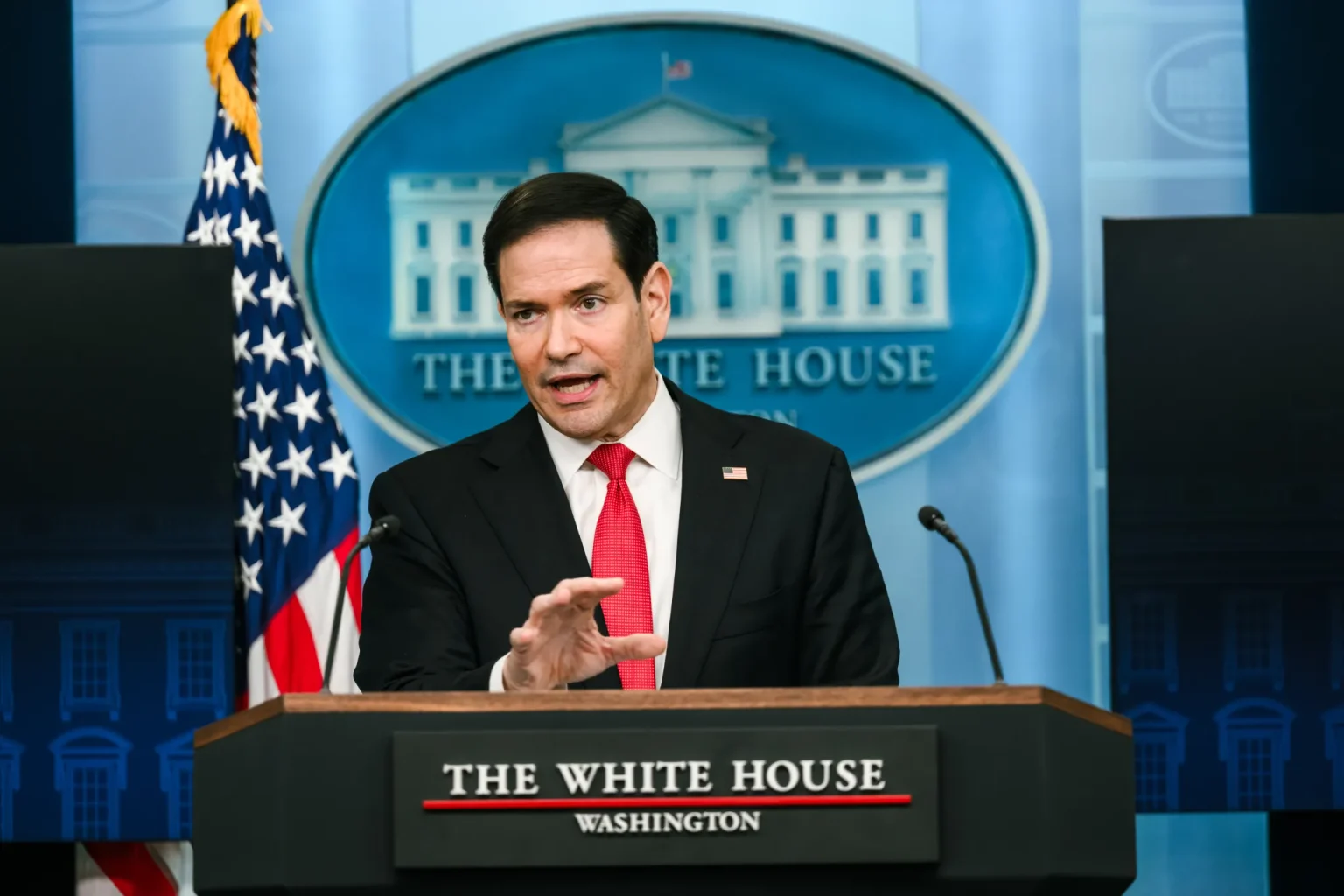
The dust has barely settled over the United States’ confrontation with Iran, yet Washington’s foreign policy machinery already appears to be redirecting its attention closer to home. As the Middle East crisis recedes, Cuba maby is once again emerging as a focal point of the Trump administration’s campaign of economic and diplomatic pressure, with Secretary of State Marco Rubio spearheading a renewed strategy of maximum sanctions.
The latest measures targeting Cuba’s state-owned energy giant CUPET signal more than another chapter in the decades-long embargo. They suggest that the White House may be seeking a new geopolitical battleground in the Western Hemisphere, one where economic coercion, energy security, and ideological confrontation converge. Whether this represents a calculated effort to accelerate political change in Havana or simply the continuation of a long-standing policy of isolation, the escalation raises broader questions about the future of U.S. influence in Latin America and the risks of opening another front in an already turbulent global order.
The central question is no longer whether Cuba can be economically isolated. It is whether Washington believes that reducing external influence particularly Chinese influence has become a national security priority comparable to other theatres of global competition.
The China Factor Is Reshaping American Calculations
In the meantime the geopolitical environment surrounding Cuba has changed dramatically over the past decade.
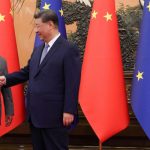
China has steadily expanded its economic and technological footprint across Latin America through infrastructure financing, telecommunications networks, logistics investments and strategic port development. While Beijing officially characterizes these activities as commercial cooperation, many American officials increasingly interpret them as elements of dual-use infrastructure capable of supporting intelligence collection and future military logistics.
Within that context, Cuba occupies a unique geographic position.
Situated less than 150 kilometers from Florida, the island offers strategic proximity unmatched elsewhere in the region. Any expansion of Chinese technological infrastructure or intelligence capabilities there inevitably attracts close scrutiny from Washington’s national security establishment.
Consequently, U.S. policy toward Havana increasingly intersects with the broader strategy of limiting Chinese strategic penetration throughout the Americas.
This represents an important evolution. During the Cold War, Cuba symbolized Soviet influence in America’s backyard. Today, policymakers increasingly discuss the island within the framework of twenty-first century technological competition, supply chains, cyber infrastructure, and intelligence networks rather than ideological confrontation.
Pressure Without Intervention
Despite increasingly forceful rhetoric from some political figures, the likelihood of direct American military action against Cuba remains limited.
The United States faces simultaneous strategic demands across multiple theatres, including deterrence in the Indo-Pacific, continued commitments in Europe, and instability across the Middle East. Military planners are unlikely to favor opening another operational front that would consume resources while offering uncertain strategic returns.
Instead, Washington appears more likely to rely upon a combination of financial sanctions, diplomatic isolation, legal measures, intelligence operations, and targeted economic pressure designed to gradually alter incentives within Cuba’s political and military establishment.
Such an approach reflects a broader evolution in American statecraft. Rather than pursuing outright regime change through military means, successive administrations have increasingly favored coercive diplomacy that combines economic restrictions with selective engagement and humanitarian exceptions.
This strategy seeks to exploit divisions within governing elites while avoiding the political and financial costs associated with direct intervention.
The White House’s Cuba Strategy as a Tool of Electoral Mobilization
No discussion of American Cuba policy can ignore domestic electoral considerations.
Florida remains one of the country’s most politically influential swing states, while Cuban-American communities continue to exercise disproportionate influence over Republican foreign policy debates concerning Havana.
Support for a hard line toward the Cuban government has long served as both a foreign policy position and an electoral signal aimed at a highly engaged constituency. Political symbolism therefore often overlaps with strategic calculation.
Yet domestic politics cuts both ways.
Polling consistently shows that American voters prioritize inflation, employment, healthcare and economic stability above foreign policy crises. While Cuba carries significant emotional resonance within parts of the Cuban-American diaspora, it occupies a relatively limited space in broader national political priorities.
This creates a delicate balancing act for any administration seeking to demonstrate toughness abroad without becoming entangled in another prolonged international confrontation.
The Church and Civil Society
One notable feature of recent American messaging has been the emphasis on humanitarian assistance delivered independently from state institutions.
Should such an approach expand, it would reflect recognition that independent civil society actors—including religious institutions—remain among the few organizations capable of maintaining public legitimacy outside formal government structures.
Supporting humanitarian channels rather than state mechanisms would allow Washington to distinguish between pressure on the government and assistance to ordinary Cubans suffering from prolonged economic hardship.
Such a distinction carries diplomatic significance, helping counter longstanding criticism that sanctions primarily harm civilian populations rather than governing elites.
Regional Implications
A more assertive U.S. approach toward Cuba would reverberate across Latin America.
Governments throughout the region remain deeply skeptical of policies perceived as external intervention, while simultaneously expressing concern about expanding Chinese influence over strategic infrastructure.
Many states would prefer avoiding a binary choice between Washington and Beijing, instead pursuing diversified partnerships that maximize economic opportunity while preserving strategic autonomy.
An intensified confrontation over Cuba therefore risks reinforcing perceptions that Latin America is once again becoming an arena for great power rivalry rather than an independent geopolitical actor.
That dynamic could complicate U.S. efforts to rebuild partnerships throughout the hemisphere precisely when competition with China is encouraging Washington to deepen regional engagement.
The Strategic Outlook
The next twelve months are likely to determine whether Cuba becomes another front in global strategic competition or remains primarily a bilateral diplomatic challenge.
Several indicators deserve close monitoring: changes in Chinese commercial activity on the island, adjustments in American sanctions policy, diplomatic engagement through regional organizations, migration pressures, and the internal evolution of Cuba’s economic model.
Rather than dramatic confrontation, the more probable trajectory is one of sustained strategic pressure accompanied by selective humanitarian engagement and intensified geopolitical competition beneath the surface.
The objective may be less the immediate transformation of Cuba’s political system than the gradual reduction of external strategic influence that Washington considers incompatible with its security interests.
The Bigger Picture
Cuba’s renewed prominence illustrates a larger shift in international politics. As rivalry between the United States and China expands beyond trade disputes and naval deployments into technology, infrastructure and regional influence, seemingly local disputes increasingly acquire global significance.
The Caribbean is no longer simply a historical theatre of Cold War competition. It is becoming part of a wider contest over strategic geography, technological networks and political alignment.
For policymakers in Washington, Havana represents more than a longstanding adversary. It has become another measure of whether the United States can preserve strategic primacy in its own neighborhood while managing intensifying competition across the international system.