




The alliance left Turkey talking about tanks and money. Its own backyard got barely a mention.
Leaders of the North Atlantic Treaty Organisation spent two days in Ankara, Türkiye, this month, adding up numbers. Billions in new weapons deals. Trillions have been spent since the last decade began. A five per cent spending target was repeated so often it started to sound like a chant. What the summit did not spend much time on was the harder question sitting quietly at the edges of the room: what NATO actually looks like once the applause fades.
The gathering on July 7 and 8 produced a formal declaration, a defence industry forum, and a long list of procurement pledges worth more than fifty billion euros. Media reports confirm European members and Canada have added over one hundred thirty-nine billion dollars to core defence budgets since the 2025 summit in The Hague. That is real money and real steel. But money was never the part of NATO that was in doubt this year. What was missing from Ankara was a straight answer on cohesion, on who the alliance actually protects, and on what happens to the parts of Europe that are not in the room.
Türkiye got the stage, and the Balkans got a seat near the exit door
Ankara hosting its second NATO summit in twenty-two years was not an accident. Türkiye fields the alliance’s second-largest army and sits at the crossroads of the Black Sea, the eastern Mediterranean, and the Middle East. Media commentary from regional analysts points out that Ankara used the summit to remind allies it is too useful to sideline, even as older disputes over its ties with Moscow, its friction with Greece and Cyprus, and its habit of trading its veto for concessions remain unresolved.
That regional framing came at a cost. The Western Balkans, a region NATO still runs a mission in Kosovo, barely made the agenda. Analysts speaking to regional outlets noted Kosovo was not invited this year at all, a reversal from 2024 when its president attended the closing session. Some opposition voices in Pristina described it plainly as a snub. For a region that still treats NATO membership as its clearest path to security, watching the alliance debate five per cent spending targets while its own accession file gathers dust sent an uncomfortable signal.
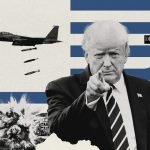
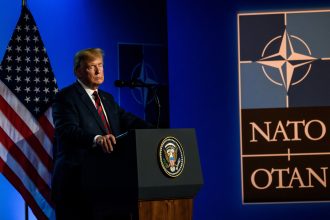
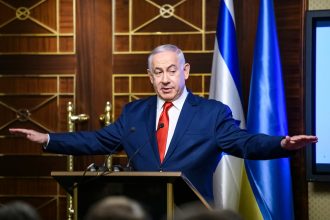
President Trump told reporters the summit showed tremendous unity and later called it tremendously successful, according to media coverage of his closing remarks. But the same coverage recorded him singling out Spain by name as a poor partner inside the alliance, a reminder that the public handshake photo rarely tells the full story. Analysts cited by international broadcasters described the underlying mood as fragile, pointing to unresolved arguments over burden sharing, over how firmly the alliance would actually honour Article 5 if tested, and over Washington’s own uncertain long-term posture in Europe, including a planned drawdown of forces from Germany that has unsettled several capitals.
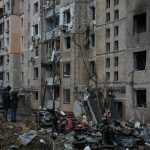
Congressional research circulated ahead of the summit flagged the same tension well before the leaders landed. Reports noted concern among some allied officials that recent American military action against Iran could strain weapons stockpiles and delay support meant for Ukraine, at the exact moment Kyiv’s own missile defence shortfalls are becoming harder to hide from Russian strikes on its cities.
Press freedom took a hit before the first delegate arrived.
Away from the podiums, the run-up to Ankara was not gentle. Human rights organisations and local monitors reported more than two hundred people detained in the two weeks before the summit, among them activists, lawyers, and journalists, as authorities banned demonstrations across the province. Independent monitoring groups also flagged that host nation officials had a direct hand in deciding which journalists received accreditation to cover an event billed as a defence of democratic values. That contradiction, a summit about collective security held under a blanket protest ban, was largely absent from the official communique.
Ukraine got promises. It did not get certain.
NATO reaffirmed a pledge of roughly seventy billion euros in military support for Ukraine through 2026, and Secretary General Mark Rutte has spoken of wanting the alliance to become what he calls NATO 3.0, a version less dependent on Washington but still anchored to it. Regional experts caution that the war shows no sign of ending soon, with Moscow’s offensive stalled but its strikes on Ukrainian cities intensifying even as Kyiv presses drone campaigns deeper into Russian territory. What Ankara did not deliver was a long-term security guarantee framework that would outlive the current political mood in any single capital, something several European officials had quietly hoped to see sketched out.
What the summit actually confirmed.
Strip away the pageantry, and one strategic reality holds. NATO members collectively agreed, on paper, to keep increasing defence spending toward the five per cent target set in the Hague, and they reaffirmed Article 5 as the alliance’s binding commitment in the formal Ankara declaration. That is the confirmed outcome. Everything else, from Türkiye’s regional ambitions to the Balkans’ place in line with Washington’s staying power, remains an open argument the alliance chose to postpone rather than settle.