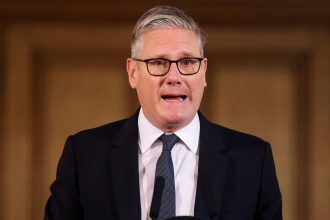





Keir Starmer’s resignation has put Britain on course for its seventh prime minister in a decade. From Brexit and party rebellions to economic turmoil and shifting voter loyalties, here’s how the UK entered an era of unprecedented political instability and leadership turnover.
With Prime Minister Keir Starmer announcing his resignation after just two years in office, the United Kingdom is once again preparing for a change at the top of government its latest in a pattern of accelerating political turnover that has become a defining feature of post-referendum Britain. Since the Brexit vote in 2016, the country is on track to have seven prime ministers, a rate of rotation that would have once been unthinkable in a political system long associated with stability and institutional continuity.
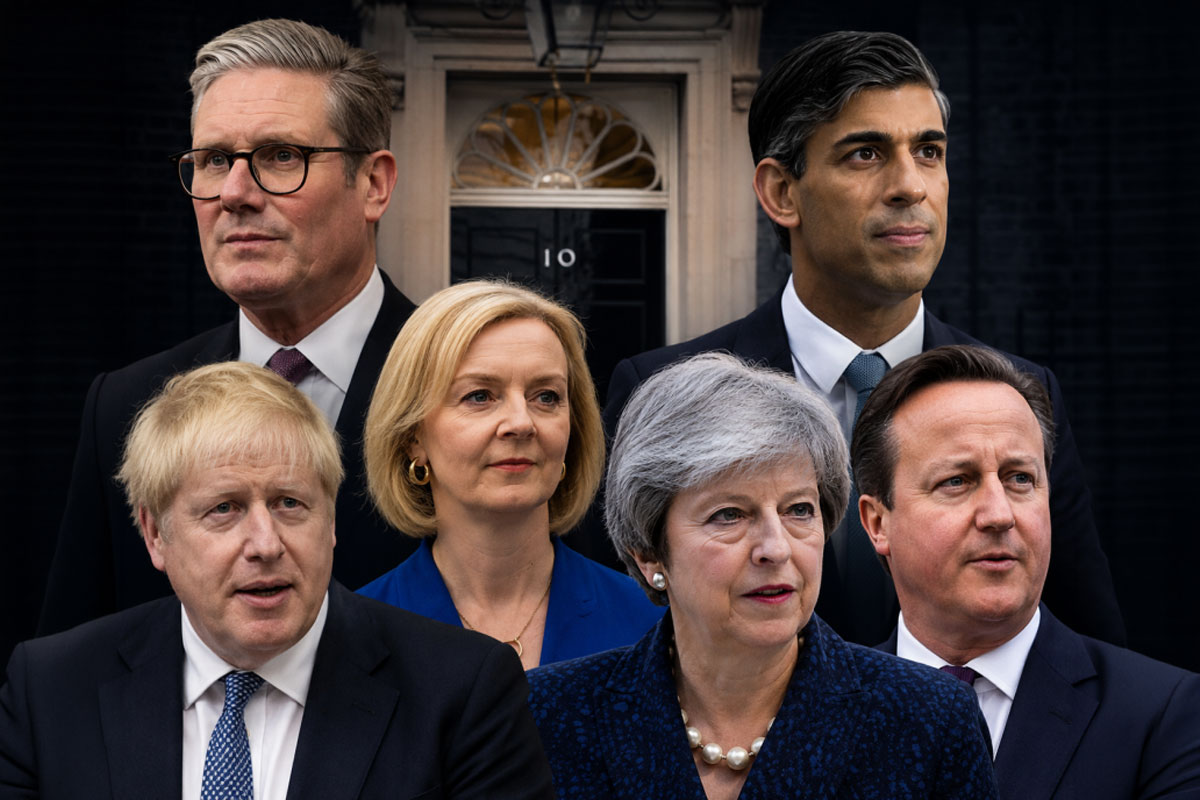
The resignation also places Starmer among a growing list of short-lived occupants of 10 Downing Street, including Rishi Sunak, Liz Truss, Boris Johnson, and Theresa May, each of whom grappled with overlapping crises of weak productivity, strained public finances, and persistent voter dissatisfaction over living standards. Beneath the leadership churn lies a more durable problem: an economy that has struggled to generate meaningful growth in real incomes despite successive governments prioritising the issue.
For policymakers and investors, the significance is less the identity of the next prime minister than the persistence of the conditions that have made political survival increasingly difficult. Britain’s instability is no longer episodic; it is becoming systemic.
A political system under economic strain
The rapid turnover in British leadership reflects more than party politics or electoral volatility. It signals a structural weakening of the link between government performance and voter patience in the context of prolonged economic stagnation. Real wages have barely moved in over a decade, while inflationary shocks have repeatedly eroded household purchasing power. Even under recent administrations, average inflation-adjusted weekly earnings have risen only marginally, reinforcing a widespread perception that economic conditions are not improving in any meaningful way.
This is not simply cyclical underperformance. It reflects deeper constraints on productivity growth, investment capacity, and fiscal flexibility. Successive governments have inherited high debt burdens and limited room for manoeuvre, narrowing the space for expansionary fiscal policy or large-scale structural reform. The result is a political environment in which governments are judged not on long-term reform trajectories, but on immediate improvements in living standards that are increasingly difficult to deliver.
From austerity to stagnation
The current malaise is rooted in a longer policy arc that began in the aftermath of the 2008 financial crisis and was compounded by Brexit, the pandemic, and the energy shock triggered by war in Ukraine. Each of these events placed pressure on public finances and constrained growth, but their cumulative effect has been more significant: a shift from a low-growth economy to one where stagnation is now widely perceived as the baseline.
Even when governments have articulated coherent growth strategies—whether through infrastructure investment, housing expansion, or industrial policy—the implementation gap has remained persistent. Delivery failures, regulatory bottlenecks, and political turnover have repeatedly interrupted policy continuity. As a result, long-term initiatives rarely survive long enough to alter structural outcomes.
The limits of political time
Starmer’s resignation underscores a growing mismatch between economic reform timelines and political survival cycles. Infrastructure investment, housing reform, and productivity-enhancing measures typically require multi-year horizons before results materialise. Yet British politics is now operating on significantly shorter electoral and intra-party timeframes, where leaders face intense pressure to demonstrate immediate impact.
This tension has created a governing paradox. Each incoming administration identifies economic growth as its central objective, yet each inherits constraints—fiscal, institutional, and political—that make rapid delivery unlikely. Over time, this has eroded public confidence not only in individual leaders but in the capacity of the political system itself to generate sustained improvement.
Market discipline and political vulnerability
The brief tenure of Liz Truss remains the clearest illustration of external constraints on British economic policymaking. Financial markets reacted sharply to unfunded fiscal proposals, forcing a rapid reversal and underscoring the continuing influence of bond markets on domestic policy space. While less dramatic under subsequent governments, the episode reinforced a structural reality: Britain’s fiscal credibility is now closely monitored by investors, limiting the scope for uncosted expansionary policies.
At the same time, inflation shocks have amplified political sensitivity to cost-of-living pressures. Households have experienced repeated erosion of real incomes, making economic dissatisfaction the dominant driver of electoral behaviour. In this environment, governments are not only judged on policy design but on their perceived ability to shield citizens from economic volatility.
A cycle of expectation and disappointment
The repeated promise of “restoring growth” has become a central feature of British political discourse. Yet each administration has encountered similar obstacles: low productivity growth, constrained investment, and structural weaknesses in housing and energy markets. As a result, even policy agendas that are broadly consistent across parties have struggled to translate into visible improvements in living standards.
This has created a feedback loop in which public expectations rise faster than delivery capacity, accelerating political turnover without resolving underlying economic constraints. The resignation of yet another prime minister is therefore less an anomaly than a symptom of a system under sustained economic strain.
Stability as the missing variable
The broader concern for policymakers is that political instability itself is now becoming an economic variable. Frequent leadership changes reduce policy predictability, complicate investment decisions, and weaken long-term strategic planning. Business confidence increasingly depends not only on macroeconomic indicators but on perceptions of political continuity.
Calls for stability from business groups reflect this growing awareness. Yet stability cannot be restored through leadership change alone. It requires a shift in the underlying capacity of the economy to generate growth that is both durable and widely distributed. Without that, the UK is likely to remain trapped in a cycle where economic weakness drives political turnover, and political turnover in turn undermines economic recovery.
New leader, same problems
Keir Starmer’s resignation is unlikely to be the final chapter in Britain’s recent pattern of rapid leadership change. Rather, it reinforces a deeper trajectory in which political instability and economic stagnation have become mutually reinforcing. The challenge facing his successor is therefore not only to restore confidence in government, but to confront an economy whose structural limitations have outlasted multiple administrations.