


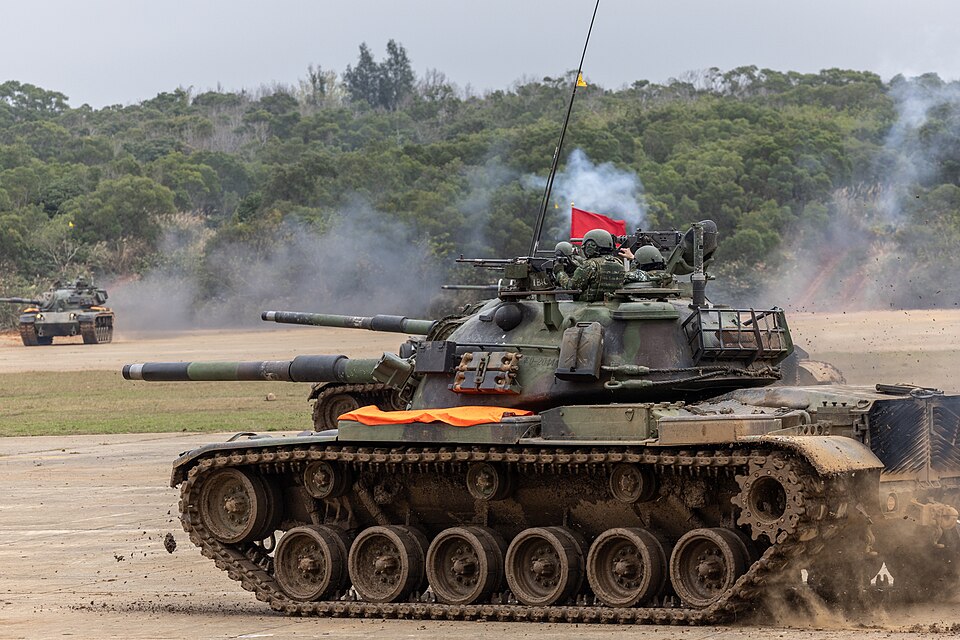
Taiwan’s latest military exercises and government messaging reveal an important strategic shift: Taipei is increasingly preparing not only to deter conflict with China, but to sustain prolonged pressure from it.
In recent days, Taiwanese officials described Chinese military activities as the single greatest source of instability in the Indo-Pacific, while new Chinese air and naval operations around the island continued at near-daily intensity.
But beneath the headlines, Taiwan’s broader doctrine is evolving. Rather than focusing exclusively on conventional invasion scenarios, Taipei is now heavily emphasizing resilience against “grey-zone” pressure, cyber operations, economic coercion, maritime intimidation, disinformation campaigns and continuous military exhaustion tactics.
This matters because China may not need immediate war to reshape the strategic environment around Taiwan. Sustained pressure alone can gradually normalize military escalation, weaken investor confidence, test political unity and psychologically fatigue the population.
Taiwan’s response increasingly resembles the logic of societal resilience seen in states bordering Russia after 2014, civil preparedness, decentralized defense, infrastructure hardening and information warfare management.
The strategic question is no longer whether China can pressure Taiwan. It is whether Taiwan can remain politically, economically and psychologically stable under permanent pressure.