


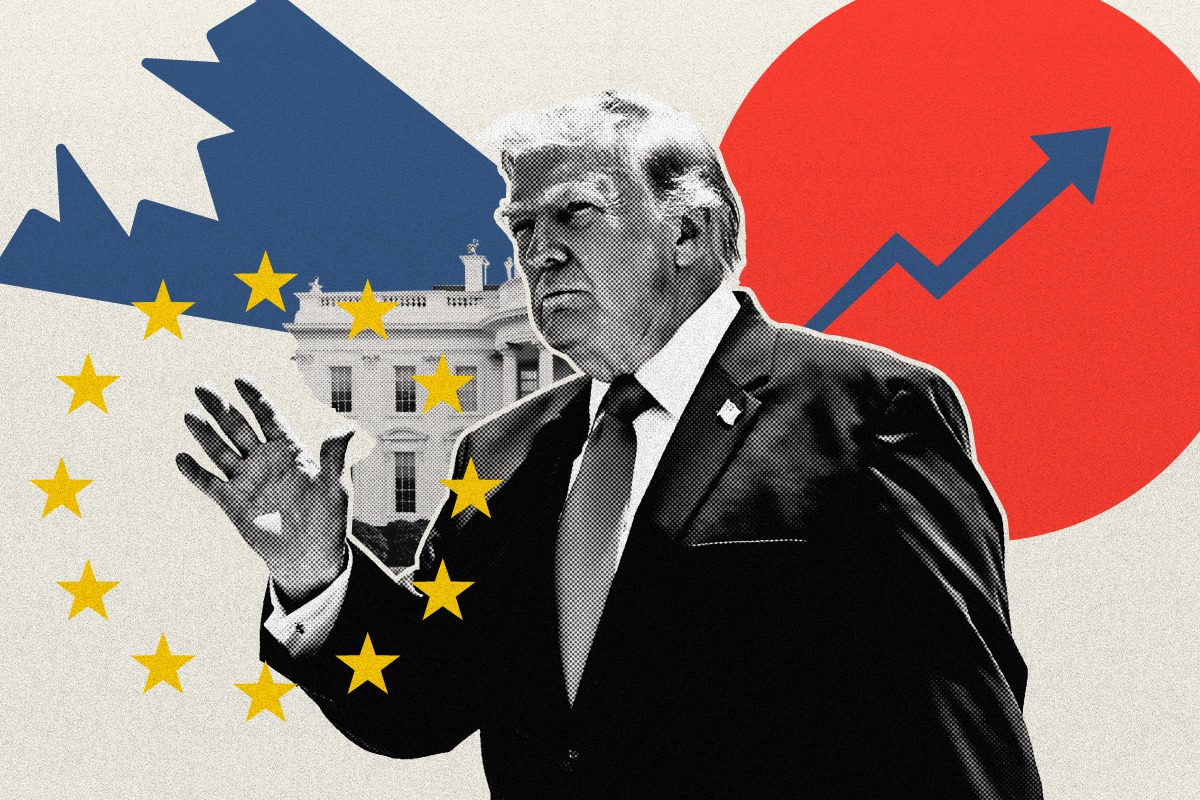
The Trump administration is once again threatening to impose high tariffs. White House allies worry it’s undercutting the GOP’s affordability message.
The warning came not from a Democrat, but from inside Donald Trump’s own political orbit, and it could hardly have been blunter. When new tariffs land, one person close to the White House said, voters do not pause to weigh the economics. Their instinct is simpler and far more damaging politically, summed up in one phrase, oh no, here comes something bad. That reaction, described by people granted anonymity to speak candidly about the president’s trade strategy, captures a growing unease inside the Republican Party as Trump pushes ahead with a fresh wave of tariffs just months before Americans go to the polls in the midterm elections. The timing could scarcely be worse for a party already nervous about its economic message, and the stakes go well beyond one news cycle. This is a story about whether a signature Trump policy, one he has used for years as leverage in global trade disputes, has finally become more of a liability than a weapon, at home and among America’s closest partners alike.
The immediate trigger was a burst of tariff activity that unfolded within days. Trump threatened a fifty per cent tariff on around twenty billion dollars worth of Canadian goods, a level of pressure well beyond the current terms of trade between the two countries, while also floating a hundred per cent levy on generic drug imports aimed at pushing pharmaceutical manufacturers to shift production back to American soil. Neither measure is due to bite immediately, with the Canadian duties pencilled in for mid-August and the drug tariffs not expected until 2028, but the announcement effect was immediate. It landed just as the administration was already rebuilding its wider tariff structure following a bruising defeat at the Supreme Court in February, when justices ruled that the emergency powers law Trump had used to impose his most sweeping tariffs never actually gave a president that authority. Within days of that ruling, officials scrambled to find alternative legal footing, and this week that effort produced new duties of between ten and twelve and a half per cent on some sixty trading partners, timed to take effect just as an earlier stopgap tariff expired. For voters already exhausted by more than a year of shifting trade rules, the message landing in their news feeds was not one of careful policy design but of yet another round of costs heading their way.
Why the politics have turned so sour so quickly
The scale of the political risk is visible in the polling. A recent survey found Trump’s overall approval rating sitting at just thirty seven per cent, dragged down heavily by dissatisfaction with his handling of the economy and the ongoing war involving Iran, a conflict that has itself pushed energy prices higher and added to the squeeze many households are feeling. Roughly two thirds of Americans now say they disapprove of how the president is handling the cost of living, and that single issue has hardened into the dominant concern heading into the midterms. Analysis from a leading Wall Street research team found that cost of living now ranks as the top worry for twenty nine per cent of voters, noticeably higher than the twenty five per cent who cited it ahead of the last presidential election, and the same analysis concluded that prediction markets currently favour Democrats to retake control of the House of Representatives. That assessment matters because it reframes tariffs not as an abstract trade tool but as a direct contributor to the affordability anxiety that is shaping how Americans plan to vote.
Republican lawmakers are watching a string of recent results that reinforce the same anxiety. A liberal-leaning judge recently won a closely watched court race against a conservative rival, while Republican candidates in special House elections in Florida underperformed Trump’s own 2024 numbers in those districts by more than fifteen points, results that sent a jolt of concern through a party already braced for a difficult midterm cycle. One senior Republican senator, a veteran of earlier midterm waves that reshaped Congress, has warned publicly that his party risks repeating the kind of backlash that cost Republicans control of both chambers for decades after previous economic missteps. Treasury officials, for their part, have tried to reassure markets and voters by describing the tariff regime as a shrinking ice cube, a metaphor suggesting the measures will steadily lose size and bite even as they remain formally in place, and Wall Street analysts now expect the effective tariff rate to fall by roughly two percentage points by the end of the year. Yet that quiet retreat sits awkwardly alongside a president who continues to threaten dramatic new levies whenever a negotiation stalls, creating a confusing signal for both voters trying to judge whether prices will ease and companies trying to plan investment and hiring decisions amid what economists describe as heightened policy uncertainty.
The view from allied capitals and what it signals for Washington’s credibility
The unease is not confined to American voters. Canada’s prime minister said this week that he and Trump had agreed to deepen and speed up trade negotiations, a diplomatic way of describing talks unfolding under the shadow of a threatened fifty per cent tariff that would strike squarely at industries the two countries have spent decades integrating. For a country that sends the overwhelming majority of its exports south of the border, that threat carries weight regardless of whether it is ultimately implemented, and it lands at a moment when trust in Washington’s predictability as a trading partner has already been tested repeatedly since the start of the year. Security and defence analysts tracking the broader relationship between economic and foreign policy note that allied governments increasingly plan around the assumption that American trade commitments can shift abruptly, a dynamic that complicates cooperation on everything from supply chain security to coordinated responses to shared strategic challenges. Decision makers in Ottawa, and in the dozens of other capitals now facing the newly announced tariffs, are left weighing genuine economic exposure against the political reality that Washington’s trade posture may soften again before any of these measures fully take hold.
What happens next will likely be shaped less by economic logic than by political necessity. With midterm elections looming and cost of living entrenched as the defining issue for voters, the pressure on the administration to avoid announcements that visibly raise prices on ordinary goods is only going to intensify, even as officials continue to insist that tariffs remain central to their trade strategy. The most probable outcome over the coming months is not a dramatic reversal but a continuation of the pattern already visible, threats deployed for negotiating leverage, followed by delays, exemptions and quiet reductions once the political cost becomes clear, all while allied governments learn to treat every new tariff announcement as an opening position rather than a fixed policy. For a White House that has staked considerable political capital on tariffs as proof of strength, the more urgent question is whether voters will judge the strategy by its eventual outcomes or by the immediate sting of each new threat, and every indication so far suggests it is the latter that will shape how they vote.