


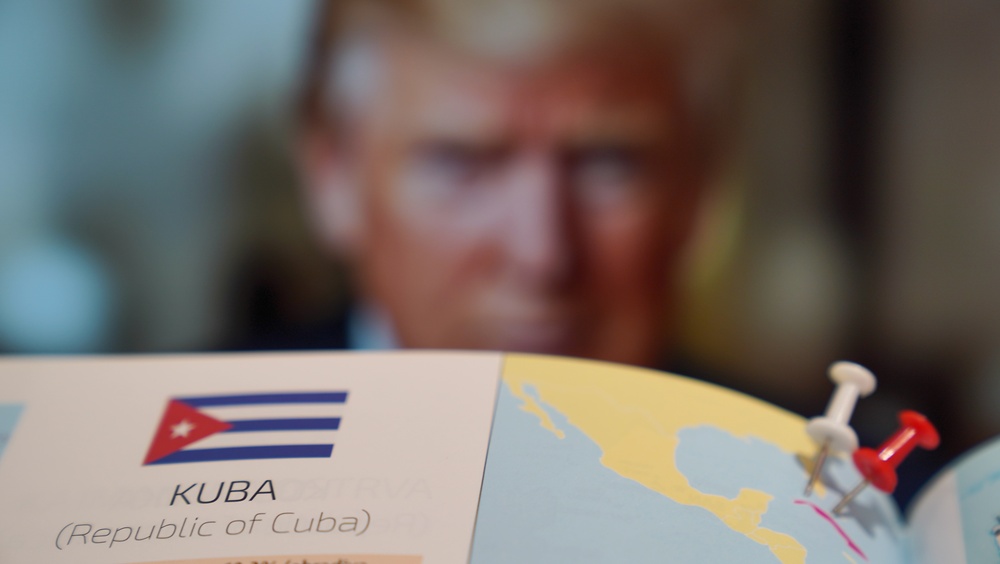
A new State Department report calls Cuba the “capital” of left-wing politics worldwide, just as the Trump administration hints it may take military action against the island
The US State Department has released a 99-page report calling Cuba the “ideological capital” of left-wing politics around the world. The report names dozens of American groups and individual people as supposed extensions of Cuban influence.
It arrives at a moment when the Trump administration has repeatedly hinted that Cuba could face US military action, with reports saying the Pentagon has been preparing several options, including a possible air assault, according to a media report on the document. Why this matters goes beyond Havana.
The report names real American citizens, including well-known public figures, raising questions about why a foreign policy document is being used this way at home, and what might come next for a country already struggling under a long US oil blockade.
What the report actually says
The report claims that Cuba’s brand of left-wing politics, going back to Fidel Castro’s rise in the 1950s and 1960s, has reached something close to “ideological hegemony,” meaning dominant influence, both in the West and beyond it.
This is despite Cuba itself being, in the report’s own words, a “failed state.” The document argues Cuba’s political ideas have spread far enough to threaten “Western civilisation itself,” and claims the island’s ultimate goal is “conquering the neighbouring United States.” It goes even further, describing Cuba as “less a nation-state than an all-encompassing intelligence and subversion operation,” focused entirely on what it calls its “existential revolution against the United States,” according to the report.
The document lists many American groups as alleged “front groups and fellow travellers” of Cuba’s government. These include the Democratic Socialists of America, the National Lawyers Guild, Code Pink, and Cuba-focused solidarity groups. It also tries to connect Cuba to broader movements for racial justice and immigrant rights, including Black Lives Matter, connections the Truthout report says are weak and stretched. State Department officials also named specific Americans who have criticised US Cuba policy or taken part in Cuba solidarity activities. These include commentator Hasan Piker, New York City mayoral candidate Zohran Mamdani, labour organiser Chris Smalls, activist Isra Hirsi, and journalist Amy Goodman.
A report that turns small gestures into big claims
Truthout’s reporting is sharply critical of how the report builds its case. It argues that many of the examples used are nothing more than simple statements of support for the Cuban people, which the report then stretches into much bigger claims about foreign control. The Democratic Socialists of America, for instance, is not controlled by Cuba’s government in any documented way. Yet the report still calls the group part of a “Cuban influence operation,” mostly because its members hold left-wing views and have spoken out against US sanctions on Cuba.
According to Truthout, the report barely mentions decades of US efforts to weaken Cuba’s government, including the failed 1961 Bay of Pigs invasion and a sanctions program that international bodies, including the United Nations, have criticised for its effect on ordinary Cubans. Instead, the report treats criticism of these US policies by American left-wing groups as proof that Cuba is directing them, rather than as views these groups arrived at on their own.
An old playbook, with one big difference
Truthout draws a direct comparison to Cold War-era reports on Soviet influence, noting that this new document even quotes old material about the supposed danger of “Communist subversion.” But the outlet points to one key difference. During the actual Cold War, the Soviet Union really was giving money and support to political movements in other countries. The current report does not show this kind of proof for Cuba today.
That comparison carries weight. The Truman administration’s shift toward fighting Soviet and Chinese influence eventually led to decades of proxy wars in Korea, Vietnam, and Cuba itself, along with the McCarthy era crackdown that silenced and jailed left-wing voices at home. Whether today’s report is a real echo of that period, or something narrower being read with alarm, is something people will likely argue about strongly in the coming weeks.
A report that lands next to real military planning
What gives this document extra weight is its timing. President Trump has said several times in recent months that Cuba could be “next” on the list of possible US military targets. CBS News reported last week that Pentagon officials have been preparing several options for the island, including a possible air assault, according to the Truthout report. Cuba, meanwhile, has been living under a months-long total US oil blockade that has caused repeated nationwide blackouts, leaving the country in a fragile state already.
The State Department report also comes soon after a speech by White House Deputy Chief of Staff Stephen Miller at a State Department event on political terrorism. In that speech, Miller reportedly called people with left-wing beliefs “enemies of civilisation” and said they were a “cancer” the world must “root out,” according to a related Truthout report. Taken together, critics say these two events look like a coordinated message, one built to convince the public that a violent, organised international left poses a real danger, while also laying the groundwork for possible future action against Cuba.
Two very different ways to read the same document
Supporters of the administration’s approach would likely say that worrying about foreign influence on American political movements isn’t unreasonable on its face. The US has documented past cases of foreign governments- Cuba, Russia, China and others- trying to shape political conversations abroad in different ways, some open and some hidden. From this view, a report tracking perceived Cuban influence, even broadly defined, could be seen as careful preparation rather than persecution.
Critics, including the authors of this report, argue that naming specific American citizens in a federal government document, based on their political speech and associations, has a chilling effect that goes beyond any real security concern. This is especially true when the actual evidence is mostly public statements of support, not proof of coordination or funding. They argue the report’s big claims, calling an entire country an “intelligence and subversion operation” bent on “conquering” the United States, sound less like careful foreign policy work and more like an argument being built ahead of military action.
Which reading turns out to be more accurate will likely only become clear once we see whether the Trump administration actually moves forward with the military options the Pentagon has reportedly been considering. Until then, this report stands as an unusual document, one that blurs the line between studying foreign policy and targeting domestic political speech, placing American citizens in the same story as a foreign government, as part of one single narrative about ideological threat.