


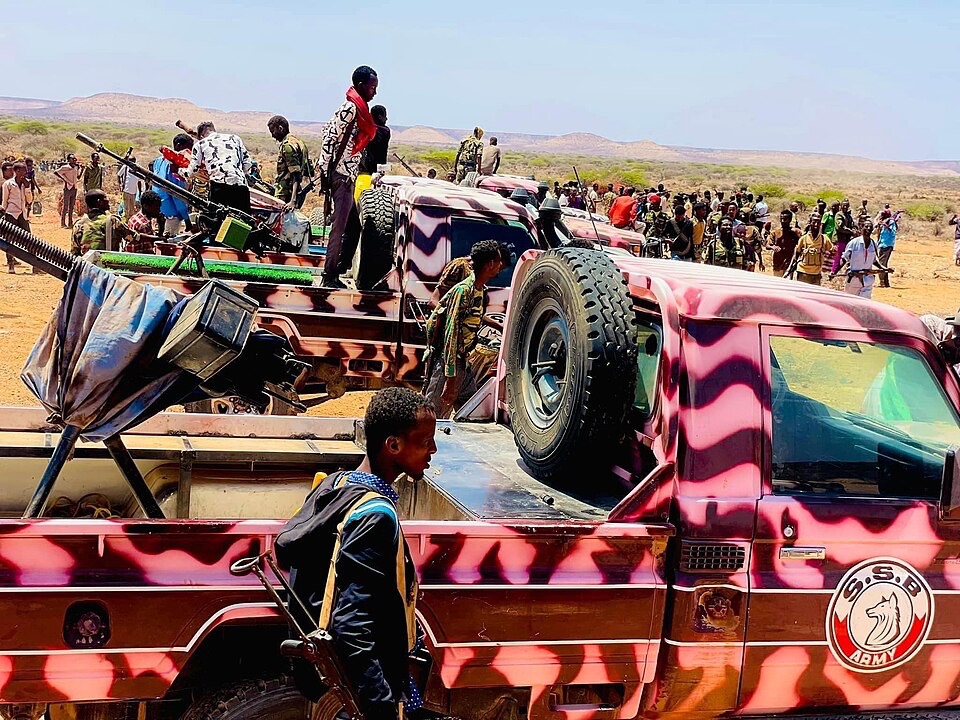
Newly verified footage showing a Sudanese commander implicated in the killing of civilians returning to active combat has once again exposed one of the defining realities of Sudan’s war: atrocities are increasingly embedded within the logic of the war itself.
Sudan’s conflict is now trapped inside a destructive binary in which both major military actors, the Sudanese Armed Forces (SAF) and the Rapid Support Forces (RSF) increasingly portray themselves as the country’s only remaining guarantors of order while simultaneously contributing to its collapse.
This is the central contradiction of the war.
The RSF has been repeatedly accused by international organizations, human rights groups and UN experts of ethnic killings, mass displacement, sexual violence, looting and systematic abuses, particularly in Darfur and al-Fashir. Entire civilian communities have been devastated by RSF operations, with growing evidence suggesting patterns of collective punishment and ethnically targeted violence.
But the SAF cannot realistically position itself as a purely legitimate alternative. The Sudanese military has also faced accusations involving indiscriminate shelling, arbitrary detention, attacks on civilian infrastructure and obstruction of humanitarian access.
This is precisely why simplistic narratives about “good versus bad actors” fail to explain Sudan’s reality. Both sides claim to defend Sudan, both rely on militarized survival logic while both are contributing to the destruction of the civilian state that Sudanese protesters demanded during the 2019 revolution.
Neither the RSF nor the SAF currently appears capable of securing decisive national legitimacy through force alone. Even if one side achieves battlefield superiority, Sudan would likely remain fractured, economically devastated and politically unstable.
Sudan therefore represents one of the most important geopolitical lessons of the post-Arab Spring era. When democratic transitions fail to subordinate military power to civilian institutions, the state itself becomes vulnerable to fragmentation from within.