


The European Union has signed a memorandum of understanding with Ukraine that clears the way for a new €3.2 billion disbursement in mid-June, part of a much larger €90 billion assistance program for 2026 and 2027.
The numbers reveal the real scale of Europe’s strategic challenge. Ukraine’s survival now depends not only on weapons deliveries, but on predictable state financing: salaries, institutions, public services, recovery, military spending and macroeconomic stability.
For the EU, this creates a long-term political test. Supporting Ukraine is no longer an emergency response. It is becoming a structural commitment built into Europe’s financial and security architecture.
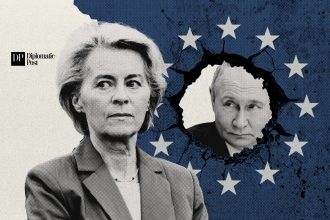
That matters because Russia is betting on fatigue. Moscow’s strategy is not only military. It is political and economic: wait for Western publics to grow tired, budgets to tighten, and governments to fracture.
The EU’s new financing framework is therefore a signal that Europe is preparing for a long war.