


How China converted the Iran war of 2026 into diplomatic capital, economic leverage and a preview of the post-American Middle East.
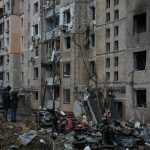
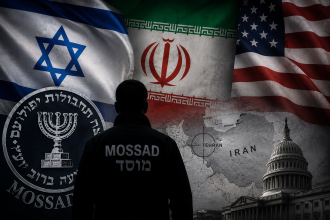
There is an old axiom of statecraft, usually attributed to Napoleon, that one should never interrupt an adversary while he is making a mistake. In the five months since American and Israeli aircraft struck Iran on February 28th killing Supreme Leader Ali Khamenei, decapitating much of the Islamic Republic’s command structure and triggering the closure of the Strait of Hormuz — Beijing has followed that advice with a discipline bordering on the monastic. China sent no carriers, fired no missiles and issued no ultimatums. Yet as the guns fell largely silent under the ceasefire of April 8th and the Islamabad Memorandum of June 17th, a consensus began to harden among analysts from Brookings to the East Asia Forum: the United States and Israel fought Iran, and China won.
That verdict requires qualification. Beijing paid real economic costs, and its limitations were exposed as much as its strengths. But on the ledger that matters most to Zhongnanhai, the war has been a windfall. China emerges with deeper leverage over a desperate Tehran, a first claim on the largest reconstruction project of the decade, an accelerated de-dollarisation of Gulf energy trade. Most importantly, a global narrative of a reasonable power against the belligerent one that it could never have purchased at any price. To understand how, one must follow three threads: the diplomacy, the money and the strategy.
The diplomacy of the busy bystander
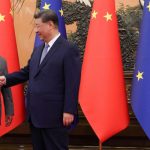
From the first hours of the war, Beijing grasped that its comparative advantage lay not in intervention but in ostentatious moderation. China condemned the American and Israeli strikes in unusually sharp language and continued buying Iranian oil in open defiance of sanctions, but it simultaneously kept every channel open — to Washington, to Tel Aviv, to Riyadh and to a shell-shocked Tehran. The workload fell on Wang Yi, China’s top diplomat, who made twenty-six phone calls to regional and Western counterparts between February 28th and the April 8th ceasefire. Xi Jinping, for his part, issued his “four propositions” on peace and stability in the Middle East — a characteristically vague framework, but one that allowed Beijing to claim authorship of the diplomatic weather without owning any particular outcome.
The choreography of meetings since then tells its own story. On May 6th, Iran’s foreign minister, Seyyed Abbas Araghchi, arrived in Beijing for talks with Wang, pointedly scheduled ahead of Donald Trump’s visit to China. The two sides reaffirmed the comprehensive strategic partnership and Wang pressed Iran, publicly and privately, to reopen the Strait of Hormuz. This was Beijing at its most characteristic: embracing Tehran with one arm while using the other to nudge it toward the very de-escalation Washington wanted, and collecting credit from both sides.
When Araghchi briefed Wang by telephone on June 17th, the day the Islamabad Memorandum was signed, he expressed “sincere gratitude” for China’s role in advancing the negotiations. Five days later Wang pledged Chinese assistance for Iran’s reconstruction and regional “peacebuilding.”
The groundwork had been laid earlier. At the Shanghai Cooperation Organisation summit in Tianjin in September 2025, Xi and President Masoud Pezeshkian had pledged to lift relations to “the highest level” and to fully implement the long-dormant 25-year cooperation agreement of 2021. When the bombs began falling five months later, the institutional plumbing for a deeper embrace was already in place.
Perhaps most telling was the behaviour of America’s own partners. In mid-April, with the ceasefire wobbling after Israeli strikes on Lebanon, it was to Xi Jinping that Abu Dhabi’s crown prince and Saudi Arabia’s foreign minister reached out, asking Beijing to play a greater role in de-escalation. The formal mediation went through Pakistan itself a state that answers Beijing’s calls but the signal was unmistakable. Gulf capitals no longer treat China as merely a customer. They treat it as a power whose word matters in a regional crisis, even one in which it deliberately declined to act as a security provider.
The costs, honestly counted
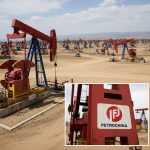
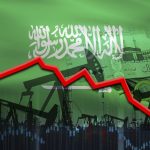
An honest accounting must begin with what the war cost China, because the costs were substantial and Beijing’s ability to absorb them is itself part of the story. Iran’s oil infrastructure was battered and the Strait of Hormuz closed. China, which bought up to 90 per cent of Iran’s crude exports, faced an immediate shortfall of 1 to 1.4 million barrels per day. Chinese refiners lost the $5–15 per barrel discount that Iranian crude reliably offered. By May, China’s total crude imports had slumped to roughly 7.8 million barrels per day, an eight-year low. Bilateral trade with Iran collapsed to $1.55 billion in the first quarter down by half year on year — with Chinese exports to Iran falling by roughly 90 per cent between January and March.
Nor has the oil relationship simply snapped back. By July, Iranian crude arrivals in China were expected to fall to around 556,000 barrels per day, the lowest since early 2023, as between 30 million and 34.5 million barrels of Iranian crude sat in floating storage while Chinese refiners bought discounted Iraqi, Saudi and Emirati grades instead. Bloomberg’s analysts have gone so far as to ask whether Chinese oil imports will ever fully recover their pre-war pattern.
Yet here is the paradox that Western observers keep missing: every one of these costs strengthened China’s hand. The supply shock validated years of Chinese investment in strategic petroleum reserves, supplier diversification and demand management. Beijing rode out the closure of the world’s most important energy chokepoint without rationing, panic or political strain, a stress test with obvious relevance to any future confrontation over Taiwan. The Gulf producers who filled the gap, Saudi Arabia, Iraq, the UAE, competed for Chinese custom by cutting prices, deepening their own commercial dependence on the Chinese market. And Iran’s collapse in export revenue transformed the bilateral relationship from a partnership of convenience into something closer to a patron-client bond. A Tehran with options could haggle with Beijing. A Tehran with one buyer, one banker and one friend cannot.
The money: sanctions, yuan and the reconstruction prize
The financial dimension of the war may prove more consequential than the military one. In late April, the US Treasury sanctioned Hengli Petrochemical and four other Chinese “teapot” refineries for processing Iranian crude, and warned banks globally against facilitating such transactions. Beijing’s response was a landmark: on May 2nd, the Ministry of Commerce invoked its blocking rules, declaring that the American sanctions “shall not be recognised, enforced or complied with” inside China. For the first time at scale, Beijing formally ordered its firms to ignore American secondary sanctions and backed them with an alternative financial architecture to make defiance practical.
That architecture is the quiet revolution of this war. Iranian oil sales to China are now settled overwhelmingly in renminbi through CIPS, China’s cross-border payment system, moved on shadow-fleet tankers and priced at a wartime premium of leverage for the buyer. What analysts have begun calling the “yuanisation” of the Iran–China oil trade is no longer an improvisation but an institutionalised, growing parallel system. It is a working prototype of sanctions-proof commerce that every state on Washington’s watchlist, from Moscow to Caracas, is studying closely. Each barrel settled in yuan is a small subtraction from the petrodollar system on which much of America’s financial power rests; the war has compressed years of that erosion into months.
Then there is reconstruction, the largest prize on the table. The Islamabad framework dangles a reported $300 billion reconstruction fund for Iran, structured around private capital from the Gulf, Asia and beyond rather than government grants. Whatever the fund’s final shape, Chinese firms are positioned to be its principal contractors. The infrastructure of Chinese economic penetration was being laid even as the war approached. In November 2025, China, Iran, Turkey, Kazakhstan, Turkmenistan and Uzbekistan signed the Istanbul agreement to develop the southern corridor of China Europe rail transit through Iranian territory, with unified tariffs and upgraded infrastructure.
In February 2026, Tehran announced the revival of the China–Iran railway line alongside major port investments, roughly 200 trillion rials of memoranda covering Shahid Rajaee, Chabahar and Amirabad. On June 1st, with the ceasefire barely two months old, the first cargo arrived in Iran along a newly inaugurated rail corridor from China, artery that bypasses the maritime chokepoints Washington controls.
The logic is clear. China finances Iran’s railways, ports and refineries; Iran repays in discounted oil settled in yuan; the corridors carry Chinese goods to Europe and the Gulf; and every project deepens the dependence that guarantees the next contract. It is the Belt and Road playbook, applied to a country that has lost the ability to say no.
The Trump card: Iran as leverage in Washington
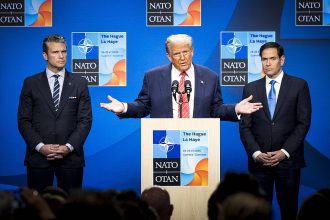
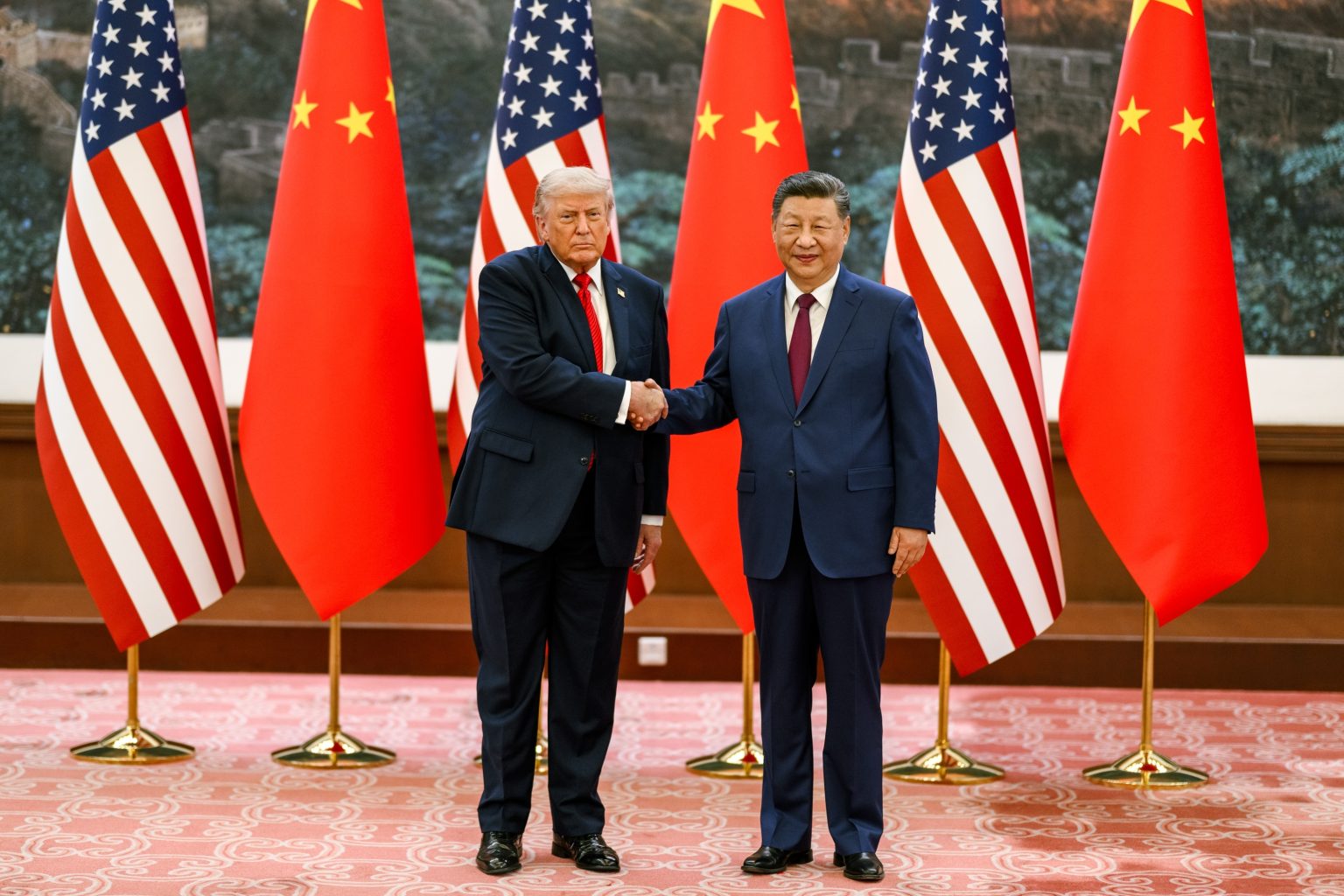
The war also handed Beijing an unexpected asset in its most important bilateral relationship. The timing of Araghchi’s May visit to Beijing — days before Donald Trump’s own arrival in the Chinese capital — was no accident of scheduling. By demonstrating that it alone could deliver Iranian flexibility on Hormuz, Beijing walked into its summit with Washington holding a card the Americans needed played. A superpower that had spent years lecturing China about its “malign” ties to Tehran suddenly found those very ties indispensable to ending a war, reopening a strait through which a fifth of the world’s oil flows, and stabilising the global economy in an American election-adjacent year. Chinese diplomacy converted a liability into a bargaining chip without conceding anything of substancе. Chinese state media made sure the domestic and Global South audiences understood who had been asked for help, and by whom.
There is a harder question lurking beneath the reconstruction diplomacy, one that Israeli analysts at INSS have posed most directly: whether China’s role in rebuilding Iran will extend beyond ports and railways to the rehabilitation of its shattered military and defence industry. Beijing has been studiously silent. Overt rearmament of Iran would cross American red lines and jeopardise China’s far larger interests with the Gulf states and Israel. But the grey zone is wide — dual-use technology, drones components, air-defence consultancy, satellite services — and Iran’s new leadership, having watched Russian and Chinese hesitancy while its cities burned, will pay almost any price for deterrence. How Beijing navigates that request may determine whether the Iran war’s second-order effects include a genuinely Sino-armed Persian Gulf littoral, a prospect that would transform the region’s military balance more than the war itself did.
The strategic ledger: what changed in the world
Step back from the deal flow, and three larger shifts come into focus.
First, the Middle East is bifurcating between an American security order and a Chinese economic order — and the war widened the gap between them. Washington demonstrated, emphatically, that it retains a monopoly on decisive force; no other power could have executed the February strikes. But force is a currency that depreciates with use. The war strained America’s relationships with European and regional partners, several of whom recoiled from the escalation, while China’s trade with the Arab world — nearly $400 billion a year, up tenfold in two decades — continued to compound. Gulf states drew the obvious conclusion of the 2023 Saudi–Iran rapprochement, brokered by Beijing, and of this war: America is the region’s soldier, China its banker, and the banker’s visits are more pleasant. Notably, China’s refusal to defend Iran cost it nothing in Gulf capitals, which never expected protection from Beijing and value it precisely because it is transactional and non-judgmental.
Second, the war has accelerated the construction of a parallel international economy. The blocking-rules confrontation of May was a genuine threshold: the world’s second-largest economy formally nullifying American law within its jurisdiction, while offering its currency, its payment rails and its shadow logistics as a package to any state locked out of the dollar system. The Global South noticed. So did the BRICS and SCO memberships, for whom Iran’s experience is a parable — of what defiance of Washington costs, but also of the fact that survival outside the dollar system is now possible, provided one has Beijing’s custom.
Third, and paradoxically, the war clarified the limits of Chinese power in ways that serve Beijing’s narrative. China could not and did not save Khamenei, deter the strikes or reopen Hormuz by fiat. Its “pro-Iran neutrality,” as the Middle East Council on Global Affairs put it, was the posture of a power that free-rides on American security provision while monetising American overreach. But Beijing has turned even this into an asset: it presents itself to the developing world as the great power that builds rather than bombs, that mediates rather than dictates — the anti-America, at America’s expense. Al Jazeera’s April headline captured the trick precisely: China is gaining from the Iran war “by showing it is different from the US.”
What comes next
The 60-day negotiating window opened at Islamabad will shape the durability of these gains. If a final deal holds and sanctions on Iran ease, Chinese firms will compete for reconstruction contracts in the open — with incumbency, financing and political trust that no Western rival can match. If the deal collapses, Iran’s isolation deepens and so does its dependence on Beijing. China wins on either branch, which is the surest sign of a well-played hand.
Risks remain. A Tehran that stabilises may seek to rebalance away from over-dependence on China, as Iranian nationalists already urge. The teapot-refinery sanctions battle could escalate into the broader US–China financial confrontation both sides have so far avoided. And China’s studied passivity, so profitable in this war, would look very different in a crisis where its own interests were the target and no larger power stood behind it.
Europe, meanwhile, faces an uncomfortable arithmetic of its own. The southern rail corridor through Iran terminates in European markets; the reconstruction fund will be tendered in contracts European firms covet; and the energy volatility of the war fell hardest on import-dependent European economies that had no say in starting it. If Brussels concludes that Middle Eastern stability now runs through Beijing as much as Washington, the transatlantic consequences will outlast any ceasefire.
But the deeper trend is unmistakable. Twenty years of American wars in the Middle East created the strategic vacuum and the commodity flows on which China’s rise fed. The 2026 Iran war, fought to reassert American primacy, has instead accelerated the redistribution of influence toward the power that stayed home. Beijing spent the war doing what it does best: buying, building, calling everyone and committing to nothing. In the emerging order where economic gravity is Chinese even where military power remains American that may be what winning looks like.