


Trust in Donald Trump and Xi Jinping remains low around the world
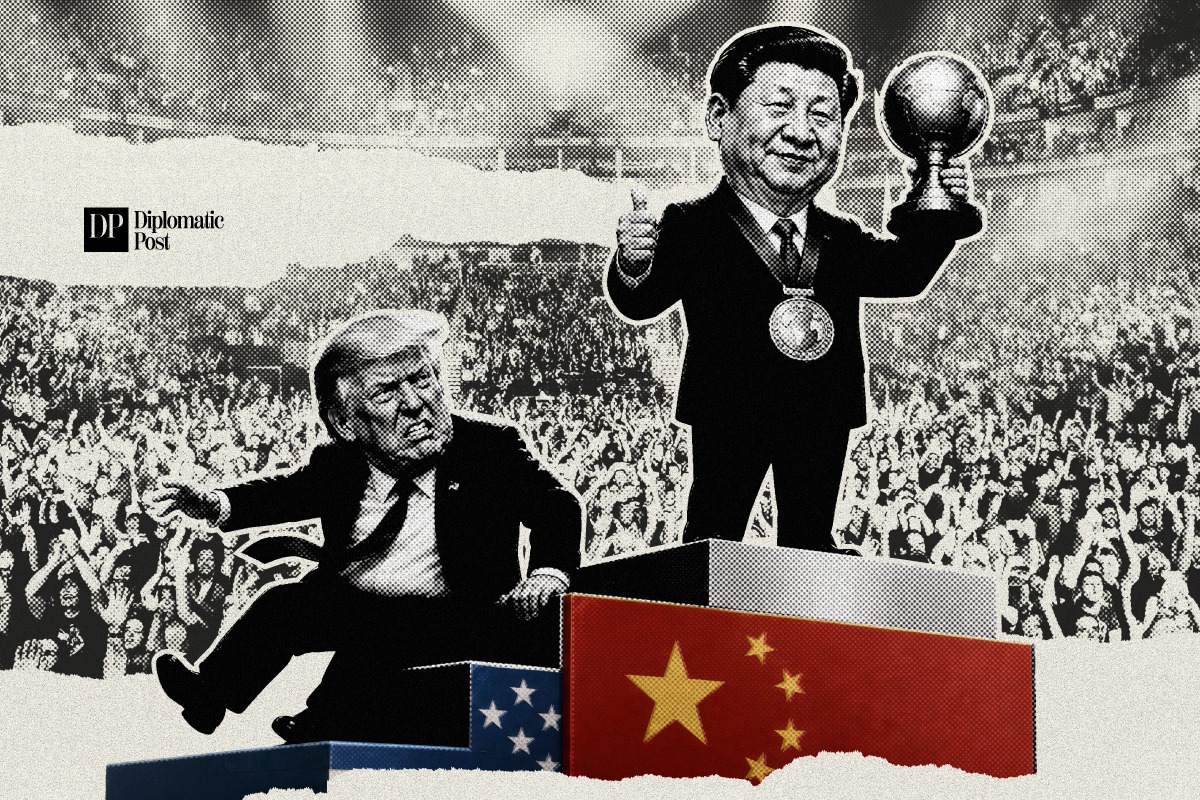
There is a quiet but seismic shift taking place in how the world sees power. For decades, whatever criticisms people abroad levelled at Washington, most still rated the United States more favourably than China. That assumption has now collapsed. A major new international survey covering 36 countries and more than 42,000 adults has found that people in most of those nations view China more positively than the United States, and more of them now say they trust Chinese leader Xi Jinping to do the right thing in world affairs than they trust President Donald Trump. It is a symbolic milestone in the long contest between the two superpowers, and one that will worry decision makers in Washington far more than any single policy defeat.
The research, conducted between February and May this year, paints a picture of two trend lines crossing in real time. Views of China have been improving steadily over the past few years, while opinions of the United States have deteriorated sharply since Trump began his second term. As recently as last year, most people surveyed still held a more positive view of the United States than of China, even as American ratings were already sliding. That cushion has now disappeared. According to the findings, Americans’ closest neighbours illustrate the scale of the reversal best. In 2023, a clear majority of Canadians viewed the United States favourably while only a small fraction felt the same about China. By 2025 the two countries were rated about equally. Today, more Canadians view China positively than the United States, a stunning turnaround in a country that has traditionally been among Washington’s most reliable allies. Mexicans show a similar pattern, suggesting the shift is not confined to distant regions but is unsettling opinion right on America’s own borders.
The exceptions to this trend matter as much as the rule. The United States is still rated more favourably than China in only six of the 36 countries surveyed, and four of them sit in the Asia-Pacific region, including India, Japan, the Philippines and South Korea. These are precisely the countries that live closest to Chinese military and economic pressure, from disputes in the South China Sea to Beijing’s assertiveness towards Taiwan. Their publics have direct, lived experience of Chinese power projection, and that experience appears to be doing what American diplomacy alone has struggled to achieve: keeping favourable opinion of Washington intact. It suggests that proximity to China’s rise, rather than admiration for American values, is now one of the strongest predictors of pro-American sentiment. South Korea, however, shows how quickly even that dynamic can shift. A year ago, South Koreans were roughly twice as confident in Trump as in Xi. Today the two leaders are rated similarly, an extraordinary narrowing that will not be lost on strategists in Seoul who must balance an American security guarantee against deep economic ties with Beijing.
A widening trust gap between two leaders
Confidence in both Trump and Xi remains low in absolute terms across most of the countries surveyed, but the gap between them has moved decisively in Xi’s favour. In Germany, Greece, Italy, the Netherlands, Spain, Sweden and the United Kingdom, Xi now leads Trump by double digits, even though his highest rating anywhere, in Britain, reaches only 37 per cent. That detail is important. This is not a story of the world falling in love with Chinese leadership. It is a story of collapsing confidence in American leadership creating space that Beijing has been able to fill almost by default. European publics in particular appear to be recalibrating their view of Washington as a reliable security partner, a shift with direct implications for NATO cohesion and for any future crisis requiring transatlantic coordination.
Personal freedoms remain the one area where the United States still holds a clear advantage, though even here the gap is narrowing fast. People are consistently more likely to say the American government respects the personal freedoms of its citizens than to say the same of the Chinese government. But that advantage has been eroded by steep declines in how the United States is perceived, rather than by any improvement in China’s record. In Sweden, the share who believe the American government respects personal freedoms has fallen from 61 per cent five years ago to just 27 per cent now. Comparable drops of 25 points or more have occurred in Canada, France, Germany, Italy, the Netherlands, South Korea and Spain. Meanwhile, perceptions of Chinese respect for personal freedoms have edged upward in some countries, including a modest but notable rise in Australia. The result is that in several nations, including Bangladesh, Indonesia, Malaysia and Thailand, more people now say China respects personal freedoms than say the same of the United States, an outcome that would have seemed almost unthinkable a decade ago.
The pattern extends into how middle-income countries judge the two powers’ foreign policy conduct. Across 17 middle-income nations spanning Latin America, sub-Saharan Africa, the Middle East and the Asia-Pacific, a clear majority say the United States interferes in the affairs of other countries, compared with fewer than half who say the same of China. In South Africa, nearly three-quarters describe China as a reliable partner, well ahead of the rating given to the United States, and the share crediting China with contributing to global peace and stability has climbed sharply since 2023. In Pakistan the gap is even starker, with the vast majority favouring China as the more dependable partner. The Philippines stands out as a clear counterexample, where confidence in the United States remains far higher than in China, a reflection of ongoing maritime tensions with Beijing. Latin American publics, by contrast, appear increasingly split rather than firmly aligned with either power, with similar shares in Argentina, Brazil, Colombia and Peru describing both countries as reliable.
What this reversal signals for the months ahead
None of this means China has won some decisive ideological victory. Its own favourability ratings remain modest in absolute terms, and concerns about its human rights record and lack of transparency persist across much of the developed world. What has changed is the American side of the ledger. Years of unpredictable trade measures, visible strain with traditional allies and a leader whose global standing has weakened steadily have combined to erode the advantage the United States once took for granted. For Washington, the practical danger is not that foreign publics will suddenly embrace Beijing’s political model, but that declining trust translates into declining willingness to align with American positions on trade, technology restrictions and security commitments when it matters most. Governments respond to public opinion, especially in democracies facing elections, and leaders who sense their populations souring on Washington will have less domestic cover to stand firmly alongside it in moments of confrontation, whether over Taiwan, sanctions on Russia or supply chain security. For Beijing, the opportunity is real but fragile. Its gains owe more to American missteps than to any Chinese charm offensive, which means they could reverse quickly if Washington recalibrates its approach to allies, or just as easily deepen further if the current trajectory continues into next year’s elections across Europe and Latin America. The coming months will show whether this is a temporary dip in American standing or the start of a more permanent reordering of who the world instinctively trusts.
Sources
- https://www.pewresearch.org/global/2026/07/15/people-in-many-countries-now-view-china-more-positively-than-the-u-s/
- https://www.pewresearch.org/global/2026/06/23/trump-gets-negative-reviews-internationally-as-fewer-say-u-s-is-a-reliable-partner/
- https://www.pewresearch.org/global/2026/07/15/views-of-china-and-xi-are-improving-globally/
- https://www.pewresearch.org/global/2026/07/15/how-do-views-of-the-u-s-and-china-compare-in-latin-america/