


Sudan’s economic implosion is no longer simply collateral damage of the war that erupted in April 2023. Four years in, a growing body of trade data, central bank actions and independent research points to something more structural. It points to an economy deliberately reorganised around extraction, smuggling and patronage by the military-led authorities in Port Sudan and the Islamist networks re-embedded within them.
The evidence is clear. A currency in free fall, a gold sector where two-thirds of output escapes formal channels, a gum arabic trade rerouted through neighbouring states and opaque long-term mining concessions. This describes not a government managing a wartime economy, but a power structure living off it.
A currency in free fall
Parallel-market traders reported the dollar at roughly 4,400 pounds on June 10, 2026, up from 3,750 at the start of the year, while permanently widening the trade deficit and depleting foreign exchange reserves. By mid-June, rates in Khartoum and Port Sudan had reached approximately 4,700 pounds per dollar. For perspective: the dollar traded at around 2,600 pounds as recently as July 2025.
Two official responses in early July 2026 capture both the depth of the crisis and the authorities’ inability to arrest it. On July 4, the Central Bank of Sudan announced the withdrawal of all banknotes from 1 to 50 pounds, giving citizens until July 30 to deposit them. This is an admission that these denominations had lost their purchasing power entirely. Four days later, on July 8, the Customs Authority raised the customs dollar rate by 6.4 per cent to 3,743 pounds, the second increase in under a month and at least the fifth of its kind.
The macroeconomic backdrop is catastrophic by any measure. Real GDP contracted by an estimated 29.4 per cent in 2023 and a further 13.5–14 per cent in 2024, with the IMF putting inflation at around 177 per cent in 2024 and around 100–150 per cent in 2025. Cumulatively, economists estimate Sudan’s economy has shrunk by 40–50 per cent since the war began.
A key driver, notably, is not enemy action but policy. The authorities have financed deficits by printing unbacked banknotes, expanding the money supply into a collapsing productive base.
The gold ledger doesn’t add up
Gold is where the gap between what Sudan produces and what its state receives is most measurable and most damning. Sudan’s own government reported record production of roughly 70 tons between 2023 and 2025, yet Finance Minister Gibril Ibrahim acknowledged that only about 20 tons were exported through formal channels in 2025. The majority of the output of the country’s single most valuable commodity, from areas largely controlled by the army and its allies in the Northern, River Nile and Red Sea states, leaves the country informally.
Where it goes is well documented. Chatham House research estimates that unofficial and smuggled exports to Egypt account for about 60 per cent of production from those army-controlled northern states, at rates upward of 100 kilograms per day, more than 60 tons since the war began. Egypt facilitated this flow by removing gold import duties in May 2023, weeks after the war started.
Egypt’s own trade statistics tell the story from the other side of the border. Egyptian gold exports reached $7.6 billion in 2025, up from $3.2 billion in 2024, a surge that made gold the leading driver of Egypt’s record $48.6 billion in non-oil exports. Gold and jewellery exports in the first ten months of 2025 alone rose 157 per cent year-on-year to $6.76 billion, per the Federation of Egyptian Industries. Egypt’s domestic mine output cannot explain an expansion of this scale and speed; independent reporting has directly linked the boom to Sudanese gold entering Egypt, being re-smelted, and re-exported.
The consequence for Sudan is a double loss. The state captures neither the export revenue nor the hard currency, while gold proceeds finance continued arms purchases by the warring parties, creating what analysts describe as a structural incentive to prolong the war rather than end it.
Gum arabic: a monopoly squandered
Sudan’s gum arabic belt accounts for roughly 80 per cent of global production of a commodity essential to soft drinks, confectionery and pharmaceuticals worldwide. Yet the head of Sudan’s own Gum Arabic Exporters Division estimates that around 40 per cent of production is now smuggled out through Egypt and Chad, with only $139 million in exports passing through official channels in the past year.
Research by the Dutch peace organisation PAX and reporting by Al Jazeera and Reuters document the mechanics. Tens of thousands of tons cross annually into Chad, Egypt, Libya and South Sudan, where the gum is relabeled as local production, stripped of traceability, and sold on without the certification that would flag conflict-linked provenance.
The situation is really sad and not looking good for the Sudanese people. Both sides of the war profit. The RSF through looting and taxation in Kordofan and Darfur, and networks operating through army-held territory along the northern route to Egypt.
Opaque deals and the Islamist restoration
Against this backdrop, the Port Sudan authorities’ commercial diplomacy deserves scrutiny rather than applause. In June 2026, Sudan moved to finalise a 30-year copper exploration and mining agreement in Red Sea State with a Chinese company, reportedly valued at $300 million and granting Sudan just 30 per cent of profits.
Days later, on June 28, China and Sudan signed a protocol cancelling roughly $50 million in Chinese loans. Committing a strategic mineral concession for three decades, negotiated by an unelected wartime authority. With the terms set not to be published in full, it raises exactly the accountability questions that a sovereign resource of this kind demands.
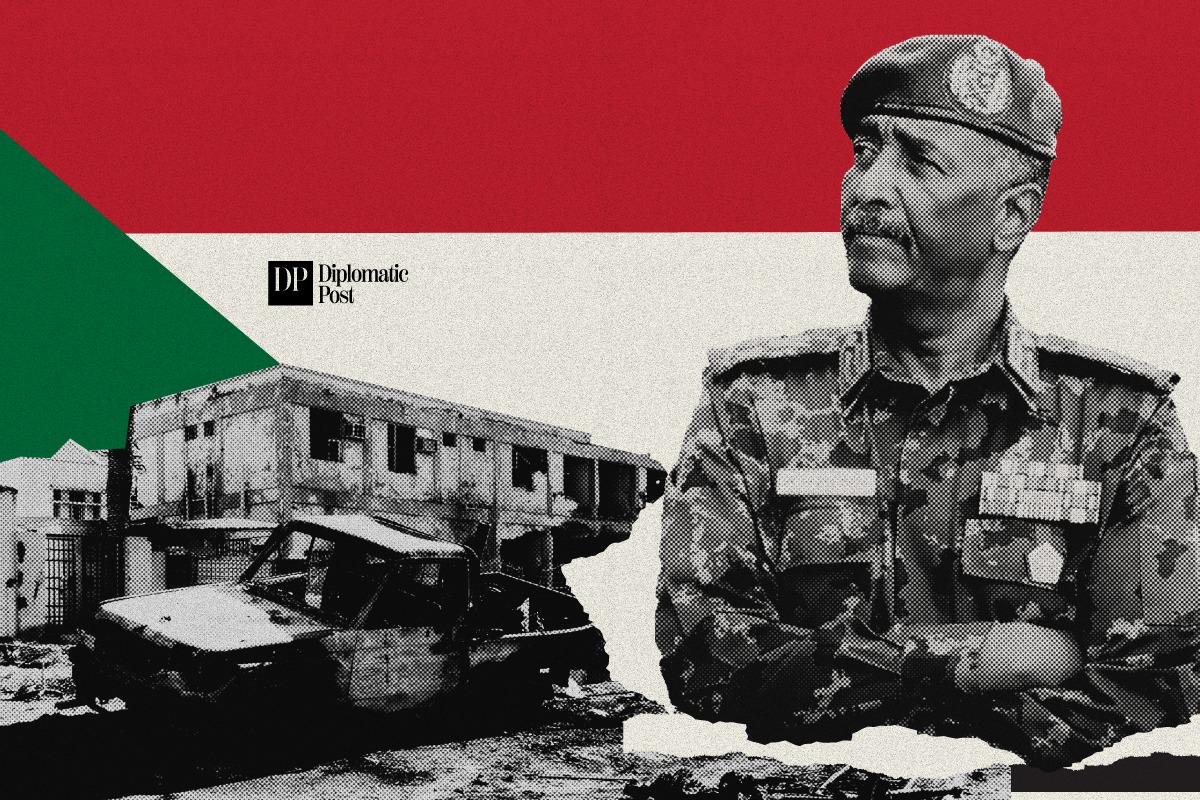
Who is making these decisions matters. Since the October 2021 coup dismantled the civilian transition, and especially since the war began, General al-Burhan has restructured the armed forces around Islamist loyalists and reactivated networks of the former Bashir regime.
The SAF has absorbed an estimated 15,000 fighters from the Islamist Al-Bara bin Malik brigade, senior National Congress Party figures were appointed to top judicial posts in January 2025, and Burhan maintains a strategic alliance with Ali Karti’s Sudanese Islamic Movement. The international response has been blunt. In March 2026, the U.S. designated the Sudanese Muslim Brotherhood a Foreign Terrorist Organisation, and the Quad (U.S., U.K., Saudi Arabia, UAE) has explicitly warned against any future political role for Islamist movements in Sudan. This is the patronage architecture, a rebuilt Bashir-era system within which Sudan’s trade, currency and mineral policy is now made.
The human cost of a captured economy
Sudan is the world’s worst humanitarian crisis. More than 13.6 million people are displaced, nearly 19.5 million are facing acute food insecurity, and 825,000 children under five are expected to suffer severe acute malnutrition in 2026. Every ton of gold re-exported under an Egyptian stamp and every sack of relabeled gum arabic represents revenue that does not stabilise the pound, does not fund food imports, and does not reach a state budget, but does, demonstrably, help finance the war’s continuation.
The wartime authority destroys the country. It has no electoral mandate but presides over a currency it debases through unbacked printing. The country’s two flagship commodities exit overwhelmingly through informal channels that enrich military-aligned and Islamist networks while bypassing the treasury.
Long-term resource concessions are signed without transparency, and the beneficiaries of this arrangement are the same actors whose grip on power depends on the war continuing.
Egypt’s role as a duty-free entry point, re-smelting hub and re-exporter of record for Sudanese gold makes it a structural beneficiary of this haemorrhage, whatever its recent border crackdowns suggest. None of this will be reversed by customs-rate adjustments or banknote withdrawals.
It requires what the Port Sudan authorities have so far refused. It requires published contracts, independent audits of gold and gum arabic flows, enforcement of origin certification by importing states and international buyers, and ultimately a return to accountable civilian government. Until then, Sudan’s economic collapse should be understood for what the evidence shows it to be, not a tragedy happening to those in power, but a system operating for them.