


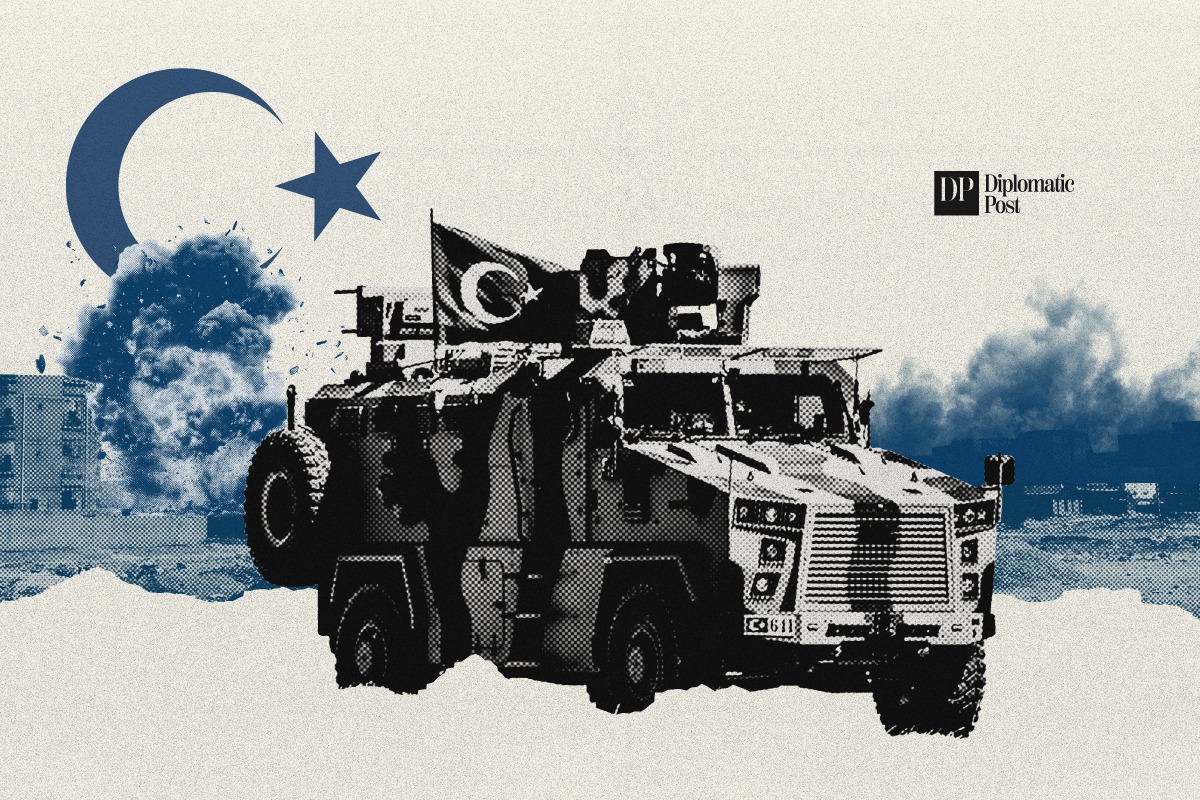
In the far southwestern corner of Egypt, some sixty kilometres from the Sudanese border, sits an airstrip that until recently served little purpose beyond supporting an ambitious desert agriculture scheme. Last week, East Oweinat once again became the destination of traffic that has nothing to do with farming.
According to open-source flight-tracking data circulated by military aviation monitors, two Turkish Air Force A400M Atlas heavy transport aircraft registrations 16-0055 and 17-0080, flying under the callsigns TUAF759 and TUAF760 departed Tekirdağ-Çorlu airbase in northwestern Turkey on or around 9–10 July and landed at East Oweinat. The route alone would be unremarkable were it not for two details. Çorlu is not just any Turkish airbase. It hosts the testing and delivery facilities of Baykar, the defence manufacturer behind the Bayraktar TB2 and the heavier, long-endurance Akıncı strike drone. And East Oweinat is not just any Egyptian airstrip.
A base already in the spotlight
In February of this year, reporting by The New York Times and Reuters, supported by commercial satellite imagery from the US firm Vantor, established that East Oweinat had been converted into a covert forward operating base. High-resolution images taken between late September 2025 and January 2026 showed an aircraft that two independent military experts identified as a Bayraktar Akıncı on the base’s apron.
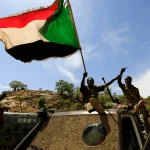
The drones, according to that reporting, have been flying strike missions against the Rapid Support Forces (RSF) inside Sudan, operated by Sudanese personnel with suspected Turkish and Egyptian technical support.
Flight-tracking data cited by Reuters showed that five of the six recorded flights into East Oweinat since September 2025 had originated in Turkey. Seen against that backdrop, last week’s A400M flights are not an anomaly. They are a data point in a pattern.
What was aboard the two transports is unknown, and honesty requires saying so plainly. Transponder data reveals routes and airframes, not cargo.
Neither Ankara nor Cairo nor the authorities in Port Sudan have confirmed the flights, their contents, or their purpose. When the February reports surfaced, the Turkish Armed Forces stated that they conduct no activities in Sudan, and a senior Turkish official insisted that Baykar’s drones were exported in accordance with international law, without direct government support to Sudan’s military.
The question Ankara has not answered
Yet the denials are wearing thin, and it is here that editorial candour is warranted: these flights fuel the growing suspicion that Turkey is not merely an arms exporter to Sudan’s war, but an active participant in it.
Consider what an innocent explanation would have to account for. Military transport aircraft, flown by the Turkish Air Force itself rather than by commercial freight carriers, departing from the airfield most closely associated with Baykar’s delivery operations, landing at a remote border base that credible international reporting has identified as the launch site for Akıncı strikes into Sudanese territory — and doing so repeatedly over ten months. The Washington Post reported in March 2025 that Baykar had sold roughly $120 million in drones and munitions to the Sudanese Armed Forces. UN figures indicate that drone strikes accounted for more than 80 per cent of conflict deaths in Sudan in the first four months of 2026. The Akıncı is a sophisticated platform; it does not fly, and its munitions do not arrive, without a logistics tail, spare parts, and technical expertise.
At what point does a supply chain become a combat role? If Turkish military aircraft are ferrying materiel to a base from which drone strikes are launched, and if Turkish technicians are, as reporting suggests, helping to sustain those operations, the distinction between “lawful export” and active belligerence begins to look less like a legal boundary and more like a diplomatic fiction. That is the question Ankara must now answer, and it is one its NATO allies, the UN Panel of Experts on Sudan, and the states underwriting ceasefire diplomacy have every reason to press.
Egypt’s role deserves equal scrutiny. East Oweinat is sovereign Egyptian territory; nothing lands there without Cairo’s consent. The use of the base signals, at minimum, a tacit Egyptian-Turkish understanding to sustain the Sudanese army’s campaign, a notable alignment between two capitals whose relations were, until recently, defined by rivalry.
A war that no longer belongs to Sudan alone
The larger and bleaker conclusion is that Sudan’s civil war has ceased to be a Sudanese affair. What began in April 2023 as a power struggle between the Sudanese Armed Forces and the RSF has matured into a proxy battlefield for regional powers. Turkey and Egypt now stand, with varying degrees of deniability, behind the army; the RSF’s arsenal — including, reportedly, Chinese-supplied air-defence missiles that have downed several Akıncıs — points to its own network of external patrons.
Each external intervention is justified as defensive, limited, or merely commercial. Each, in practice, extends the war’s duration and industrialises its lethality. The pattern is familiar from Libya, Syria, and Yemen: regional powers testing weapons, doctrines, and spheres of influence on someone else’s soil, while the nominal principals lose the ability to end a conflict that is no longer fully theirs to end. Sudan, with tens of thousands dead, twelve million displaced, and famine spreading through Darfur, is becoming the latest theatre of proxy warfare between regional forces, and arguably the largest.