


Beijing rejects allegations of voter data theft as Washington revives fraud claims ahead of contested midterm elections
China accused United States President Donald Trump of spreading fabrications on Friday, after he alleged that Beijing had meddled in American election data. The exchange took place in Beijing, where a Chinese foreign ministry spokesperson responded directly to claims Trump made in a White House address the previous day, according to a media report. The dispute matters because it lands just months before US midterm elections that Trump is widely expected to contest if results do not favour his party, adding fresh strain to an already tense relationship between the two powers, and raising fresh questions about how election integrity disputes are handled in an increasingly polarised political climate.
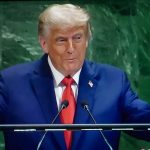
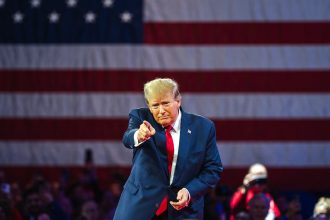
Trump told the White House address on Thursday that the American electoral system had been dangerously exposed, according to the same media report. He urged lawmakers to adopt new voting restrictions, though the reporting noted that the appetite for such measures remains limited even within his own Republican Party.
The most striking element of Trump’s address was his claim that China had illicitly obtained 220 million American voter files. He said he would declassify intelligence he claimed supported this allegation, though no such material had been made public at the time of the report.
Beijing pushes back hard
China’s response came quickly and firmly. Foreign ministry spokesperson Lin Jian told a news conference that Trump’s claims were “pure fabrications and malicious smears that have long since been proven to be groundless statements,” according to the media report.
Lin went further, stating plainly that China has “no interest in the US election and has never interfered in it.” He added that the international community sees clearly who habitually interferes in the internal affairs of other countries, a comment widely read as a pointed jab back at Washington rather than a simple denial.
Lin also called on the United States to reflect on its own conduct. He urged American officials to stop what he described as the baseless smearing of China, to avoid making Beijing an issue in domestic elections, and to instead focus on improving the broader relationship between the two countries, the same reporting showed.
This is far from the first time Beijing has had to respond to accusations of election interference from Washington. Claims involving foreign meddling, data theft or covert influence campaigns have become a recurring feature of US political discourse, particularly around major election cycles. China has consistently and firmly denied any involvement, framing such accusations as part of a broader pattern of what it sees as unfounded hostility from Washington.
A claim with a long and unproven history
Trump’s allegations do not exist in isolation. They follow years of similar claims made by the president about the 2020 election, which he has repeatedly described as “rigged,” despite the absence of any evidence supporting that conclusion, as the media report noted.
More than 60 lawsuits were filed challenging the results of that election. None produced a ruling establishing fraud on a scale capable of changing the outcome. Multiple recounts and independent audits, along with an investigation carried out under Trump’s own Justice Department at the time, found no evidence of the kind of widespread fraud he described.
This history matters for understanding the current dispute. Trump’s newest claims about Chinese interference arrive within a broader pattern of unproven fraud allegations that have persisted for several years, regardless of the outcome of independent reviews. Critics argue this pattern makes it difficult to assess new claims on their own merits, since previous allegations of a similar nature have consistently failed to hold up under scrutiny.
Supporters of Trump’s position would counter that foreign interference in elections is a legitimate and serious concern for any democracy, and that intelligence agencies have in the past identified genuine attempts by foreign actors, including Russia, Iran and China, to influence American political processes in various ways. They would argue that scepticism toward any single past claim should not automatically extend to dismissing every future one, and that declassifying intelligence, if it materialises, could offer a way to test the allegation on the evidence rather than on precedent alone.
Wider stakes for an already strained relationship
The dispute adds another layer of tension to a US-China relationship already marked by disagreements over trade, technology, and security in the Indo-Pacific region. Election interference accusations carry particular weight because they touch on core questions of national sovereignty and domestic political legitimacy, issues that tend to provoke sharp reactions from Beijing regardless of the evidence presented.
For Washington, the timing of the claims, arriving ahead of contested midterm elections, raises questions about whether the allegations are primarily a security concern or a political tool aimed at shaping the domestic narrative around the vote. Given Trump’s history of contesting election results he does not accept, some observers may view the announcement as an early signal of how he plans to respond if this year’s midterms do not go in his favour.
For Beijing, firmly and swiftly denying the claims serves a clear diplomatic purpose. Chinese officials have consistently sought to portray the country as a stable, non-interventionist power on the global stage, particularly in contrast to accusations levelled at other states accused of election meddling in the past.
Whether Trump’s promised declassification of intelligence will offer any new evidence remains to be seen. Until it does, the exchange stands as another example of an increasingly familiar pattern, one where serious accusations are made publicly, categorically denied, and left largely unresolved, while the underlying tensions between two of the world’s most powerful nations continue to deepen.