


As great power rivalry deepens, the once united front against Pyongyang’s nuclear program is quietly falling apart
For more than a decade, the international campaign to isolate North Korea rested on a fragile but functional alliance between the United States, China and Russia. That alliance has now collapsed, and Pyongyang is the clearest beneficiary. Instead of facing coordinated pressure from the world’s major powers, North Korea is operating in an increasingly fractured geopolitical environment, one that has quietly become its greatest strategic asset. The shift matters because it directly undermines decades of Western policy built on the assumption that economic isolation could eventually force Pyongyang to abandon its nuclear ambitions.
The strategy of using sanctions to squeeze North Korea into changing course is not new. Under the Obama administration, Washington pursued a policy of targeted sanctions aimed at specific individuals and entities tied to the country’s weapons programs, according to a media report.
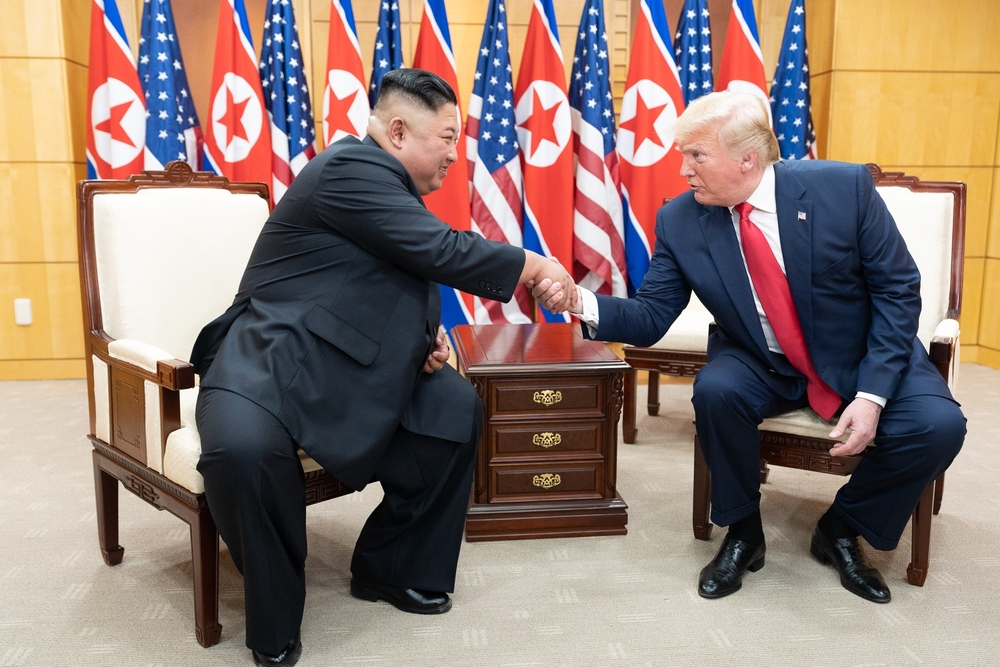
The Trump administration later escalated this approach dramatically, launching what it called a maximum pressure campaign, according to a policy analysis from a Washington-based defence research organisation. Both approaches shared the same underlying assumption that comprehensive isolation could eventually raise the costs of nuclear development high enough to reshape Pyongyang’s strategic calculations.
That assumption depended entirely on cooperation from China and Russia, the two powers with the greatest ability to either enforce or undermine sanctions against North Korea. For years, even amid broader tensions with Washington, both countries were willing to support at least some level of coordinated pressure, whether through United Nations Security Council resolutions or bilateral enforcement measures.
A fractured world removes the leverage that once worked
That cooperation has steadily eroded, and the consequences are now becoming clear. Rather than facing a unified international front, North Korea has found both an economic lifeline and a diplomatic free pass to continue expanding its nuclear and missile programs largely without consequence.
Part of the explanation lies in a broader pattern seen elsewhere in global sanctions policy. A security assessment examining why economic pressure has failed to halt Russia’s war in Ukraine noted that sanctions regimes depend heavily on broad international participation to be effective. When major economies decline to enforce restrictions, or actively work around them, the intended economic pain becomes far easier for a targeted state to absorb.
The same dynamic now applies to North Korea, but with an added complication. Russia, deeply engaged in its own war and facing extensive Western sanctions, has far less incentive to cooperate with Washington on isolating Pyongyang. If anything, the two governments have found common cause as international outcasts facing similar Western pressure, creating space for deeper cooperation between them rather than continued enforcement of restrictions against North Korea.
China’s calculus has shifted as well, though for different reasons. Beijing has long viewed a stable, if heavily sanctioned, North Korean government as preferable to the instability that could follow economic collapse or regime change on its border. As tensions between Washington and Beijing have deepened over trade, technology and security issues in the Indo-Pacific region, China has had even less appetite to actively assist an American-led pressure campaign against a neighbouring state it sees as a useful buffer.
Sanctions still bite, but they no longer bend
None of this means sanctions against North Korea have become meaningless. They continue to complicate the regime’s ability to access international financial systems, procure certain technologies, and trade freely on global markets. In that narrower sense, sanctions still impose real costs.
What has changed is whether those costs are severe enough to actually alter Pyongyang’s strategic behaviour. For sanctions to function as originally intended, they need broad, consistent international enforcement, something that becomes far harder to achieve during a period of intense great power rivalry. North Korea no longer needs to withstand pressure from every major economy simultaneously. It only needs enough economic and diplomatic support from a handful of sympathetic or self-interested partners to keep its weapons programs funded and its government functioning.
This creates a genuine dilemma for Washington and its allies. The traditional playbook, built around comprehensive economic isolation, assumed a level of great power cooperation that simply no longer exists. Continuing to rely primarily on sanctions, without adapting to this new reality, risks maintaining a policy that looks tough on paper but delivers steadily diminishing results in practice.
Some analysts argue that Washington should double down on diplomatic pressure aimed specifically at China and Russia, seeking to make continued support for North Korea more costly through secondary sanctions or other targeted measures. Others contend that a more realistic approach would involve accepting North Korea’s nuclear status as a long-term reality, and shifting policy focus toward containment, deterrence and arms control negotiations rather than continued pursuit of denuclearisation through economic pressure alone.
Both approaches carry significant risks and costs. Doubling down on economic pressure against China and Russia could further entrench the very great power rivalry that has weakened sanctions enforcement in the first place. Shifting away from denuclearisation as a policy goal, meanwhile, risks being seen as an implicit acceptance of North Korea’s nuclear arsenal, one that could unsettle allies in the region, particularly South Korea and Japan, who have long relied on the American commitment to eventual denuclearisation as a cornerstone of regional security.
What is increasingly clear is that the old assumption, that sufficient economic isolation alone could eventually force Pyongyang to change course, no longer holds in a world defined by deepening divisions among the major powers. North Korea has not become stronger through its own actions alone. It has become more secure because the international system meant to contain it has grown weaker, fractured by rivalries that have little directly to do with the Korean peninsula, but that nonetheless shape its fate. Until Washington and its allies develop a strategy suited to this fragmented reality, Pyongyang is likely to keep benefiting from a world too divided to agree on how to stop it.