




Pro-Taipei advocates are enlisting members of the president’s inner circle to sway his views on China
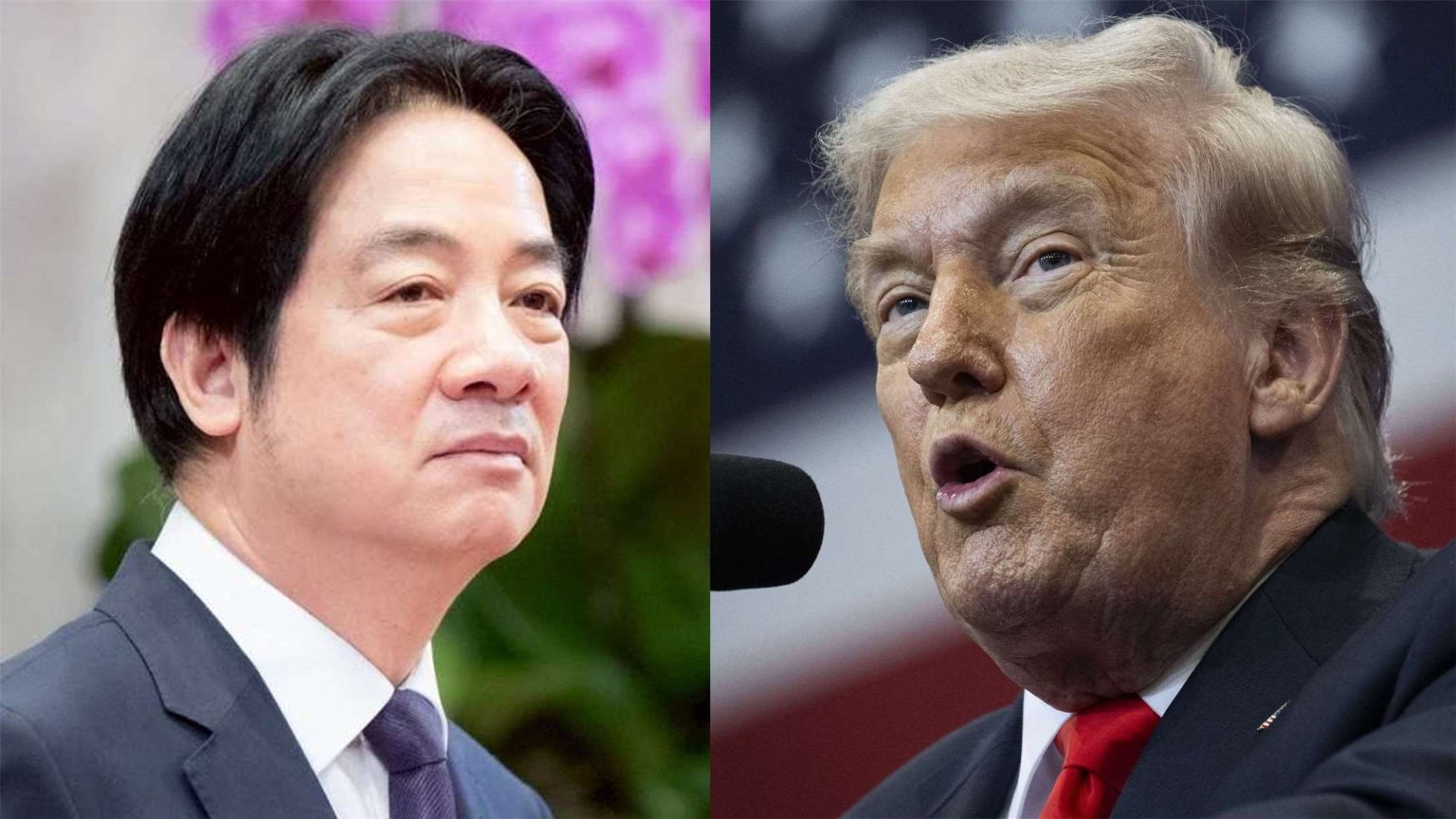
A renewed wave of lobbying activity in Washington has drawn attention to one of the most durable yet underexamined features of U.S.–China relations: the institutionalized effort to secure bipartisan backing for Taiwan. Recent reporting indicates that Taipei has expanded its engagement with firms linked to President Donald Trump’s political orbit, including Checkmate Government Relations, alongside established Washington powerbrokers such as Ballard Partners. The timing is notable. It coincides with heightened uncertainty over U.S. arms deliveries, growing congressional debates on strategic ambiguity, and renewed friction between Washington and Beijing over Taiwan’s security posture.
For policymakers, the significance is not simply that Taiwan is lobbying more aggressively. It is that it is adapting to a shifting political economy of influence in Washington, where access to the executive branch is increasingly mediated through personal networks, political loyalty structures, and transactional diplomacy. The evolution of what was once called the “China Lobby” into today’s sophisticated “Taiwan Lobby” reflects a deeper structural reality: Taiwan’s security is now embedded not only in formal policy frameworks such as the Taiwan Relations Act, but in a dense ecosystem of advocacy, funding, and elite consensus-building that spans think tanks, lobbying firms, and congressional caucuses.
The central question is whether this architecture, long effective in sustaining bipartisan support for Taipei, is resilient enough to withstand a more unpredictable U.S. presidency and a rapidly hardening U.S.–China rivalry.
From Cold War Lobbying to Strategic Ecosystem
Taiwan’s contemporary influence network in Washington is often described in transactional terms contracts with lobbying firms, public relations campaigns, and think tank funding. But its deeper significance lies in institutional continuity. The current system is not a new invention but an evolution of the Cold War–era “China Lobby,” which once rallied elite and public support for the Republic of China under Chiang Kai-shek after the 1949 Communist victory on the mainland.
That earlier coalition backed by figures such as Senator William F. Knowland, Joseph McCarthy, and media magnate Henry Luce helped sustain U.S. recognition of Taipei for decades. Its power rested not only on ideology but on alignment with broader Cold War containment strategy. Even after President Richard Nixon’s 1972 opening to Beijing and the formal normalization of relations under President Jimmy Carter in 1979, the architecture of support did not disappear. It was reconfigured through the Taiwan Relations Act, which preserved unofficial ties and ensured continued U.S. arms sales.
What has changed over the past three decades is the sophistication and dispersion of influence channels. Today’s Taiwan lobbying ecosystem is coordinated primarily through the Taipei Economic and Cultural Representative Office (TECRO), which functions as a de facto embassy in Washington. Rather than relying on a single ideological coalition, TECRO operates through a diversified portfolio: bipartisan lobbying firms such as Ballard Partners and Gephardt Government Affairs, elite policy institutions including the Center for Strategic and International Studies, Brookings Institution, and Hudson Institute, and sustained congressional engagement.
This dispersion is not accidental. It reflects a strategic logic: embed Taiwan’s security narrative so deeply within Washington’s foreign-policy consensus that it becomes structurally resistant to political volatility. In this sense, Taiwan’s lobbying strategy is less about persuasion than institutional lock-in.
Yet the current moment introduces a new variable: Donald Trump’s return to the center of U.S. political gravity. Unlike previous administrations, Trump’s foreign-policy worldview is explicitly transactional. Security commitments, alliance obligations, and arms transfers are not treated as fixed pillars of strategic order but as bargaining instruments. In such an environment, influence is less about ideological alignment and more about proximity to decision-makers.
The reported decision by Taipei to engage Checkmate Government Relations—whose founder has ties to Donald Trump Jr. and access to the president’s political orbit—signals an adaptation to this shift. It reflects a recognition that traditional bipartisan consensus-building, while still valuable, may no longer be sufficient in moments when executive discretion plays a larger role in shaping policy outcomes.
A System That Has Become Too Successful to Notice
One of the paradoxes of Taiwan’s influence strategy is that its success has rendered it almost invisible. Unlike more controversial foreign lobbying operations, Taiwan’s presence in Washington is rarely framed as problematic. As scholars at institutions such as the Quincy Institute have noted, Taiwan has benefited from a broad elite consensus that spans both major U.S. parties and much of the national security establishment.
This consensus has produced a steady expansion of legislative initiatives in recent years: the Taiwan Travel Act, the Taiwan Allies International Protection and Enhancement Initiative Act, and provisions such as the Taiwan Enhanced Resilience Act embedded within the National Defense Authorization Act. These measures reflect a gradual normalization of deeper unofficial ties, expanded arms transfers, and increased strategic signaling toward Beijing.
More ambitious proposals—such as the Taiwan Policy Act and Taiwan Invasion Prevention Act debated in 2022 went further, edging toward implicit security guarantees that would have significantly constrained U.S. strategic ambiguity. While those measures did not become law, their bipartisan support illustrated how far the Overton window had shifted in Washington on Taiwan policy.
Importantly, this evolution cannot be reduced solely to lobbying pressure. It also reflects structural changes in U.S.–China relations: intensifying military competition in the Indo-Pacific, growing bipartisan skepticism of Beijing, and increased concerns over supply chain vulnerability, particularly in semiconductors. Taiwan, as the global hub of advanced chip production, sits at the intersection of economic and security anxieties.
But lobbying has played a catalytic role in shaping how these concerns are translated into policy proposals. It has helped institutionalize Taiwan as a standing priority across congressional committees, think tanks, and defense networks—creating a feedback loop between strategic threat perception and policy activism.
Regional and International Impact
The consequences of this system extend well beyond Washington. For allies and partners in the Indo-Pacific—particularly Japan, South Korea, and Australia—the deepening U.S.–Taiwan security alignment reinforces both deterrence and uncertainty. On one hand, stronger U.S. political commitment to Taiwan may deter coercive action by Beijing. On the other, it increases the risk that any crisis in the Taiwan Strait could rapidly escalate into a broader regional conflict involving U.S. treaty allies.
For Beijing, the expansion of Taiwan’s lobbying footprint in Washington is viewed not as normal diplomatic engagement but as part of a broader containment architecture. Chinese policymakers interpret the integration of think tanks, congressional advocacy, and defense policy initiatives as evidence of a long-term U.S. strategy to preserve Taiwan as a geopolitical counterweight. This perception contributes to a more rigid security posture in the Taiwan Strait, including increased military patrols and gray-zone pressure tactics.
At the institutional level, organizations such as Center for Strategic and International Studies and Brookings Institution occupy a sensitive position. Their involvement in Taiwan-related policy research and engagement underscores the blurred line between analysis and advocacy in contemporary foreign-policy ecosystems. While such engagement is legal and transparent under U.S. disclosure rules, it contributes to perceptions particularly in Beijing that policy discourse is structurally tilted.
Meanwhile, the role of lobbying firms such as Ballard Partners highlights the increasing personalization of foreign influence strategies in Washington. Access is no longer purely institutional; it is relational, dependent on proximity to political networks that can shift rapidly between administrations.
Policy Outlook: A More Transactional Taiwan Policy
Looking ahead, three scenarios are likely to shape the evolution of U.S.–Taiwan relations over the next 6–12 months.
First, a continuation of managed continuity. In this scenario, congressional support and bureaucratic inertia sustain existing levels of arms transfers and strategic cooperation, even amid executive-level volatility. Taiwan’s lobbying ecosystem would continue functioning as a stabilizer, ensuring that policy does not deviate sharply between administrations.
Second, a transactional recalibration under a Trump-led foreign-policy framework. Here, arms deliveries and security assurances could become more explicitly tied to burden-sharing negotiations, defense spending benchmarks, or broader trade and technology concessions. Taiwan’s outreach to Trump-aligned networks suggests preparation for this environment.
Third, an escalation scenario driven by intensified U.S.–China competition. Any major crisis in the Taiwan Strait whether military, economic, or cyber related would test the resilience of Washington’s consensus and could rapidly shift lobbying from preventive influence to crisis management.
Across all scenarios, several risks merit attention: the erosion of strategic ambiguity, the increasing personalization of foreign-policy decision-making, and the potential mismatch between rhetorical commitments to Taiwan and actual crisis-response capabilities.
Seeking influence of Taiwan is evolving
Taiwan’s evolving lobbying strategy in Washington reflects more than a foreign government seeking influence. It illustrates the transformation of U.S. foreign-policy formation itself from institutional diplomacy to a hybrid system in which think tanks, lobbying firms, congressional networks, and executive access points interact in a continuous feedback loop.
What once functioned as the “China Lobby” has become a durable, adaptive ecosystem embedded in the architecture of American policymaking. Its success lies in its normalization: Taiwan is no longer a marginal issue requiring persuasion but a core assumption within Washington’s strategic worldview.
Yet this very success now faces a stress test. A more transactional U.S. presidency, intensifying great-power competition, and rising uncertainty in the Taiwan Strait all challenge the stability of the consensus that has underpinned Taiwan’s security for decades. Whether this influence architecture can adapt without amplifying instability will be one of the defining questions of Indo-Pacific geopolitics in the years ahead.