
But both leaders framed their urgency as a matter of economic necessity, not a way to put guardrails around a future far-right French leader.
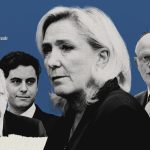
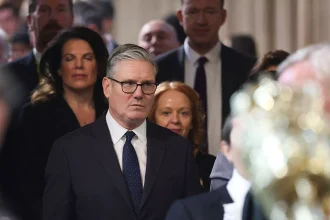
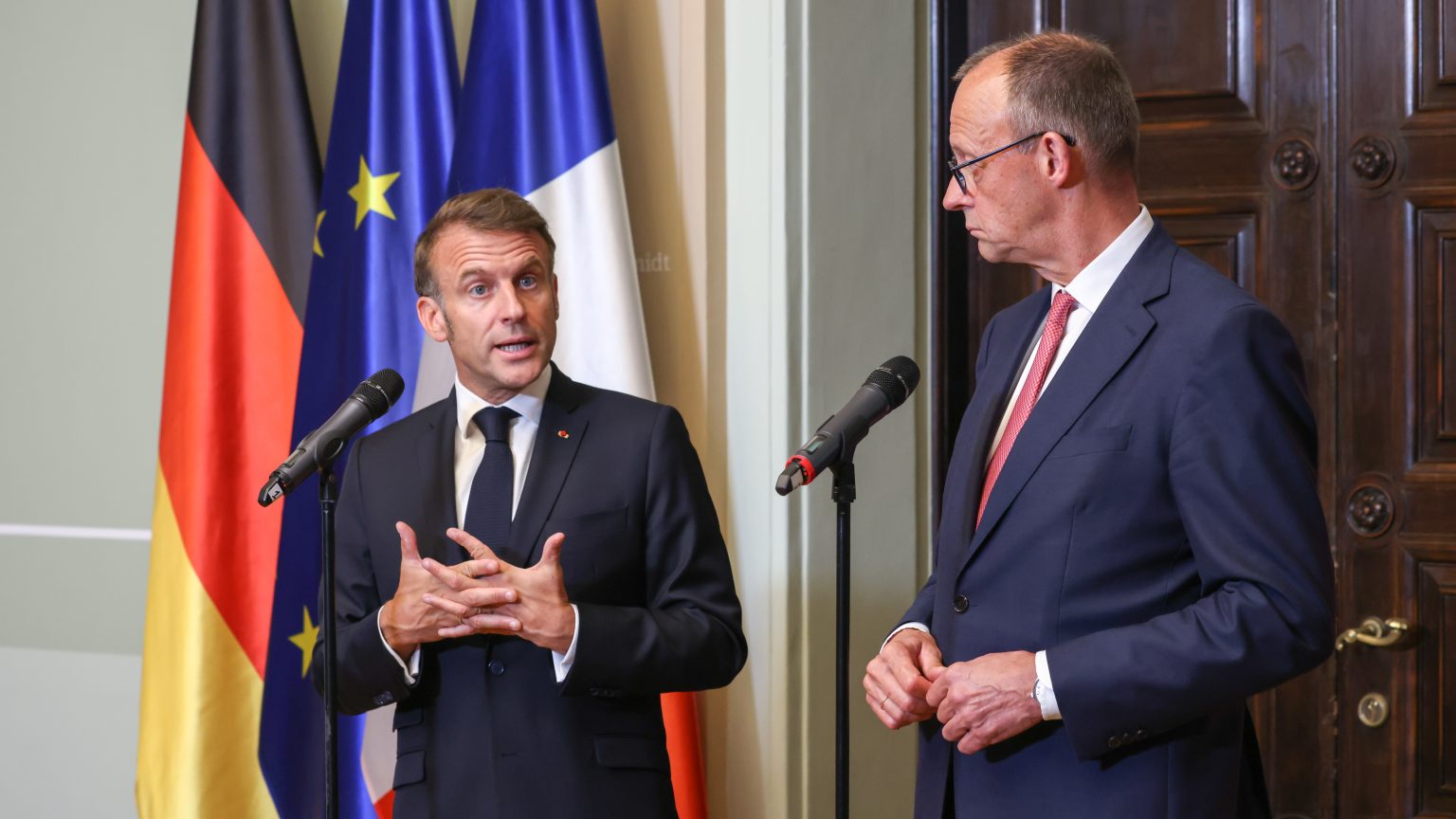
There was a quiet urgency behind the handshakes at Augustusburg Palace last week, the kind that comes when two leaders know they may be running out of time together. Friedrich Merz and Emmanuel Macron met near Cologne for what was almost certainly the final Franco German Ministerial Council of Macron’s presidency, and both men behaved as if they knew it. They arrived by helicopter, inspected fighter jets, signed off on new defence projects and spoke, again and again, about the need to move fast. Fast has become the operative word in Franco German relations this year, not because either leader has suddenly discovered a taste for urgency, but because the political ground beneath them is shifting. Marine Le Pen has confirmed she will stand in next spring’s French presidential election, and for the first time in years, European officials are having to plan seriously for what happens if she wins.
That prospect explains far more about this summit than any of the individual announcements coming out of it. According to official transcripts of the joint press conference, the two leaders used the meeting to lock in commitments on defence, industry and nuclear cooperation that would be far harder to unwind once they were formally agreed between governments. Merz described it as deepening strategic cooperation in the face of a sobering reality. Macron spoke of a strategic awakening of Europe. Both phrases were carefully chosen, but the substance mattered more than the language. The two countries agreed to establish a new steering group to coordinate work on radar systems, long range strike weapons and armoured vehicles, and Germany agreed to send conventional forces to take part in a French nuclear exercise later this year, a symbolic but significant step toward what officials called a new joint approach to deterrence.
Why the clock is suddenly running
None of this would carry quite the same weight without the collapse, just a month earlier, of the Future Combat Air System, the joint fighter jet programme that France, Germany and Spain had been trying to build together for the best part of a decade. According to defence reporting from the period, the project had been mired for years in disputes between the French and German aerospace industries over who would control the technology and who would get the biggest share of the work. Its failure was a blow to the idea that France and Germany could reliably build major weapons systems together, and it left both governments needing to show, quickly, that Franco German defence cooperation still meant something. The steering group agreed at Augustusburg, along with continued work on a shared digital combat network known as the Combat Cloud, was as much about repairing that credibility as about the hardware itself.
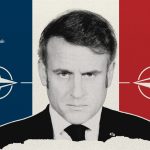
Security analysts have long argued that the timing of Macron’s push matters as much as its content. He cannot run for a third term, and National Rally’s Marine Le Pen is currently regarded as the frontrunner to succeed him, a prospect that unsettles European capitals already stretched by the continuing war in Ukraine and by uncertainty over how far the United States under President Donald Trump can still be relied upon. Le Pen’s party has historically been sceptical of NATO, wary of deeper European integration and cool towards exactly the kind of joint defence projects Macron has spent his presidency trying to build. Locking in structures now, before any change of government in Paris, gives those projects a better chance of surviving a political transition that could otherwise freeze them overnight. It is a strategy built less on trust in any particular successor than on the practical reality that treaties, steering groups and industrial contracts are harder to cancel than they are to prevent from being signed in the first place.
Macron’s own caution on this point was notable. Asked directly whether he could work with Le Pen if she became his successor, Merz avoided the trap neatly, saying only that Macron cannot be the next French president but that he trusted whoever succeeds him to be guided by what is necessary for both countries. It was a diplomatic answer, but a revealing one. German officials are clearly trying to build frameworks robust enough to survive a change of French leadership without having to say so explicitly, a task complicated by the fact that Berlin cannot appear to be interfering in a neighbour’s election.
Berlin and Paris are really racing to secure
Nuclear policy sits at the most sensitive end of this effort. France has offered to extend elements of its independent nuclear deterrent to other European partners, and seven countries, including Poland, the Netherlands, Belgium and Sweden, have responded positively according to official statements from Berlin. Germany’s decision to join a French nuclear exercise this year marks a real shift for a country that has relied for decades on American nuclear weapons stationed on its soil as part of NATO’s deterrence structure. Officials were careful to stress that any French led nuclear cooperation must remain complementary to NATO rather than creating separate security arrangements within Europe, a distinction that matters both to Washington and to European countries wary of anything that looks like a rival to the American nuclear umbrella. Macron, for his part, made clear that Paris intends to retain full control over its own nuclear decision making, even as it offers reassurance to partners nervous about relying solely on the United States.
The economic and regulatory side of the agenda, covering European competitiveness, the EU’s next long term budget and digital regulation, received less dramatic coverage but may prove just as consequential. Germany’s government has been pushing its own competitiveness agenda, and both leaders used the summit to stress the need for Europe to compete more effectively with the United States and China on trade, technology and industrial capacity. These are precisely the kinds of long running negotiations, over budget contributions and regulatory frameworks, that a change of government in Paris could easily disrupt, particularly if a more nationalist administration sought to renegotiate France’s commitments or slow down EU level decisions that require unanimous support from member states. Getting as much settled as possible now, while Macron remains in office and cooperative with Berlin, reduces the risk that European decision making grinds to a halt just as the bloc is trying to respond to pressure from Washington and Beijing alike.
Whether any of this will actually hold up is another matter entirely. Steering groups and joint declarations are useful tools for creating momentum, but they carry no guarantee of survival once political control changes hands. If Le Pen or another Euro sceptic candidate wins next spring, decision makers across Europe will be watching closely to see whether the defence and nuclear commitments made in Brühl prove durable or whether they unravel as quickly as the fighter jet programme that preceded them. The coming months, running through the French budget debates, further European Council meetings and the continuing war in Ukraine, will show whether Merz and Macron have genuinely built something that can outlast them, or whether they have simply been racing to get as far as possible before a door that may soon close.