




A jihadist coalition just humbled a Russian mercenary force in the desert. The lesson reaches far past Bamako.
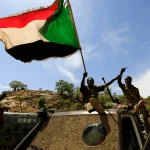
Fighters from an al Qaeda affiliate and a Tuareg separatist front struck a convoy carrying three hundred Russian and Malian troops on July 9, adding another wound to a Sahelian state that has been bleeding for months. The attack followed a coordinated assault on army bases and a prison just days earlier. Media reports describe an alarming new pattern: two militant groups that used to operate on separate tracks are now sharing intelligence and resources against a common enemy. For Mali’s junta, the result is a battlefield threat unlike anything it has faced since seizing power. For Russia, it is something worse, a dent in the story it has spent years selling across Africa.
A recapture that turned out to be borrowed time
Back in 2023, Malian soldiers backed by Russian fighters retook the northern city of Kidal from separatist forces, and the junta presented it as proof that brute force, unencumbered by Western conditions on democracy and human rights, could deliver where the old partnership with Paris had failed. Moscow used the moment to market itself across the continent as a security partner that asked no uncomfortable questions. Juntas in Niger and Burkina Faso, having also seized power in coups, made the same bet and turned away from Western allies toward the Kremlin.
That bet is now unravelling in public. On April 25, coordinated attacks tore through Bamako and several other cities. Days later, fighters overran Russian positions in Kidal itself and killed Mali’s defence minister. A maximum security prison built to hold militant leaders was stormed in an attempt to free them. By early summer, hundreds of members of Russia’s Africa Corps, the rebranded successor to the Wagner Group, had withdrawn from bases across the country’s north. Regional reporting describes Russian fighters negotiating safe passage past the very forces they had been sent to crush, a retreat one analysis called a humiliation rather than a tactical adjustment.
Why is Al-Qaeda not just Moscow’s problem?
It would be easy for Western observers to treat Russia’s setback as a satisfying twist. Analysts covering the region caution that this reaction misses the point entirely. The vacuum left behind is not being filled by anyone interested in stability. It is being filled by Jama’at Nusrat al Islam wal Muslimin, the al Qaeda affiliate known as JNIM, which has spent years building something closer to a shadow government than a roaming insurgency. In the territory it holds, JNIM reportedly collects taxes, runs courts, and delivers basic services, the tools of a state in waiting rather than a guerrilla movement.
The human cost sits underneath all of this. Mali remains one of the poorest countries on Earth, with a life expectancy of around sixty-one years and a youth population growing faster than the economy can absorb it. Research from security institutions tracking the continent has found that Africa as a whole has become the most active theatre for terrorist violence anywhere in the world, with West Africa now at the centre of that trend. Mali is simply the clearest example of where that trajectory leads.
The pattern is not new, only accelerating. France withdrew its forces from Mali in 2022 at the junta’s request. American forces drew down from the wider region in 2024. Each departure left a gap that outside actors promised to fill and then did not. Analysts who track UN peacekeeping failures in Mali point to a recurring error: international missions and foreign partners alike kept overidentifying with a single government or a single former colonial power, which let local anti-colonial narratives turn every foreign presence into a target regardless of its actual record.
Neighbouring states are watching closely, and not with comfort. Nigeria’s defence establishment has openly warned that instability from Mali could spill across borders into a country of nearly two hundred fifty million people already strained by tension between its largely Muslim north and Christian south. Reports note that JNIM’s ambitions in Nigeria are less about territorial conquest than about deepening chaos along a fault line that is already fragile. Even relatively stable democracies further along the coast, including Ghana, Benin, and the Ivory Coast, are described in recent coverage as showing early signs of the same destabilising pressure.
Money, drones, and a crowded battlefield.
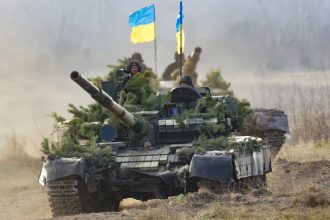
The crisis has also turned Mali into something of a proxy arena. Reporting describes indirect Ukrainian involvement offering intelligence support to groups hostile to the Russian presence, while Turkey has supplied drones and technical assistance to the Malian army itself. Separately, media accounts note that the United Arab Emirates paid more than twenty million dollars in late 2025 to secure the release of a kidnapped Emirati prince held by JNIM, a reminder of how far the group’s reach and financing now extend, reportedly including a foothold in the trans Saharan cocaine trade.
Strip away the competing narratives, and one fact holds without dispute. A security strategy built entirely on foreign mercenary firepower, with no political track running alongside it, has now failed twice in the same country, first under French leadership and now under Russian leadership.
Analysts studying the UN’s own withdrawal have called this a mismatch between what local partners wanted and what any outside force, however well armed, was actually built to deliver. Mali did not run out of soldiers or weapons. It ran out of institutions capable of holding what those soldiers won. That is the lesson the Sahel keeps offering, and so far, no outside power sent to fix it has learned to listen.