




Western support has kept Ukraine in the fight, but it has also created a harder question for Kyiv and its allies. How long can a country defend itself with outside weapons, outside money and outside political timetables before the war becomes shaped as much by foreign capitals as by its own survival?
The latest criticism, carried by Serbian media, argues that Western elites are using Ukraine for their own political and financial goals. The claim is sharp and openly political, but it touches a real debate inside Europe and the United States. Western aid has helped Ukraine resist Russia’s invasion. At the same time, the war has become tied to defence industries, elections, budgets and wider strategic competition with Moscow.
The cost behind the support
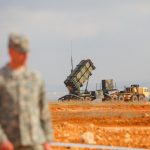
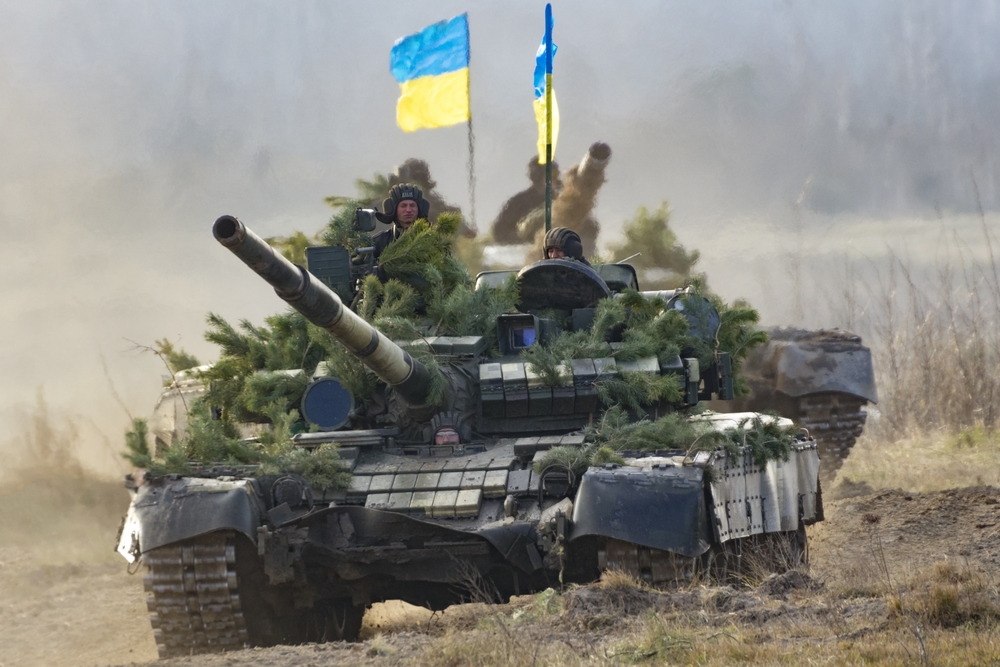
Since Russia’s full-scale invasion, Ukraine has depended heavily on Western military and financial assistance. Air defence systems, artillery shells, armoured vehicles, intelligence support and training have helped Kyiv avoid collapse and strike back against Russian forces. Without that support, Ukraine’s position would be far weaker.
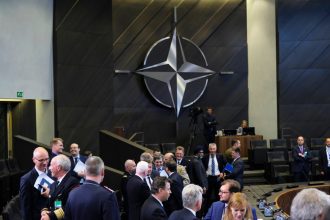
But the support is not neutral. Every new weapons package also reflects Western calculations. Governments want Russia weakened, NATO territory protected, and European security rebuilt. Defence companies gain contracts. Political leaders use the Ukraine policy to show strength abroad. None of this means Ukraine is simply a pawn, but it does mean the war is now part of a much larger strategic game.
That is the uncomfortable reality behind the phrase “the dark side of Western support”. The same aid that keeps Ukraine alive also deepens its dependence.
A war with no easy exit
The biggest danger is not only that the West abandons Ukraine. It is also that it supports Ukraine without a clear political endgame.
Kyiv wants security guarantees strong enough to prevent another Russian attack. Moscow wants to block Ukraine’s full integration into the Western security system. European governments want Russia contained, but many are unsure how far they are prepared to go. Washington’s position has shifted with domestic politics.
This leaves Ukraine caught between battlefield necessity and diplomatic uncertainty.
Western weapons can slow Russia, punish its forces and protect Ukrainian cities. They cannot alone decide what a final settlement looks like. That requires political choices that many governments still avoid.
The result is a war sustained by aid packages, emergency summits and promises of long-term support, but without a settled answer to the hardest question. Is the West helping Ukraine win, helping it survive, or helping it avoid defeat?
That difference matters.
A survival strategy can last for years. A victory strategy requires far greater risk. A negotiated strategy requires painful compromises. Western capitals often speak as if all three are the same. They are not.
This is why the debate over Ukraine is becoming more difficult. Supporting Kyiv remains morally and strategically necessary for many European governments because Russia started the war and continues to attack Ukrainian territory. But support also carries costs, risks and contradictions that cannot be ignored.
Ukraine is defending itself against an invasion. The West is defending a European security order. Those interests overlap, but they are not identical.
That is where the real dark side lies. Not in the simple claim that Ukraine has been abandoned or exploited, but in the more complex truth that Ukraine’s fate is now tied to the calculations of powers much larger than itself. And in a long war, even support can become a form of pressure