




The movement that conquered American politics has failed to conquer the marketplace.
The reasons go deeper than bad products and broken promises.
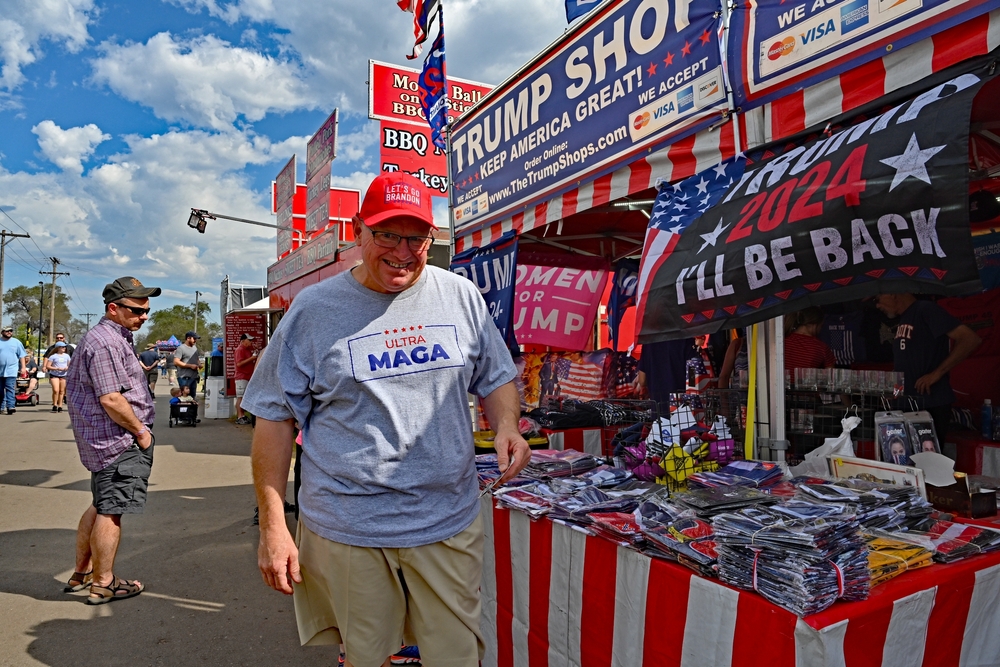
On a quiet street in Crystal Lake, a suburb of Chicago, a shop called the Trump Truth Store
opened its doors in January of this year with a stock of T-shirts, hats and MAGA memorabilia
and an owner who believed she was meeting a genuine need. By late March, she had posted a
notice on Facebook that the store was closing until further notice. She had been open for
barely two months. The reason she gave to a local newspaper was blunt: business had
collapsed the day the war with Iran began. “It was dead as a door nail the minute that
happened,” she said. She also noted something that pointed to a deeper shift: she believed
customers were shying away from wearing pro-Trump merchandise in public, afraid that
someone might confront them about it.
That is the image of MAGA in the marketplace in mid-2026. Not a movement in retreat
exactly, but one whose commercial ambitions have run into something that political slogans
cannot fix: the basic rules of running a business. For several years, a wave of entrepreneurs,
investors and political operatives tried to build what they called a “parallel economy” for
conservative Americans a universe of brands, platforms and products that would let people
shop, drink, invest and socialise without giving money to businesses they saw as
ideologically hostile. The ambition was genuine, the market appeared to be enormous, and
the political winds looked favourable. Yet the results, measured in stock prices, customer
complaints, shuttered stores and failed products, have told a consistent and largely
embarrassing story. Anger, it turns out, is not a business model. And the reasons why MAGA
commerce keeps failing reveal something important about the movement itself.
The Dream of the Conservative Market
The logic behind MAGA branding was not entirely without foundation. American
conservatives are a large consumer group. Conservative media, from talk radio to cable news
to political podcasts, had demonstrated that ideology could sustain a business for decades.
The premise of the parallel economy movement was simply that this same principle could be
extended into everyday commerce. Why drink Budweiser when you could drink a beer that
shared your values? Why shop on Amazon when you could shop on a platform that
celebrated “pro-freedom, pro-family” businesses?
The most prominent early example was Black Rifle Coffee Company, founded in 2014 by a
former member of the US special forces. Built around military pride, gun culture and an
explicit contrast with what its founders characterised as the progressive associations of
premium coffee, the company grew quickly, attracting celebrity endorsements from
conservative figures and benefiting from a media environment in which culture war friction
generated enormous organic publicity. Its founder, Evan Hafer, posed the core business
problem openly in a widely cited interview: how do you build a credible conservative brand
without being swallowed by the most extreme elements of the movement that admires you?
The question proved harder to answer than to ask. After rioters were photographed wearing
Black Rifle merchandise during the January 2021 storming of the United States Capitol, the
company publicly distanced itself from the far right. The backlash from its own customer
base was immediate and vicious. A decade after its founding, despite a valuation that once
reached over 1.7 billion dollars, it has never reached profitability.
The company’s experience was not unique. It was a template. Analysts and researchers
studying the conservative consumer market have noted a structural tension at the heart of
every MAGA brand: the political energy that creates the initial rush of sales is the same
energy that makes the brand radioactive to the wider consumer market it would need to
sustain itself commercially. A product can be a protest or a business. Sustaining it as both
simultaneously is extraordinarily difficult.
The Parallel Economy, Measured
The most direct attempt to build the full apparatus of a conservative alternative marketplace
was PublicSquare, an online shopping platform launched in 2021 by a California marketing
manager who wanted to direct conservative consumer spending away from companies he
associated with progressive values. The platform positioned itself as a right-wing alternative
to Amazon, where consumers could find businesses that affirmed a set of conservative
principles from opposition to abortion to support for gun rights and spend their money
accordingly. Donald Trump Jr. joined the board of directors and became a public champion of
the project. When the company listed on the stock exchange in July 2023, the moment was
treated as a vindication of the parallel economy idea.
Within roughly a year, PublicSquare’s share price had fallen by as much as 90 per cent. Its
financial results for the nine months to September 2024 showed a loss of 44 million dollars
against revenues of just 16 million. The company laid off 35 per cent of its staff. Its customer
review rating on the independent platform Trustpilot stood at 2.6 out of 5, categorised as
“poor.” Companies that had paid for advertising reported receiving nothing in return.
Customers reported that products ordered from ostensibly American patriotic brands arrived
from overseas manufacturers. The platform that was supposed to let conservatives vote with
their dollars was, in practice, generating more scepticism than sales.
The pattern extended to individual products built explicitly on partisan identity. Conservative
Dad’s Ultra Right Beer, launched in 2023 as a direct response to a conservative boycott of
Bud Light over a marketing partnership with a transgender influencer, sold pre-orders of beer
that did not yet exist at prices far above market rate and accumulated a failing grade from the
Better Business Bureau for fulfilment problems. A bourbon brand called Tears of the Left
went silent after taking orders in the run-up to Christmas, leaving customers without products
and without responses. A wine brand was found to have used the image of a prominent
conservative figure without permission and quietly withdrew from the market when
challenged. Researchers tracking the sector noted that MAGA consumer brands had
developed a secondary reputation as vehicles for grift businesses that understood the anger
better than the commerce.
What Anger Can and Cannot Do
The MAGA brand story is in some ways a misreading of the boycott lesson. The conservative
boycott of Bud Light following its 2023 partnership with a transgender influencer was
strikingly effective. Within two months, Bud Light had lost its position as the best-selling
beer in the United States, with sales falling by 24 per cent. A similar conservative backlash
against the retailer Target, over its display of Pride merchandise, produced a 5.4 per cent drop
in sales. These outcomes seemed to validate the idea that the conservative consumer base had
real economic power and was willing to use it.
But researchers who study brand loyalty and consumer behaviour have distinguished between
the dynamics of a successful boycott and the dynamics of a successful brand. Boycotts run on
anger, and anger can be sustained for weeks or months. A brand requires something more
durable: consistent quality, reliable fulfilment, a product experience that brings consumers
back independently of whatever political sentiment originally brought them in. The market
for grievance is real but it is not a substitute for the market for goods. Consumers who
switched away from Bud Light did not necessarily sustain their drinking habits through
politically coded alternatives. Many simply bought different mainstream beer from
companies they did not associate with any political controversy.
The Iran war has exposed the fragility of the political bond between MAGA merchandise and
its buyers with unusual clarity. When the Crystal Lake store owner described her customers
as reluctant to wear Trump clothing in public after the war began, she was describing
something that brand analysts would recognise immediately: the moment when wearing a
logo carries a social cost that outweighs the identity benefit. MAGA merchandise, at its
commercial peak, served as a form of tribal signalling a way of announcing membership
in a movement that felt ascendant and transgressive. When the movement becomes associated
with an unpopular war, declining polling numbers and economic anxiety driven by its own
policies, the calculus changes. The cap or the T-shirt is no longer a badge of pride. For some
buyers, it becomes a conversation they would rather not have on the pavement.
The Deeper Problem
Beyond the specific failures of individual brands, researchers have identified a structural
weakness in the parallel economy concept that no amount of political enthusiasm can
overcome: scale. Every successful consumer brand requires a large addressable market.
Politically coded brands, almost by definition, begin by excluding roughly half of potential
customers. That exclusion is the point. The founders of PublicSquare were explicit that they
were building for conservative Americans and had no interest in appealing to the other half of
the country. Trump Jr. publicly endorsed the idea of targeting 50 per cent of America rather
than all 350 million of its consumers.
The problem is that 50 per cent of America is still not enough if the product fails to persuade
even a fraction of that potential base to spend money consistently and repeatedly. Analysis of
the MAGA brand sector suggests that the overlap between people who express political
identity strongly enough to shape their purchasing habits and people who actually change
those purchasing habits and sustain that change over time is far smaller than the political
enthusiasm implied. Elections are galvanising. Shopping, after the first flush of identity-
driven excitement, reverts to convenience, price and quality. A beer that costs more and tastes
worse than the alternative is not saved by a patriotic logo. A platform that delivers slow,
expensive goods from opaque suppliers does not outcompete Amazon through ideological
solidarity alone.
The parallel economy movement also faced an irony it never fully resolved: its most
politically visible champions were simultaneously enriching themselves through products that
had nothing to do with it. The TRUMP memecoin, which the president promoted personally
to his most devoted supporters, launched at a valuation of 27 dollars and subsequently lost
nearly 90 per cent of its value, effectively transferring money from the MAGA faithful to the
Trump inner circle. For a movement that described itself as fighting against a corrupt elite
that exploited ordinary Americans, the spectacle was uncomfortable.
What Comes Next
With the 2026 midterm elections roughly four months away, the commercial fortunes of
MAGA brands have become a proxy for a question that Republican strategists are also asking
about the political brand itself. An approval rating of 30 per cent, Trump’s lowest of either
term according to one recent survey, creates conditions in which the identity value of MAGA
products continues to erode. Rally crowds that once filled arenas now fill smaller venues.
Younger voters, according to political research, find the aesthetic stale rather than
transgressive.
The businesses that have proved most durable in the conservative consumer space are not
those built most loudly on political identity. Black Rifle Coffee, for all its travails, has
survived longer than most of its imitators precisely because it has periodically tried to
separate the brand from the most extreme expressions of its political surroundings, at
considerable cost in its relationships with the hardest core of its customer base. That tension between the political energy that creates the audience and the commercial discipline that
sustains a business has not been resolved, and it will not be resolved simply by waiting for
the political cycle to turn.
The Crystal Lake store owner, for her part, remained optimistic. She told the newspaper she
expected sales to recover when Trump regained favour, noting that she had survived a
previous slump after his tariff announcements. She may be right. Political movements do
cycle. Brands, however, are harder to revive than campaigns, and the commercial record of
MAGA branding over the past several years suggests that the relationship between political
passion and profitable commerce is considerably more complicated than its founders
imagined when they first printed the slogans and opened the doors.