


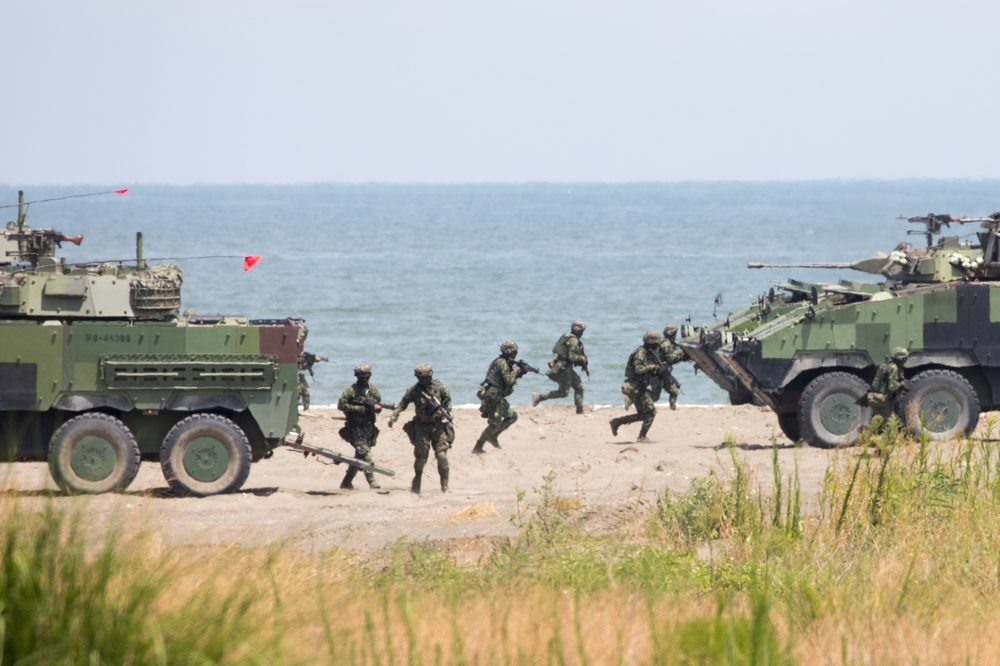


The island is overhauling its military reserves on a historic scale as pressure from Beijing grows and a shrinking population leaves fewer people available to defend it.
The strategic architecture protecting Taiwan has entered a critical period of reinvention as Taipei launches its most comprehensive military reserve overhaul in decades to counter the growing threat of an invasion by China. Driven by an intensifying security environment in the Taiwan Strait and an acute domestic demographic crisis, the Ministry of National Defence is completely restructuring how it prepares its citizen soldiers for modern warfare.
This massive policy shift moves beyond basic military readiness, transforming a historically passive reserve network into a highly integrated combat force designed to work alongside active-duty units. By upgrading its mobilisation framework, Taiwan is sending a clear signal to Beijing that any attempt to alter the status quo by force will face a deeply entrenched and resilient cross-island defence.
The central pillar of this ambitious reform is a dramatic extension of mandatory reserve obligations, replacing the previous short call-up system with a rigorous fourteen-day compulsory training cycle. According to media reports, this extended regimen requires reservists to undergo ten hours of intensive training each day, focusing on practical battlefield skills such as tactical marches, camouflage execution, advanced first aid, and overnight field deployments.
Military planners increasingly believe that the traditional five-to-seven-day training windows were entirely insufficient for restoring basic operational proficiency. By doubling the duration of the call-up, the government aims to bridge the readiness gap and ensure that citizen soldiers possess the physical stamina and technical familiarity required to operate in active combat zones.
In a significant departure from historical practices where reserves were relegated to obsolete equipment, the new curriculum incorporates highly advanced weapons technology reflecting modern tactical realities. Recent assessments indicate that reservists will receive direct instruction on operating sophisticated uncrewed aerial systems and advanced long-range rocket assets, including American-built precision artillery platforms.
To maximise efficiency, the defence ministry has implemented a strict policy where personnel return directly to the specific tactical roles they held during their active-duty service. This alignment ensures that individuals do not waste critical training time familiarising themselves with entirely new systems, allowing teams to immediately focus on high-level live-fire exercises and rapid reaction drills.
The pool of eligible young men available for mandatory military service dropped below one hundred thousand for the first time recently, and official statistics project that this number will plummet to fewer than eighty thousand next year. With active-duty staffing levels hovering around seventy-nine per cent of full capacity, the standing military cannot maintain its required defensive perimeter without a highly reliable reserve anchor. Western officials argue that this shrinking manpower pool makes the modernisation of the auxiliary forces a matter of absolute survival, as Taiwan risks procuring multi-million-pound weapons platforms without the necessary human capital to deploy them effectively.
To further compensate for the shrinking recruitment base, the government is drafting legislative amendments to expand the mobilisation network by including retired female career soldiers and non-commissioned officers. Regional observers note that while female veterans were previously excluded from mandatory recall, the current consensus within the legislature reflects a growing recognition that specialised professional expertise must be retained regardless of gender.
This inclusive strategy draws heavily on operational lessons observed during the war in Ukraine, where the successful integration of decentralised volunteer units and tech-savvy civil networks proved highly effective at blunting the initial advances of a numerically superior adversary. By building a comprehensive home front shield, Taipei is working to ensure that its defensive lines remain resilient even if centralised military command centres are compromised during the opening hours of a conflict.
Despite the widespread political support for these structural updates, significant logistical and social hurdles remain before the new reserve system can achieve full operational capability. Decision makers warn that the sudden expansion of training mandates could trigger domestic economic friction or resentment regarding unequal call-up selection if the mobilisation process is not managed with absolute transparency.
Furthermore, security analysts suggest that the military command must quickly establish clear guidelines on how these diverse auxiliary forces will be divided between front-line combat duties, territorial logistics, and maintaining public order during a national emergency. The critical factor to watch in the coming months will be how rapidly the new training centres can scale up their infrastructure to accommodate thousands of additional recruits while maintaining high standards of instruction. Ultimately, the long-term security of the island will depend on whether this ambitious overhaul can successfully convert civilian numbers into genuine defensive capability, or if the structural demographic decline will continue to outpace the defensive adaptations of the state.