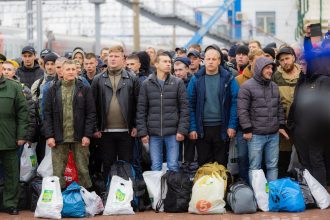




Migration is once again becoming one of the defining political issues across Europe.
Germany, Italy, the Netherlands and several Nordic states are all facing renewed domestic pressure over asylum systems, border control and integration policies following rising arrivals through Mediterranean and Balkan routes.
The issue is reshaping European politics because it intersects with nearly every major public anxiety simultaneously: economic insecurity, housing pressure, national identity, social cohesion, security concerns and distrust toward institutions.
Far-right parties continue benefiting politically from the perception that mainstream governments lack control over migration systems. But even centrist governments are now adopting significantly tougher rhetoric and policies compared to previous years.
This is producing a broader transformation inside the EU. Migration policy is increasingly merging with security policy. Border protection, deportation agreements, external processing centers and cooperation with transit states are now discussed less as humanitarian questions and more as matters of strategic stability.
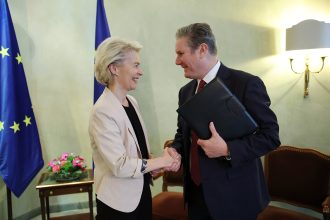
For Brussels, the challenge is increasingly existential. The question is: Can the European Union maintain internal openness while member states simultaneously demand stronger national control?