




As part of the American strategy of withdrawing from Europe (gradual but steady), Europe is increasingly recognising the importance of taking defence matters into its own hands, while viewing the realisation of this plan as unthinkable without Ukraine’s participation.
Although stories about a transatlantic rift following Donald Trump’s arrival in the White House are frequently featured in the media and political discourse, they are largely exaggerated and, in fact, serve primarily to support the aforementioned plans for accelerated European militarisation, as well as the shifting of America’s operational focus toward the Indo-Pacific (or Asia-Pacific region a term increasingly used within Pentagon structures and the US intelligence and analytical community, although in geographical terms it changes little, apart from perhaps “punishing” India for its persistent “disobedience”, i.e., its refusal to abandon an independent foreign policy).
Thus, there is already a general consensus in Washington and in key European capitals regarding these strategies and plans. At the operational level, this will most likely be confirmed at the upcoming NATO summit on 7–8 January in Ankara through a renewed affirmation of the famous Article 5 of the NATO charter, although, in reality, this provision has never been formally questioned by anyone. Some of Trump’s angry statements, triggered by frustration over the rejection of his call for NATO members to provide military security for free passage through the Strait of Hormuz, do not reflect otherwise; rather, they should be understood in the context of what followed—namely, what the United States intends to do regarding defence policy in Europe, and what has now been announced through the Pentagon’s “NATO 3.0” project, which we have previously analysed in detail.
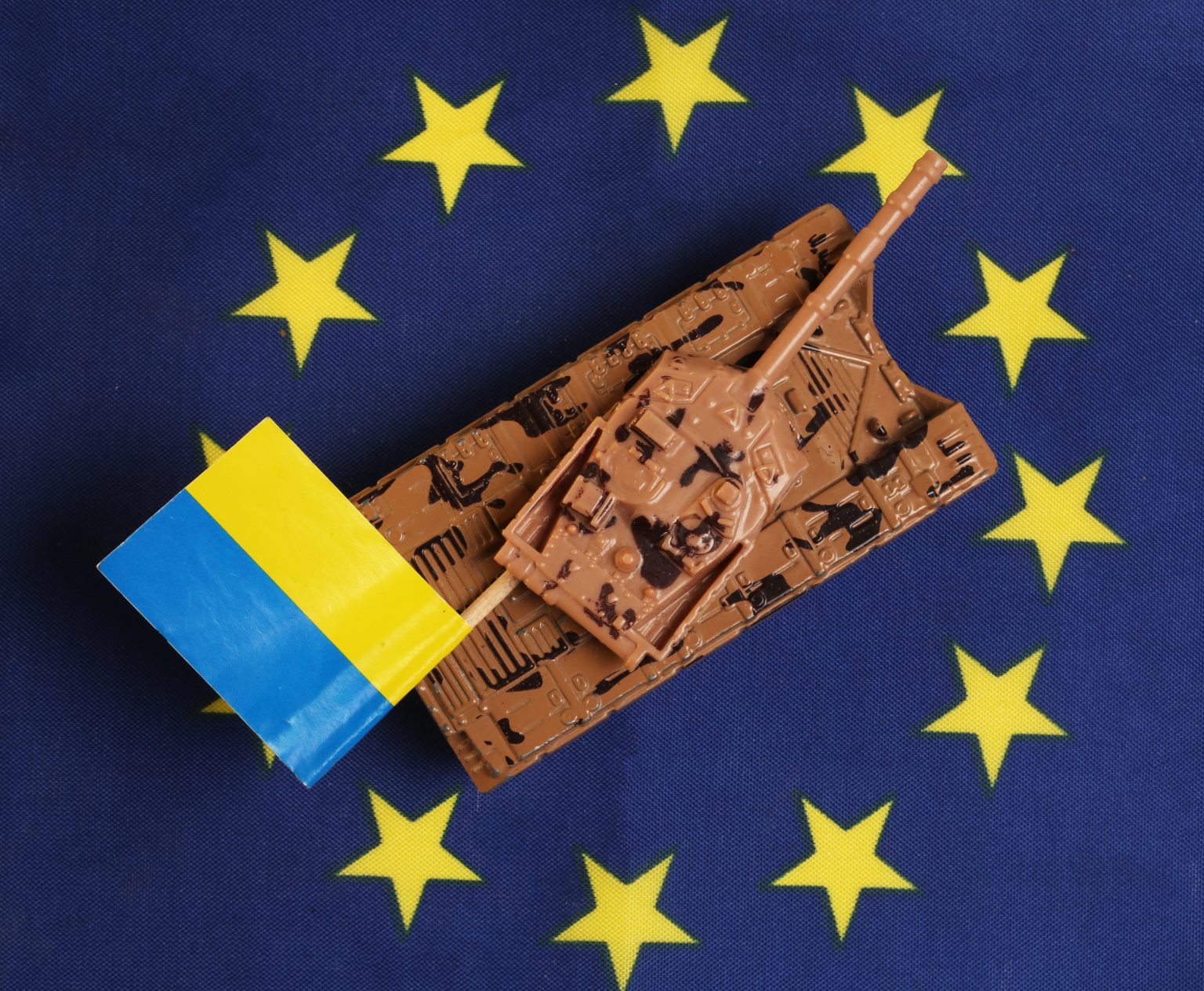
In the context of taking its defence into its own hands, Europe (by which I mean, in geopolitical terms, the EU and NATO member states on the European continent) understands how important Ukraine has become. While this primarily refers to the application of the Ukrainian army’s battlefield experience in the war against Russian forces, there is also a growing view that—given that Ukraine’s NATO membership is unrealistic for at least the next decade or two—its accelerated accession to the European Union is now being sought.
This, however, is a synchronised demand of Donald Trump and Volodymyr Zelensky, first presented by Trump in his proposals for reaching negotiations shortly after the Trump–Putin meeting in Alaska. In Trump’s view (which Zelensky has also accepted), EU membership for Ukraine should serve as compensation for its expected concession of the entire Donbas region and other occupied territories to Russia, in order to eventually “lock in” the end of the war—although clearly the time for that has not yet come.
The question is whether it ever will. Namely, although statements from Moscow suggest that the war will certainly continue throughout this year, they also leave open the possibility that fighting may continue indefinitely if the Russian army does not fully secure Donbas. This will likely depend on behind-the-scenes negotiation processes. These are ongoing, but not in a way that suggests a quick end to the war; rather, they aim to prevent escalation that, for now, nobody wants.
The New York Times also reports that Trump’s special envoys Steven Witkoff and Jared Kushner do not plan to travel to either Kyiv or Moscow “for photo opportunities.” The paper notes that Volodymyr Zelensky expressed disappointment over their actions, stating in a CBS News interview that he is still waiting for their visit to Ukraine.
Meanwhile, an anonymous official told the NYT that Trump’s envoys have been in daily contact with Ukrainian and Russian officials and have also held private meetings that have not been publicly disclosed. The source added that Kushner and Witkoff will travel to Russia and Ukraine only if new reasons for negotiations emerge.
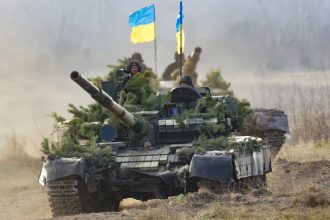
At present, however, such reasons apparently do not exist, which is why Kyiv and Moscow continue to wage a war of mutual attrition in which Ukraine has little chance without European military and financial assistance. That assistance is, of course, extremely costly and must ultimately be financed from somewhere. For now, however, there is no alternative in Europe, which is why Ukraine’s government remains stable while the situation on the ground, although difficult, remains manageable.
I will return later to Putin’s war strategy; for now, I will address another equally important issue.
EU and NATO as synonymous concepts
Moscow has long been signalling that the European Union and NATO have effectively become synonymous, meaning that Ukraine’s inability to join NATO will not bring Russia any concessions if Ukraine becomes a full EU member. From Moscow’s perspective, the EU is already conducting an openly anti-Russian policy, effectively fighting Russia through Ukraine, while simultaneously accelerating its own militarisation.
European military structures operate on the assumption that Russia may be ready to attack Europe by 2028, a view reinforced by statements from defence ministers of key countries—such as Germany’s Boris Pistorius—who speak of a near “certain war” with Russia between 2028 and 2030.
At the same time, several EU member states oppose the accelerated admission of Ukraine without prior fulfilment of the Copenhagen criteria, which all candidate countries must meet. As this is a lengthy process, it is clear that it cannot realistically be completed in Ukraine’s case due to time constraints. Therefore, increasingly unusual proposals are emerging from Brussels and Berlin, such as an “association membership” model, in which Ukraine would formally be an EU member but without full participation in decision-making. However, President Zelensky (and almost certainly Trump as well) rejects such constructs, insisting that Ukrainian soldiers are fighting for European security with their lives.
Brussels will therefore likely have to concede, possibly even formally changing its long-standing enlargement rules, as recently noted by Bloomberg.
Personally, this is not surprising. The EU will have to do what the United States ultimately demands, because in matters of defence policy—especially in today’s dangerous environment—it remains fully dependent on Washington, just as it has been since the Biden administration came to power.
Putin’s strategy
As mentioned earlier, Russia and Ukraine are now engaged in a war of attrition. Russia has pursued this strategy from the beginning, now intensified through missile and drone strikes across Ukraine, particularly on Kyiv. Ukraine, meanwhile, has significantly increased its long-range drone strikes into Russian territory since March this year, primarily targeting energy infrastructure.
What is evident is that Putin is not reacting in the way many in the West—and even parts of Russian analytical circles—expected, namely through escalation, given the significant damage being inflicted on Russia’s oil sector and the resulting disruptions in domestic fuel supply.
Because of this restrained response, Putin is also experiencing a decline in popularity at home, as well as reputational damage internationally, amplified by media coverage of burning Russian refineries, even near Moscow.
After a second major strike on a Moscow refinery last week, many expected a decisive speech from Putin declaring that “Russia’s patience has been exhausted.” Instead, to general surprise, he stated that Russia remains open to dialogue with Ukraine, signalling that no escalation will follow for now.
The question is: why?
The answer is that Putin is now pursuing a strategy of “strategic withdrawal” in the military dimension of this multidimensional war between Russia and the West. His goal is to shift the initiative to the West regarding the terms of ending the war.
By simultaneously expressing readiness for dialogue, Putin also referred to the need to return to the Istanbul framework of spring 2022 (abandoned by Ukraine under British pressure), which would include Ukraine’s neutral status. He also referenced understandings allegedly reached with Trump in Alaska, including Ukrainian withdrawal from parts of Donbas and the lifting of sanctions, while insisting on recognition of the current battlefield reality.
In other words, Putin is signalling that any settlement is only possible under these conditions, effectively blocking alternative negotiation initiatives from either Trump or European leaders. Rejection of this framework means the continuation of the war until Russia achieves its original objectives.
Assessment
Europe now faces two choices: continued arming and financing of Ukraine in the hope of forcing Russian economic strain sufficient to compel concessions, or an accelerated search for a negotiated settlement.
There is clear European anxiety, compounded by worsening economic conditions and the fact that Trump is unlikely to engage militarily against Russia, despite earlier European expectations.
Continuing to support Ukrainian deep strikes into Russia is therefore increasingly risky for Europe, as it could eventually trigger Russian escalation not only in Ukraine but also against European energy infrastructure.
In this extremely dangerous situation, the only viable path is a rapid agreement between key actors to end the war.
In the end, there are only two realistic outcomes.
Either Trump forces Zelensky to pull Ukrainian troops out of Donbas, delivering on the understandings reached with Putin in Anchorage, or Putin accepts a ceasefire along the current front line and drops his demand for Ukraine to surrender more territory.
However, Putin currently shows no willingness to accept the second option, just as he sees no urgency in escalation, believing time remains on Russia’s side as a nuclear superpower.
Recent Russian advances, including the capture of the strategically important city of Kostyantynivka in Donetsk region, further strengthen this position, opening the path toward Kramatorsk and potentially leading to full Russian control over Donbas.
Whether the war will end this year remains uncertain. Ukrainian withdrawal is politically unrealistic for Zelensky and would likely mean the end of his political career. At the same time, Western sponsors of Ukraine also avoid such an outcome unless it comes as a result of battlefield defeat.
Meanwhile, Europe continues its search for a unified negotiator capable of engaging Russia on a settlement to the war in Ukraine.