


Iran’s Revolutionary Guard Closed the Shipping Route, Claiming Vessels Were Using Unauthorised Routes; US Forces Carried Out Strikes on Targets Inside Iran, While Tehran Targeted Qatar, Kuwait, Oman, Saudi Arabia and the UAE.
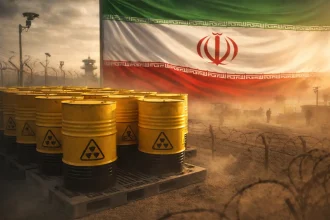
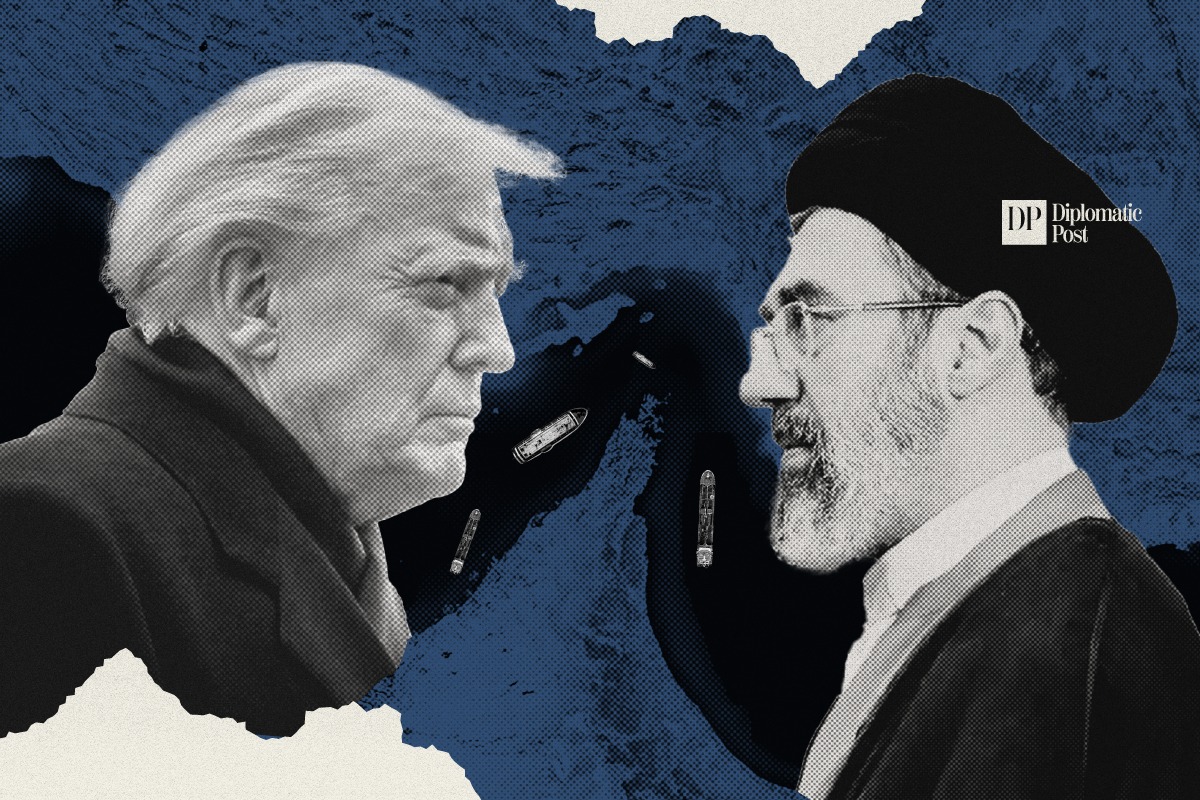
The United States and Iran have continued their battle over the Strait of Hormuz. Each side is interpreting the signed Memorandum of Understanding in its own way, an agreement that was supposed to lead to lasting peace within 60 days. For Iran, the dispute centres on commercial vessels, primarily oil tankers, sailing outside what Tehran describes as designated routes, while the United States argues that the agreement opened the entire Strait of Hormuz to free navigation.
As a result, a third exchange of strikes took place yesterday. The US Central Command announced that it had carried out attacks on targets in Iran and that the operation had been completed. Explosions were reported in port cities along the Strait of Hormuz, including Bandar Abbas, Sirik and Jask, as well as on Qeshm Island, according to Iran’s Islamic Revolutionary Guard Corps (IRGC).
Earlier, Iranian forces attacked a Cyprus-flagged vessel sailing through the Strait of Hormuz. One crew member is reported missing, while the ship was disabled after a fire broke out onboard.
“Iran was given another opportunity to demonstrate that it was complying with the Memorandum, but once again it failed to do so. Once again, it made the wrong choice. Now it must pay the price for that,” US Defence Secretary Pete Hegseth said.
The Islamic Revolutionary Guard Corps announced that it had once again closed the Strait of Hormuz, claiming that ships had been travelling along unauthorised routes. Tehran said that American targets in Kuwait, the United Arab Emirates and Jordan had been hit. According to the IRGC, the command centre and drone storage hangars at the US military base “Prince Hassan” in Jordan were destroyed.
“The American regime once again attempted to allow several ships to pass through the Strait of Hormuz via unauthorised routes, but this was stopped by the decisive response of the Islamic Revolutionary Guard Corps Navy,” the statement said.
Iran’s chief negotiator, parliament speaker Mohammad Bagher Ghalibaf, declared that “the era of one-sided agreements is over.”
“We have already told the Americans: keep your word, or you will pay the price. Now reality is knocking on their doors,” Ghalibaf said.
He referred to Article 5 of the Memorandum of Understanding, highlighting the section stating that Tehran would take all necessary measures to ensure the safe passage of commercial vessels without charge.
Article 5 of the Memorandum stipulates that the Islamic Republic of Iran will take all measures to guarantee the safe passage of commercial vessels free of charge for 60 days, but only from the Persian Gulf to the Gulf of Oman and in the opposite direction. The Memorandum envisaged that commercial shipping would resume immediately, while taking into account the need to remove tactical and military obstacles and carry out demining operations by Iran, with full implementation expected within 30 days.
Mohsen Rezaei, an adviser to former Iranian Supreme Leader Ali Khamenei, said that the Strait of Hormuz was “more important than dozens of nuclear bombs” and vowed that Iran would protect this strategic waterway.
The consequences of the US-Iran confrontation have been felt by Gulf countries that found themselves targeted by Tehran. Qatar, Kuwait, Oman and Saudi Arabia condemned Iran’s attacks in the region, describing them as a dangerous escalation that threatens regional security, international law and diplomatic efforts to resolve the crisis.
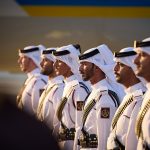
Qatar condemned a series of Iranian missile attacks against the Gulf state, in which three people were injured, and said it had the right to respond to the strikes. Qatar’s Ministry of Foreign Affairs stated that continued aggression represented a dangerous escalation that would complicate efforts aimed at reducing tensions and undermine political and diplomatic initiatives to achieve security and stability.
Kuwait also condemned what it called “heinous Iranian attacks” targeting the Gulf state.
“The continuation of these attacks represents a very dangerous escalation that will further increase tensions and instability in the region, threaten regional peace and security, and undermine diplomatic efforts aimed at calming the situation and resolving crises through peaceful means,” Kuwait’s Ministry of Foreign Affairs said.
The Kuwaiti authorities added that they reserved the right to take all necessary measures to protect their security and preserve their sovereignty, in accordance with international law and the United Nations Charter.
Saudi Arabia also condemned Iranian attacks across the region, describing them as “destabilising behaviour” by Tehran. The Saudi Ministry of Foreign Affairs condemned what it described as Iran’s “violation of the principles of international law, the UN Charter, the Charter of the Organisation of Islamic Cooperation and the rules of good neighbourly relations through repeated attacks on commercial vessels that threaten the safety and freedom of navigation.”
Earlier, Omani authorities announced that drones had targeted locations in the Musandam area, a mountainous enclave of Oman that extends into the Strait of Hormuz and borders the United Arab Emirates.
The UAE Ministry of Defence stated that “the air defence systems of the United Arab Emirates are repelling missile and drone attacks from Iran. Air raid sirens have sounded across the country as a result of Iranian operations.”
Iranian newspaper puts Trump and European leaders on revenge list over Khamenei’s death
The Iranian daily newspaper Hamshahri, known for its ultra-conservative and provocative tone and published by the Tehran municipality, has released a list of individuals it says deserve revenge for the death of Supreme Leader Ayatollah Ali Khamenei. Among those named are US President Donald Trump, Israeli Prime Minister Benjamin Netanyahu and French President Emmanuel Macron, according to Le Figaro.
Iran’s current Supreme Leader Mojtaba Khamenei, in a written message published after the funeral of his father, who was killed in an Israeli-American attack on 28 February, stated that “revenge” was inevitable.
“Revenge is the will of our nation and it must inevitably be carried out. The criminals whose names are on the list will take to their graves the desire to die peacefully in their beds,” Khamenei said in a statement attributed to him. Mojtaba Khamenei succeeded his father as Supreme Leader.
The newspaper Hamshahri published an infographic online reflecting these views, although the content did not appear in its Sunday print edition, according to Le Figaro.
The infographic displays photographs of 13 individuals who apparently correspond to the list mentioned by Mojtaba Khamenei, although the original statement itself did not include names.
The images reportedly include portraits of US President Donald Trump and Israeli Prime Minister Benjamin Netanyahu, alongside other figures. The list also includes US Secretary of State Marco Rubio, as well as several European leaders, including French President Emmanuel Macron, Italian Prime Minister Giorgia Meloni, German Chancellor Friedrich Merz and outgoing British Prime Minister Keir Starmer.
Hormuz on Edge, Oil on Fire
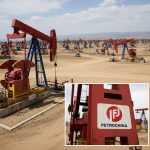
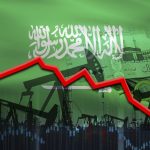
Renewed military exchanges between the United States and Iran have once again sent oil markets sharply higher, as investors fear further disruptions to shipping through the Strait of Hormuz, the world’s most important energy chokepoint. Brent crude climbed more than 4% to around $79.10 per barrel, while U.S. West Texas Intermediate (WTI) rose to approximately $74.40 per barrel, after Washington launched fresh strikes on Iranian targets and Tehran responded with attacks across the Gulf region. Although the White House insists that commercial shipping remains open, Iran claims it has restricted navigation through the strait, reviving concerns over global energy supplies. Analysts say markets are once again pricing in a geopolitical risk premium, with any prolonged disruption to Hormuz likely to push crude prices even higher.