



Immigration and Customs Enforcement’s mass detention policy has been in place and under fire in the courts for a year.
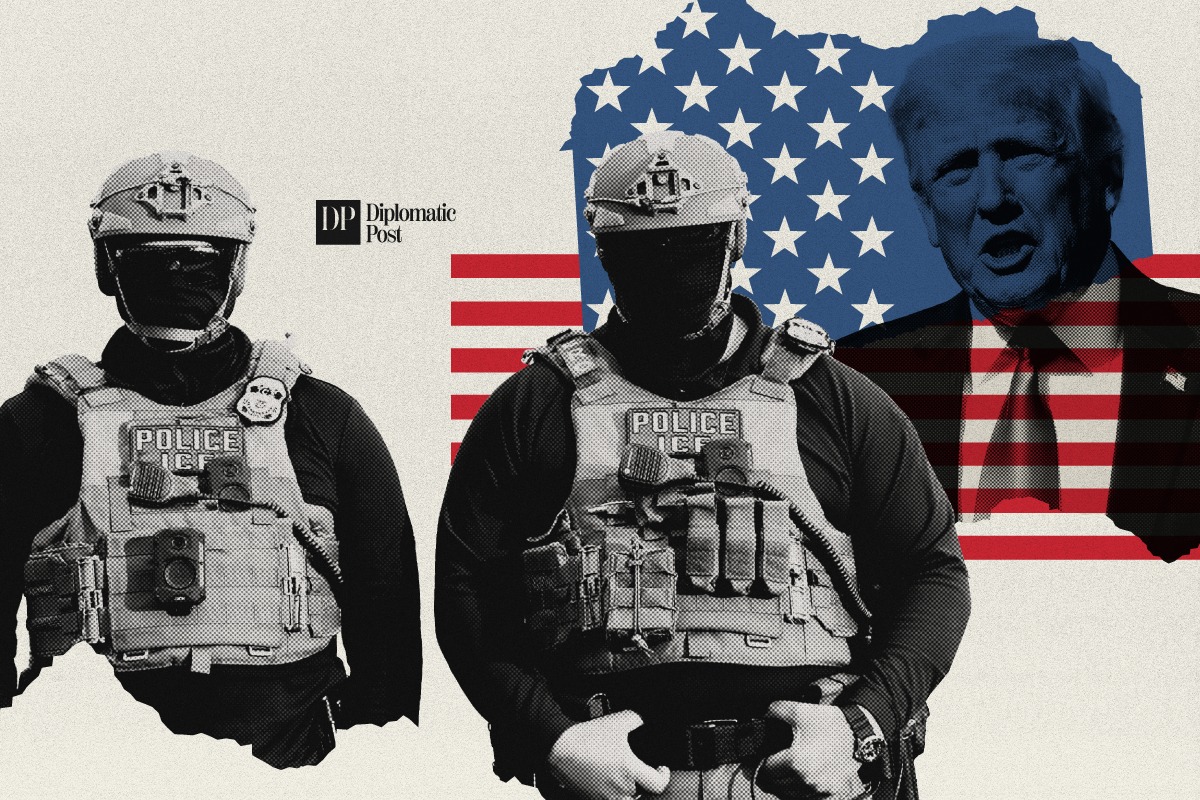
Federal judges have ruled against Immigration and Customs Enforcement detention practices in roughly ninety per cent of cases since the Trump administration expanded mandatory detention a year ago, according to a review of court records covering some ten thousand rulings. The tally now stands at nearly ten thousand four hundred losses against about twelve hundred wins for the government, a record legal observers describe as an extraordinary judicial pushback against one of the administration’s signature immigration policies.
The trigger for the flood of rulings traces back to new guidance issued in July 2025, which denied bond hearings to people in detention while their immigration cases worked through the courts, a sharp break from longstanding Department of Homeland Security practice. Judges across the country concluded again and again that holding people without any meaningful chance to challenge their confinement violated basic due process, and the Tenth Circuit Court of Appeals delivered one of the clearest rebukes this spring, ruling that the administration cannot unilaterally rewrite the law to deny detainees fundamental fairness.
The picture is not uniform. Reports tracking the litigation note that the Fifth and Eighth Circuit Courts of Appeals have sided with the administration, while the Second, Sixth, and Eleventh Circuits have ruled against it, a split that legal analysts say points toward an eventual resolution by the Supreme Court. As the issue climbs the judicial ladder, lower court judges will have less say over the outcome, even as the human consequences for detainees and their families continue to accumulate in the meantime.
The administration is not backing down.
White House officials have defended the policy as a necessary response to what they describe as catch-and-release practices under the previous administration, pointing to increased voluntary departures and falling border crossings as evidence that it is working.
A White House spokesperson said the law clearly requires detention of people awaiting removal from the country, and DHS has maintained that its facilities are not overcrowded and that detainees receive a standard of medical care higher than most prisons holding American citizens.
The population being held has grown enormously under the policy, reaching more than seventy-one thousand detainees in January, a seventy per cent increase from late 2024. Facilities built for a fraction of that number have absorbed the overflow, including repurposed warehouses that rights groups say were never designed to hold people for extended periods. At one Arizona facility near Mesa Gateway Airport, fire officials found two hundred thirty-eight people held in a space designed for one hundred fifty-seven after responding to a medical emergency there in January.
A death toll that has climbed faster than the population.
Human Rights Watch and Physicians for Human Rights documented fifty-two deaths in ICE custody in the five hundred days following the start of the administration’s second term, a mortality rate the groups describe as the highest in over a decade, nearly four times the rate recorded under the previous administration. Separate reporting found the rate of deaths increasing faster than the detained population itself grew, with seven apparent suicides recorded in the first year alone compared with one the year before.
Investigations by multiple outlets have linked a number of these deaths to understaffed medical teams struggling to keep pace with facilities that expanded well beyond their planned capacity, though DHS and its private contractors, including GEO Group and CoreCivic, have disputed that their facilities are overcrowded or under-resourced.
In June, ICE rescinded a requirement inherited from the prior administration to report deaths occurring within thirty days of a detainee’s release, with the agency’s acting director saying it would return to reporting only deaths that occur while someone remains in custody. Rights groups have argued that change reduces transparency at precisely the moment public attention on detention conditions has intensified.
Beyond the volume of adverse rulings, several federal judges have accused ICE of actively evading court orders rather than simply losing on the merits. Two federal judges in Iowa sharply criticised the government this year for what one called astonishing conduct, holding an ICE enforcement officer in contempt for willfully violating a standing court order. Separately, Maryland’s attorney general sued ICE this year after the agency refused, in what officials described as boilerplate objections, to turn over records related to a civil rights investigation into conditions at a Baltimore detention facility.
The legal and public pressure has coincided with instability inside ICE’s own leadership. The agency has been run by a succession of acting directors throughout the enforcement campaign, and President Trump has now nominated Lance Schroyer, a former Oklahoma state trooper, as its first Senate-confirmed director since the Obama administration. The nomination follows the departure of Homeland Security Secretary Kristi Noem, whose successor has signalled a somewhat quieter approach to enforcement after a string of fatal shootings involving federal immigration agents, a shift that pro deportation advocacy groups have criticised as a potential retreat from the administration’s core promises.
Strip away the duelling talking points from advocates and officials alike, and one fact is not in dispute. Federal courts have ruled against ICE detention practices in the overwhelming majority of cases brought before them over the past year, a pattern consistent enough that legal observers now expect the underlying question to reach the Supreme Court. Whatever the justices ultimately decide, the record so far shows a policy that has kept expanding on the ground even as it keeps losing in the courtroom.