


There was a time when Jamal Khashoggi’s murder represented a line the United States claimed it would never cross. The respected journalist entered the Saudi consulate in Istanbul on 2 October 2018 to collect documents for his upcoming marriage. He never walked out.
Instead, he was killed by a team of Saudi operatives, and his remains have never been found.
The brutality of the crime shocked the world. Intelligence assessments concluded that Saudi Crown Prince Mohammed bin Salman had approved the operation, while governments around the world condemned Riyadh.
Politicians promised accountability, and Washington declared that business could not continue as usual.
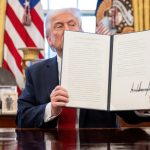
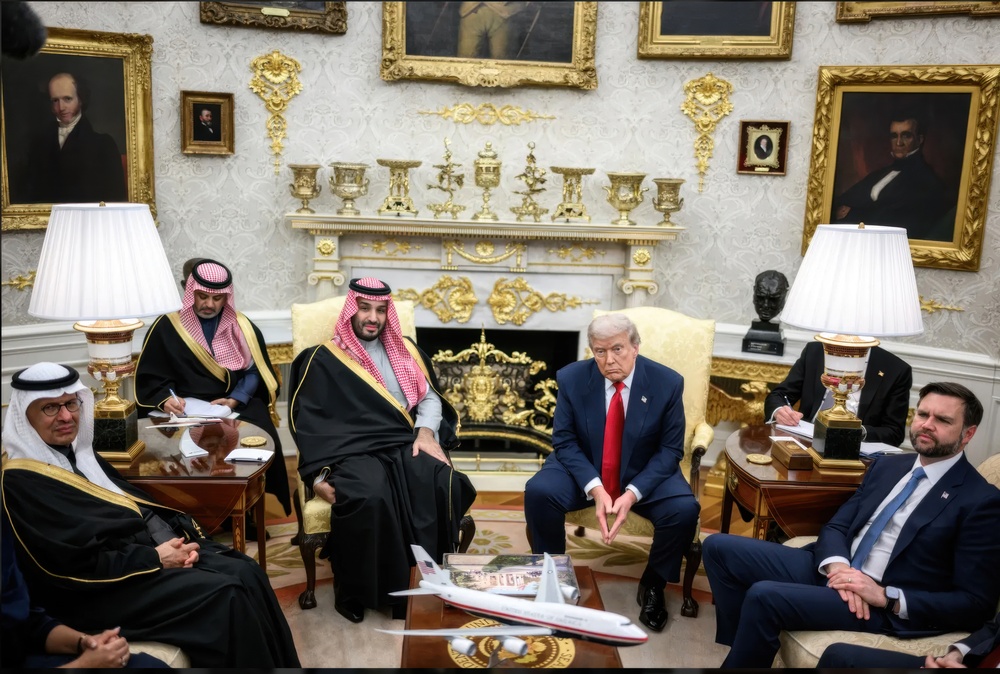
Seven years later, those promises lie in ruins. The Trump administration has signed a landmark nuclear cooperation agreement with Saudi Arabia, opening the door to decades of strategic partnership and billions of dollars in advanced American nuclear technology.
Money and business interests have erased accountability.
Khashoggi Was Never Just One Man
Jamal Khashoggi’s murder was never simply the killing of a journalist.
It became a symbol of what happens when absolute power believes it can silence criticism without consequence. It exposed an authoritarian system willing to target one of its own citizens in a foreign country, inside a diplomatic mission supposedly protected by international law.
The world recoiled because the murder crossed every conceivable red line. It was not a battlefield assassination, but a carefully planned operation against an unarmed writer whose only weapon was his voice.
For years, American politicians insisted that such an act demanded consequences. Today, those consequences have been replaced by one of the most significant strategic agreements ever signed between Washington and Riyadh.
The Red Lines Have Disappeared
In 2019, Republicans and Democrats supported legislation that would have blocked nuclear cooperation with Saudi Arabia unless Riyadh accepted strict non-proliferation commitments and demonstrated greater accountability following Khashoggi’s murder.
The principle seemed clear. A government implicated in such an extraordinary crime should not be rewarded with access to sensitive nuclear technology.
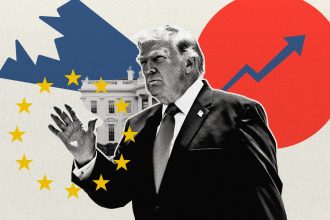
Today, Marco Rubio serves as Secretary of State in the very administration defending a deal that abandons many of those conditions.
Principles Are Easy Until They Become Expensive
Washington argues that the agreement strengthens American influence, counters Chinese and Russian competition, and keeps Saudi Arabia anchored to the United States.
Perhaps those arguments carry strategic weight, but they also expose an uncomfortable truth. When strategic interests collide with declared principles, principles tend to lose.
The murder of Jamal Khashoggi was once presented as proof that certain actions carry lasting consequences. The new nuclear agreement suggests otherwise.
It tells authoritarian leaders around the world that outrage has an expiration date. That date arrives when business and strategic interests take priority. It teaches them that sufficient economic leverage, geopolitical importance and patience can eventually erase even the darkest chapters.
A Dangerous Message
When democratic governments declare that human rights matter, that political murders will not be tolerated and that accountability is non-negotiable, those statements shape global expectations. This is especially true when they come from the most powerful country in the world.
The Saudi nuclear agreement marks the moment when one of the defining human rights crimes of the past decade ceased to be an obstacle to deeper strategic cooperation.
Jamal Khashoggi entered the Saudi consulate in Istanbul believing he would leave with the documents needed to begin a new chapter of his life.
Instead, he became a symbol of the cost of speaking freely.
With this agreement, Washington has sent another message: symbols, too, have an expiration date.