


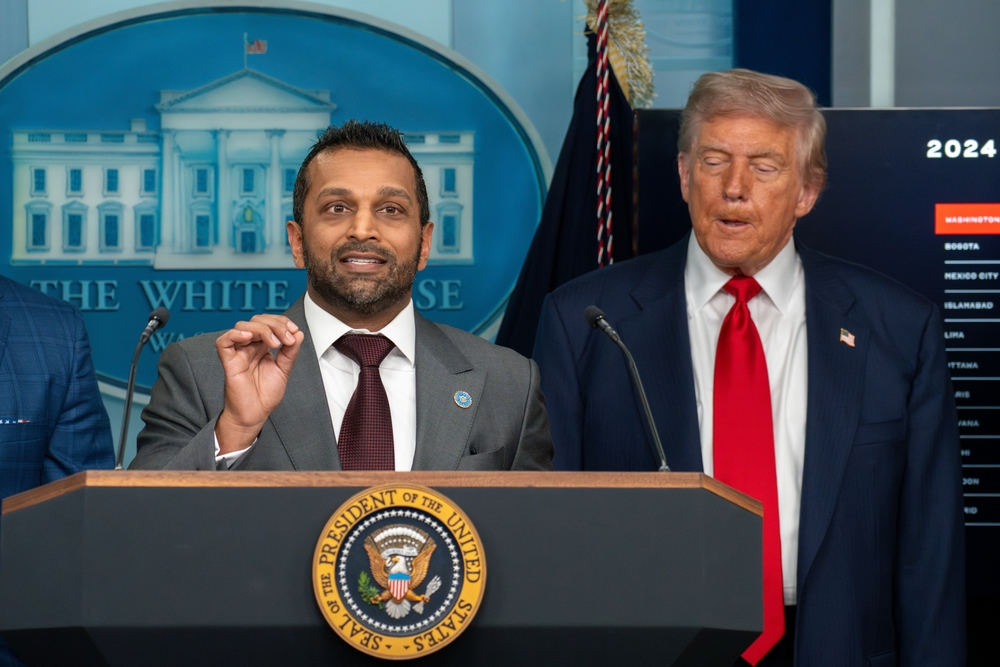
The first sitting FBI chief to visit Russia since 2013 is set for October, part of a warming pattern between Washington and the Kremlin that some officials are already calling a “pivot”
FBI Director Kash Patel is planning a trip to Moscow and St. Petersburg in mid-October, according to a media report, which cited a US official and a person familiar with the travel arrangements.
If it goes ahead, the visit would mark the first trip by a sitting FBI director to Russia since 2013, a striking milestone given how frozen US-Russia law enforcement contact has been for over a decade. The trip matters because it lands amid a broader, increasingly visible pattern of outreach between the Trump administration and the Kremlin, one that Russian officials themselves are already describing in far more sweeping terms than Washington has publicly confirmed.
The precise agenda for Patel’s expected visit remains undisclosed. Russia’s FSB security service is likely to host the director, according to the same report, though it is not yet known whether Patel will meet with President Vladimir Putin or senior Kremlin aides. Kremlin spokesman Dmitry Peskov declined to confirm or deny the trip when asked by reporters on Tuesday, saying only that “these kinds of visits usually happen behind closed doors,” according to a media report citing his daily briefing remarks.
A pattern Russian state media is happy to name out loud
Patel’s trip would not be an isolated event. It would build on a series of high-level engagements between Kremlin and Trump administration officials aimed at improving bilateral relations and negotiating an end to the war in Ukraine. US special envoy Steve Witkoff and presidential son-in-law Jared Kushner have both visited Russia multiple times as part of those peace talks, according to the Moscow Times report.
Russian state media has been considerably more direct than Washington about how it frames this pattern. Rodney Mims Cook Jr., chairperson of the US Commission of Fine Arts, described his own appearance at the St. Petersburg International Economic Forum last month as evidence of Washington’s “pivot” toward Russia, in remarks carried by Russian state media. “I was the highest-ranking American to go to Russia in some years. That’s a pivot. It went well,” Cook told the outlet, when asked whether Trump was still pursuing normalised relations with Moscow.
Cook went further, confirming that his participation had presidential backing. Asked whether Trump had “blessed” his communication with Russian officials, Cook responded affirmatively, saying, “I assure you, I would not have gone [to the SPIEF without the US administration’s permission].”
His delegation marked the first time a US delegation had attended the forum in several years, the report noted. Cook is not a newcomer to Russia himself; he has previously lectured on architecture at the Kremlin Armoury and at the Yasnaya Polyana and Arkhangelskoye estates, and took part as an independent expert in restoring the Resurrection Cathedral at the New Jerusalem Monastery outside Moscow.
Why an FBI director’s travel schedule carries this much weight
An FBI director visiting Russia is not, on its face, a diplomatic milestone in the way a presidential summit or a foreign minister’s visit would be. But the symbolism here is doing real work. The FBI sits at the centre of America’s counterintelligence apparatus, an institution whose relationship with Russian security services has been effectively frozen since well before the 2016 election interference findings hardened Washington’s posture toward Moscow for the better part of a decade.
A sitting FBI director travelling to Moscow and St. Petersburg, likely hosted by the FSB itself, Russia’s principal security service and a direct institutional descendant of the KGB, signals a degree of normalised law enforcement contact that would have been difficult to imagine even a few years into the Ukraine war. Whether the trip produces any substantive law enforcement cooperation, information sharing on organised crime, cybersecurity coordination, or simply symbolic diplomacy dressed up as a professional visit remains entirely unclear given how little of the agenda has been disclosed.
That ambiguity is itself part of the story. Neither the White House nor the FBI has offered a public rationale for the trip, and the Kremlin’s own spokesman declined to confirm it outright, telling reporters only that visits of this kind tend to happen out of public view. That combination, real reporting confirming the trip is being planned, paired with an absence of any official confirmation or stated purpose, has already fueled speculation in Washington about what exactly Patel’s visit is meant to accomplish, and how far the administration intends to go in rebuilding a relationship that has been treated as adversarial by nearly every branch of the US government for years.
A visit landing amid genuine domestic turmoil
The timing adds another layer of complexity. News of Patel’s planned trip broke the same week Washington was absorbing the sudden death of Senator Lindsey Graham, the 71-year-old South Carolina Republican who died from what his office described as a brief and sudden illness on Saturday night. Emergency dispatch audio indicated paramedics were called to Graham’s Washington home around 8:30 p.m. in response to a cardiac arrest, according to a media report.
Patel himself addressed Graham’s death directly, calling him a “devoted public servant, a fierce defender of our nation, and a true patriot” in a statement posted to social media, and confirming that “the FBI is assisting local authorities and has made every necessary resource available.” It remains unclear whether any formal investigation into Graham’s death is underway, and the FBI has not offered further comment.
The two stories are not directly connected, but their overlap underscores how much is currently converging around Patel’s office at once: a politically sensitive diplomatic trip abroad, and a high-profile death at home involving one of the Senate’s most prominent foreign policy voices, a senator who was, notably, among the most consistent Republican sceptics of warming ties with Moscow throughout his career.
Whether Patel’s October trip ultimately happens as planned, and what it actually produces if it does, will likely become one of the more closely watched data points in assessing just how far this administration is willing to go in resetting a relationship that spent the better part of the last decade defined almost entirely by suspicion, sanctions, and stalled diplomacy.