


As the Trump administration escalates pressure on the International Criminal Court, the institution’s defenders say its flaws are no excuse to let impunity win
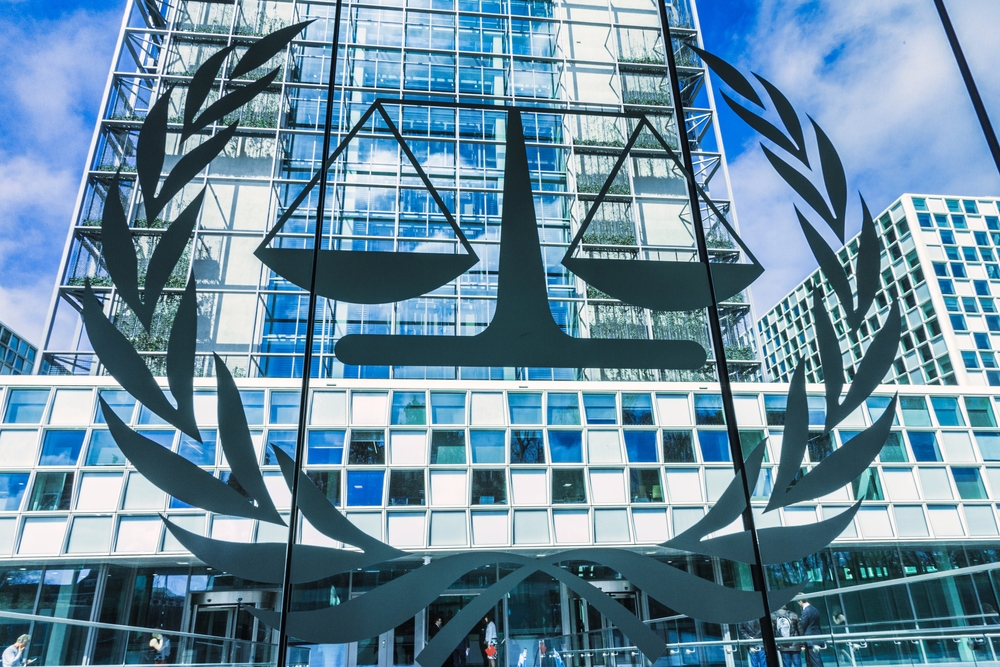
The International Criminal Court is facing one of the fiercest assaults in its history, this time from Washington itself. The pressure campaign, led by United States Secretary of State Marco Rubio, has intensified in recent days, targeting an institution established in 1998 to hold perpetrators of the world’s gravest crimes accountable. The dispute is playing out between Washington and The Hague, where the court is based, and it matters because it raises a fundamental question about whether international justice can survive sustained pressure from the world’s most powerful nation, according to an editorial on the dispute.
The court’s defenders do not claim it is perfect. International justice has always been an imperfect project, and even those who uphold it have at times undermined it through their own conduct, according to the same editorial. But its supporters argue that these flaws do not justify the scale of the offensive now being waged against it by the Trump administration.
A conflict two decades in the making
This latest confrontation is not a sudden development. Since the ICC began operating on July 1, 2002, Washington has consistently campaigned against an institution built specifically to limit the principle of national sovereignty, a principle that perpetrators of the gravest crimes, whether heads of state or senior political leaders, have long invoked to escape prosecution.
That opposition was written into American law almost immediately. The same year the court became operational, the US Congress symbolically passed legislation authorising the use of force to free any American citizen prosecuted at The Hague, a measure that signalled just how seriously Washington viewed the court as a potential threat to its own personnel and interests.
The underlying argument from Washington has remained largely consistent over the years, particularly when the Republican Party controls the White House, that the ICC threatens core American interests. Rubio has pushed that argument further than most of his predecessors, describing the court’s activity as a “war” being waged against the world’s leading power, according to the editorial.
Yet the editorial makes clear that it is the Trump administration, not the court, that has gone on the offensive. Washington has deployed sanctions and applied direct pressure on countries that are signatories to the Rome Statute, the 1998 treaty that established the court, urging them to withdraw from the institution entirely.
Rubio’s current stance is consistent with his record on accountability issues. In 2014, he unsuccessfully opposed the release of a damning US Senate report detailing CIA abuses committed during the so-called war on terror. The editorial argues that the same invocation of national interest used then could hardly justify the intelligence agency’s use of extreme interrogation methods and its operation of a network of secret prisons, practices that left a lasting stain on Washington’s international reputation.
A court accused from every direction
The ICC’s difficulties are not limited to pressure from Washington. For years, critics have accused the court of functioning as a form of Northern justice imposed on the Global South, a criticism rooted in its early caseload, which focused heavily on leaders responsible for atrocities across African nations.
That criticism has evolved rather than faded as the court’s focus has expanded. The institution now finds itself under renewed attack precisely because it has extended its investigations to include figures such as Russian President Vladimir Putin and Israeli Prime Minister Benjamin Netanyahu, cases that have drawn fierce pushback from powerful states unaccustomed to seeing their leaders subject to international legal scrutiny.
Support for the court from other major powers has been inconsistent at best. China, under President Xi Jinping, has offered no meaningful backing to the institution, while several European countries have at times adopted ambivalent positions that have, according to the editorial, ended up undermining the court’s authority rather than reinforcing it.
This combination of pressures, American hostility, Chinese indifference, and European ambivalence leaves the ICC in an unusually exposed position for an institution meant to represent a collective international commitment to accountability.
Why the mission still matters
The editorial argues that the court’s current critics suffer from short memories. The ICC was not created in a vacuum. It followed a series of special tribunals established to address war crimes, crimes against humanity and genocide in the former Yugoslavia, Rwanda and Cambodia, situations where inaction would have been, in the editorial’s words, monstrous.
The genuine advance brought by the Rome Statute was the creation of a permanent judicial institution, rather than a series of ad hoc tribunals assembled after each new atrocity. That permanence was meant to make the court more operational and to give it a real deterrent effect, one designed to make future perpetrators think twice before assuming they could act with impunity.
The editorial’s central argument is that this founding legitimacy endures, regardless of the court’s practical shortcomings or the political pressure currently being applied against it. At a moment when raw power increasingly appears to be prevailing over the rule of law on the international stage, the editorial expresses hope that the ICC can withstand this latest assault from Washington.
Whether that hope is realistic remains genuinely uncertain. The court has survived American hostility for more than two decades, but the current campaign, combining sanctions, diplomatic pressure on treaty signatories, and rhetoric describing the institution’s work as an act of war, represents an unusually direct and sustained challenge to its authority.
What is at stake, according to the editorial, extends well beyond the fate of any single case or any single accused leader. The court remains, however imperfectly, one of the few mechanisms available to prevent a broader return of impunity on the world stage. And as the editorial notes, it is always the most vulnerable, those with the least power to protect themselves through wealth, status or state backing, who stand to lose the most if that safeguard is allowed to fail.