


Andy Burnham Called It a Scar on the National Conscience. Turning Words Into Policy Is Where the Fight Actually Starts
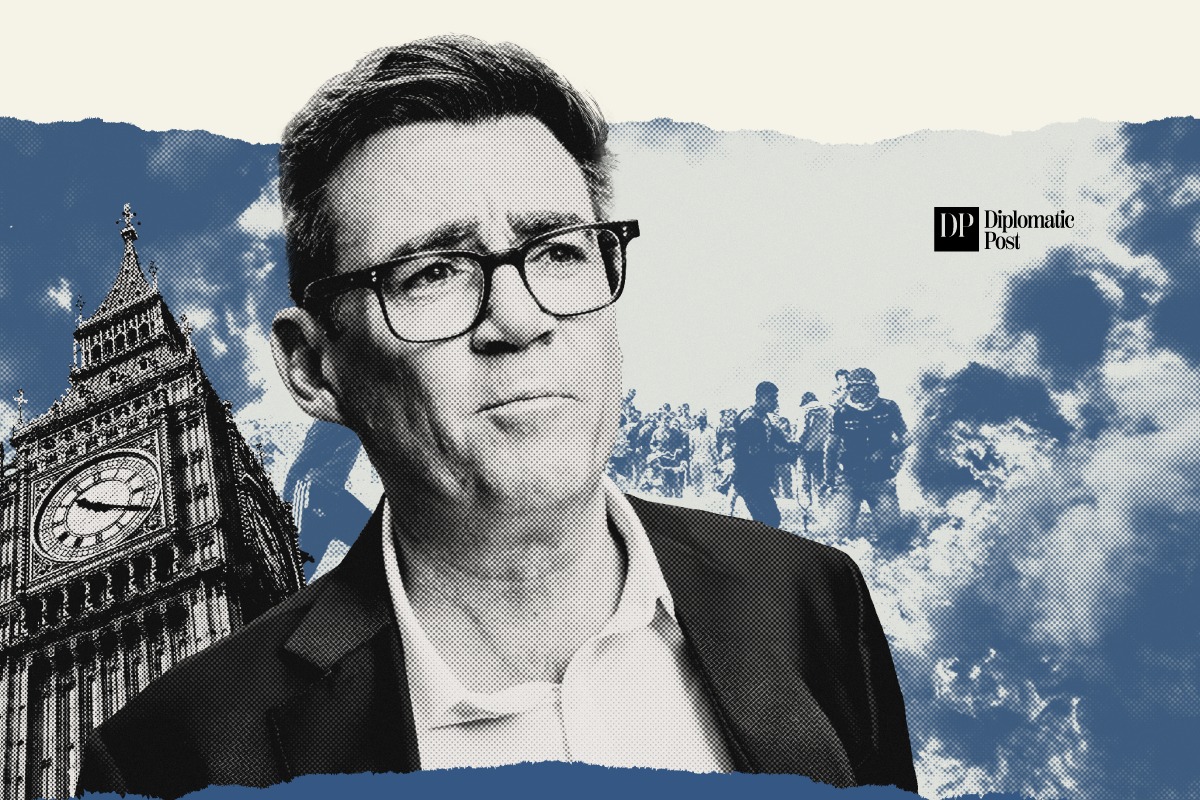
Andy Burnham, poised to become Britain’s next prime minister after being elected Labour leader by 322 of the party’s MPs, roughly eighty per cent of the parliamentary party, used one of his first major public appearances to apologise for his own party’s record on Gaza. Speaking at the People’s History Museum in Manchester on June 29, Burnham said Labour under his predecessor Keir Starmer had been too slow to call for a ceasefire, described the current situation as a scar on our collective conscience, and said Israeli Prime Minister Benjamin Netanyahu was clearly attempting to make a two-state solution impossible.
A break with the man he is replacing
The contrast with Starmer was immediate and pointed. As opposition leader, Starmer had told LBC radio that Israel had the right to withhold power and electricity from Gaza, a remark that drew lasting criticism and that he later struggled to walk back under pressure. Burnham’s apology explicitly addressed what he called Labour’s failure to speak up sooner, while crediting Starmer for pushing recognition of a Palestinian state during his time in office. He has since said he will look at further sanctions on Israeli settlers and at banning trade with settlements in the occupied West Bank.
Despite the apology, Burnham has twice declined to describe events in Gaza as a genocide, telling reporters on one occasion that he could not judge things of that enormity from where he is as mayor of Greater Manchester, and saying more recently that such determinations belong to international courts rather than politicians.
Commentary from Middle East Eye’s editor-in-chief, David Hearst, argues that framing understates where the legal record already stands, pointing to a 2024 International Court of Justice ruling that ordered Israel to immediately halt its military offensive or risk being found in breach of the Genocide Convention, and to a UN inquiry that concluded Palestinian children in Gaza had been deliberately targeted. Israel has consistently rejected the genocide characterisation, and its government has defended its military campaign as a necessary response to Hamas’s October 7, 2023, attack and the hostages Hamas continues to hold.
Hearst’s column lays out what he argues full compliance with international obligations would demand of a Burnham government, including suspending the UK’s trade agreement with Israel, banning the sale of settlement-produced goods, ending export licenses covering British-made components for the F-35 fighter jet program, and halting military and intelligence cooperation with Israel. The Campaign Against Arms Trade has identified seventy-nine British companies operating under a general license that lets them export F-35 components without individual case-by-case approval, a business the organisation values at six point seven billion dollars.
Former foreign secretary David Lammy suspended a small number of arms export licenses to Israel last year, a move critics said left the bulk of that broader F-35 supply chain untouched.
A domestic controversy sitting right beside the foreign policy one
Burnham also inherits an unresolved fight over Palestine Action, the protest group banned under terrorism law roughly a year ago. Middle East Eye reporting found more people have been charged with terrorism offences in the year since that ban than during the entire war on terror period stretching back to September 2001, with government figures showing arrests linked to the group have skewed heavily toward women with an average age of fifty-seven, compared with thirty for other terrorism related arrests.
Home Secretary Shabana Mahmood, who championed the ban and whom Burnham is reportedly planning to keep in post, has made the proscription central to her tenure.
Burnham’s remarks have already drawn sharp pushback. The Board of Deputies of British Jews and the Jewish Leadership Council conveyed what they described as significant concerns to his team, criticising him for not mentioning Hamas’s continued presence in Gaza or its operations in the West Bank.
French commentator Bernard Henri Levy called the omission of any reference to Hamas’s culpability, blindness or worse, cowardice.
Other critics have gone further, with one Conservative MP describing the reaction as evidence of a pernicious obsession with Israel and a researcher at the Henry Jackson Society drawing a direct line back to the antisemitism controversies that defined Jeremy Corbyn’s Labour leadership.
On the specific question of whether Hamas has used civilians as human shields, Human Rights Watch and the Euro-Med Human Rights Monitor have both said they found no supporting evidence, while separate testimony gathered by Haaretz and ITV News from Israeli soldiers themselves described the reverse practice, the use of Palestinian civilians as shields by Israeli forces.
Why may politics not follow the old script?
Analysts weighing Burnham’s prospects note that public opinion in Britain has shifted markedly since the war began, and that Labour’s vote has already suffered in by-elections partly tied to its Gaza stance, including a loss to the Green Party in the Gorton and Denton contests. Whether that shift makes a repeat of the sustained pressure campaign faced by Corbyn less effective this time remains untested, and Burnham’s own advisers describe his relationship with Manchester’s Jewish community, built during his years as mayor, as a different starting point from his predecessor’s.
Strip away the competing predictions about where this leads, and the settled facts are narrower than the debate around them. Burnham has issued a public apology and named specific policy areas, settler sanctions and settlement trade, that he intends to review; the International Court of Justice has issued binding provisional measures against Israel that remain unresolved, and Britain’s terrorism prosecutions tied to Palestine Action continue to move through the courts on a near monthly basis. Whether the apology turns into the kind of policy change his critics on one side are demanding, and his critics on the other side are already mobilising against, remains to be seen.