


A Fish, a Patriarch, and a Visa Ban Are Standing Between the EU and Its Own Deadline
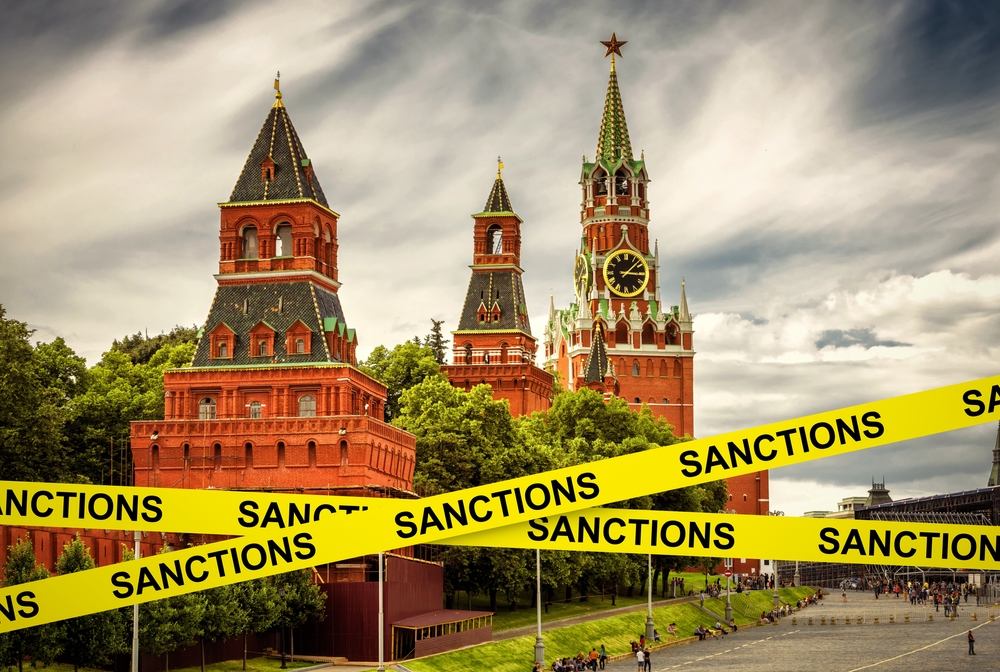
Ambassadors from all twenty-seven EU member states held last-minute talks in Brussels on Tuesday, racing to lock in a new round of sanctions on Russia before a Wednesday deadline that could otherwise force the bloc to loosen one of its most effective tools for squeezing Moscow’s oil income.
At stake is the price cap that limits how much Russia can earn per barrel by selling crude oil on international markets, a mechanism the EU shares with the wider G7 coalition.
Under existing rules, that cap is due for automatic review, and with global oil prices having surged because of the war between the United States, Israel, and Iran, letting the review proceed unchanged would push the ceiling upward and hand Moscow a windfall Brussels never intended to give it.
The Commission had wanted to freeze the current level for several more months specifically to prevent that outcome, but the broader sanctions package carrying that freeze has run into exactly the kind of national objections that have slowed nearly every round before it.
What is actually holding up the twenty-first package?
This would be the twenty-first sanctions package the EU has assembled since Russia’s full-scale invasion of Ukraine in 2022, and reports on the negotiations describe a familiar pattern of individual countries blocking pieces they find objectionable. Bulgaria has resisted placing Russian Orthodox Patriarch Kirill on the sanctions blacklist, a measure Hungary blocked once before.
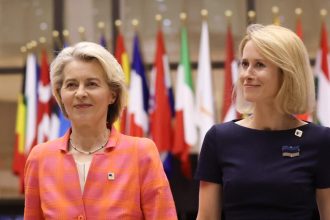
Diplomats say Germany has raised concerns over a proposed ban on imports of Alaskan pollock, a fish widely used in children’s meals, sourced from Russian waters. A separate push to soften a planned sweeping visa ban targeting any Russian citizen who took part in the invasion has also slowed the talks. EU foreign policy chief Kaja Kallas described the bloc as quite close to a deal following Monday’s meeting of foreign ministers, while acknowledging that a fallback plan would be needed if no agreement materialises.
Beyond the price cap itself, the twenty first package as proposed by the European Commission in June covers a wide range of measures, including thirty additional vessels added to the roster of ships blacklisted for supporting Russia’s so called shadow fleet, the aging tanker network Moscow uses to move oil outside coalition oversight, along with new export limits on metals and drone related technology, transaction bans on additional Russian banks, and, for the first time, direct restrictions on Russian liquefied natural gas.
Commission President Ursula von der Leyen has argued the goal is straightforward: keeping the full intensity of existing sanctions rather than allowing market conditions shaped by an unrelated Middle East war to hand Russia relief it has not earned.
Kyiv is watching from a different angle
Ukraine’s own diplomats have pushed for the package to go further still. Kyiv’s ambassador to the EU has said restrictive measures should extend to additional shadow fleet vessels and the wider network supporting them, and has separately raised the question of sanctioning Rosatom, Russia’s state nuclear energy agency, which Ukrainian officials describe as an extension of the country’s war effort.
The timing carries its own symbolism; von der Leyen is scheduled to travel to Kyiv on Wednesday for talks with Ukrainian President Volodymyr Zelensky, the same day the EU’s self-imposed sanctions deadline falls.
Alongside the sanctions negotiations, London and Brussels jointly announced new coordinated sanctions on Monday targeting officers of Russia’s GRU military intelligence agency, accusing Moscow’s intelligence services of running a persistent and increasingly reckless campaign of cyberattacks across Europe. The Kremlin rejected the claim outright.
Spokesman Dmitry Peskov called the accusations baseless and said they were never substantiated with actual evidence, adding that Russia considers the sanctions illegal and expects them to have no impact on its own policy. He said the country has spent years adapting to and learning how to minimise the effect of what he described as tens of thousands of sanctions already in place, and expects to keep doing so.
Analysts tracking the broader sanctions regime describe the current standoff as symptomatic of a structural problem rather than a one-time hiccup, since EU sanctions require unanimous agreement among all twenty seven members, giving any single country leverage to slow or reshape a package regardless of how urgent the underlying goal is. That dynamic has already played out across prior rounds, including the twentieth package adopted in April, which added one hundred twenty individual listings in the bloc’s largest single batch of designations in two years, followed by a further thirty-four individuals and forty seven entities added by the Council in June.
Strip away the competing national objections, and the settled facts are these. The EU’s automatic review of its Russian oil price cap falls due on Wednesday, regardless of whether ambassadors reach an agreement beforehand.
The Commission’s stated goal is to hold that cap at its current level rather than let it rise, and von der Leyen’s trip to Kyiv is fixed on the calendar for the same day the deadline falls. Whether the twenty-first package clears in time to prevent that automatic increase, or whether Brussels is forced into what Kallas has called Plan B, is a decision that member state ambassadors were still negotiating as the clock ran out.