


Surging in the polls, the ex-military chief has become the face of Israel’s opposition and the biggest threat yet to Netanyahu’s hold on power
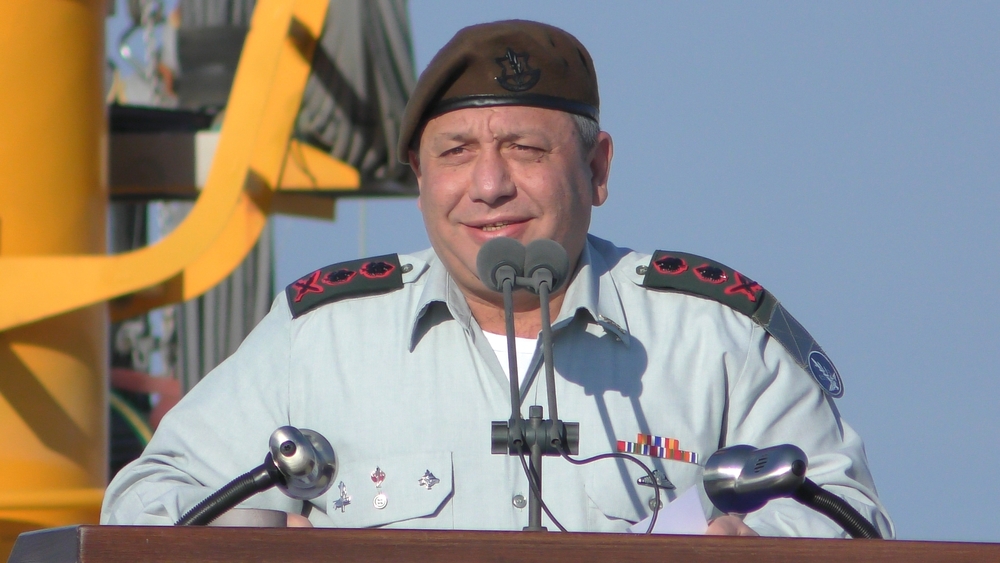
Gadi Eisenkot’s campaign launch speech on June 30 set the stakes about as high as Israeli politics gets. Twice, the former army chief of staff told supporters, a sovereign Jewish kingdom existed in this land, and twice it collapsed in its eighth decade. Once again, he said, Israel stands at a fateful point, and unifying under his leadership is the way through it.
That message appears to be landing. Following weeks of a statistical tie, Eisenkot’s Yesh Atid party overtook Prime Minister Benjamin Netanyahu’s Likud for the first time this month, according to a Channel 13 poll, pulling support largely from the camp built around former rival Naftali Bennett.
Analysts following the race describe the election, due by law no later than October 27, as fundamentally a referendum against Netanyahu rather than a contest between competing visions. Diana Buttu, a Palestinian lawyer and analyst, told the media the main goal shared by every opposition party is simply removing Netanyahu from office, and predicted Eisenkot will keep the rest of his platform deliberately vague as the campaign continues.
Amjad Iraqi, a senior analyst at the International Crisis Group, described the ambiguity as a familiar pattern among retired generals entering politics, who tend to present themselves as above the mess of ideological debate and focused instead on the state as a whole.
Soldier’s résumé that voters are responding to
Eisenkot, 66, was born in Tiberias to Jewish Moroccan immigrants and raised in a working-class family in Eilat, a background that would make him Israel’s first prime minister of Mizrahi heritage if elected. He rose through the Golani Brigade starting at eighteen, commanded the army’s West Bank division during the Second Intifada, and became the military’s head of operations in 2005, then chief of staff from 2015 to 2019.
His son was killed fighting in Gaza roughly two months into the current war, an experience that has reinforced, for many voters, an image of a leader whose family has borne the same costs ordinary Israelis have. That contrast has become a recurring theme against Netanyahu, whose own son spent much of the past three years in Miami and who has spoken publicly about the personal toll of postponing a family wedding around the timing of military operations.
Eisenkot’s tenure produced two strategies that remain central to how critics and supporters alike describe him. As a division commander during the Second Intifada, he championed what became known as mowing the lawn, short, recurring military operations meant to suppress armed resistance rather than resolve it permanently. During the 2006 Lebanon war, as head of operations, he authored what came to be called the Dahiyeh Doctrine, a strategy of applying deliberately disproportionate force against any village from which fire originated.
He described the approach candidly in a later interview, saying every building destroyed under the doctrine was treated as a legitimate military target. That war killed more than twelve hundred Lebanese civilians and displaced roughly a million more, according to figures widely cited at the time, and Eisenkot has said the strategy has remained essentially unchanged in subsequent operations.
What his platform would actually preserve
Iraqi predicts that, if elected, Eisenkot would try to maintain roughly the current status quo, with continued Israeli control over Gaza, southern Lebanon, and the West Bank, without pursuing dramatic new moves in any direction. Eisenkot has opposed rebuilding Israeli settlements inside Gaza, framing his concern around preserving Israeli societal unity and protecting the country’s international standing rather than any principled objection to settlement itself.
On West Bank settlements, which have seen a documented rise in settler violence against Palestinian communities in recent years, Eisenkot has said he supports those that serve Israel’s interests, a position Iraqi describes as reflecting frustration with settler groups acting outside military coordination rather than any disagreement with the underlying policy of Israeli control.
Eisenkot’s break from government came in June 2024, when he resigned from the war cabinet and the Knesset over what he saw as Netanyahu’s departure from a doctrine favouring brief, forceful, decisive military campaigns in favour of prolonged, multi-front conflict. Since the ceasefires that followed the wars in Gaza and Lebanon, reporting has documented continued Israeli strikes killing over a thousand people in Gaza and more than four hundred in Lebanon during the ceasefire period in the latter, casualty figures that have fed into broader Israeli public unease about how the post-war period has actually unfolded.
Analysts caution against reading a possible Eisenkot victory as any kind of resolution. Israel’s proportional representation system requires coalition building after nearly every election, and Iraqi says expecting a stable government to emerge quickly after Netanyahu’s departure would be unrealistic, with likely prolonged negotiation among parties.
He adds that whatever debate follows will not centre on whether Israel continues asserting control over Palestinian territory and parts of Lebanon, but rather on how far and how visibly that control extends. Palestinian political voices remain largely absent from the current campaign conversation, even as their electoral weight could eventually factor into coalition arithmetic.
Strip away the competing predictions about coalition math and campaign strategy, and the settled facts are these. Eisenkot’s Yashar party has overtaken Likud in at least one major poll for the first time since its founding. Israel is legally required to hold elections by late October, and Eisenkot’s own public statements on Gaza, Lebanon, and the West Bank describe managing the current arrangement rather than fundamentally altering it. Whether Israeli voters are choosing a genuinely different direction or simply a different face delivering the same policy remains the question this election has not yet answered.