




The UAE’s Push to Escape Hormuz Dependency Signals a Strategic Rewiring of Gulf Trade Routes
The United Arab Emirates is advancing an ambitious plan to reduce and ultimately eliminate its dependence on the Strait of Hormuz, a move that reflects both the strategic shock of recent regional conflict and a broader recalibration of Gulf energy geopolitics.
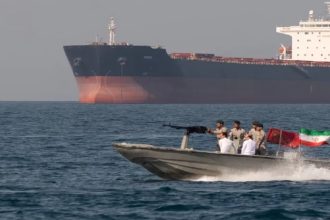
According to UAE Minister of Foreign Trade Thani Al Zeyoudi, the country is moving toward what he described as a “zero dependency on Hormuz” strategy, Bloomberg reported. The statement comes in the aftermath of a temporary disruption of the strait following military escalation between the United States and Iran, which exposed the vulnerability of one of the world’s most critical maritime chokepoints.
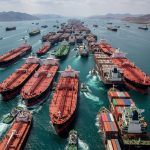
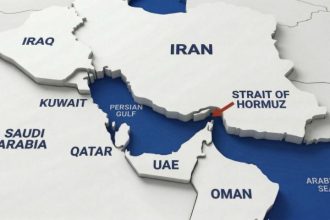
The Strait of Hormuz, through which roughly one-fifth of global oil and liquefied natural gas flows passed before the crisis, has long been the linchpin of global energy security. Its partial closure during recent hostilities underscored how quickly regional confrontation can spill into global economic instability.
For the UAE, the episode has reinforced a long-standing strategic dilemma: while the Gulf state is deeply embedded in regional energy networks, its prosperity is also exposed to the fragility of those same routes.
A Strategic Pivot Toward the Gulf of Oman
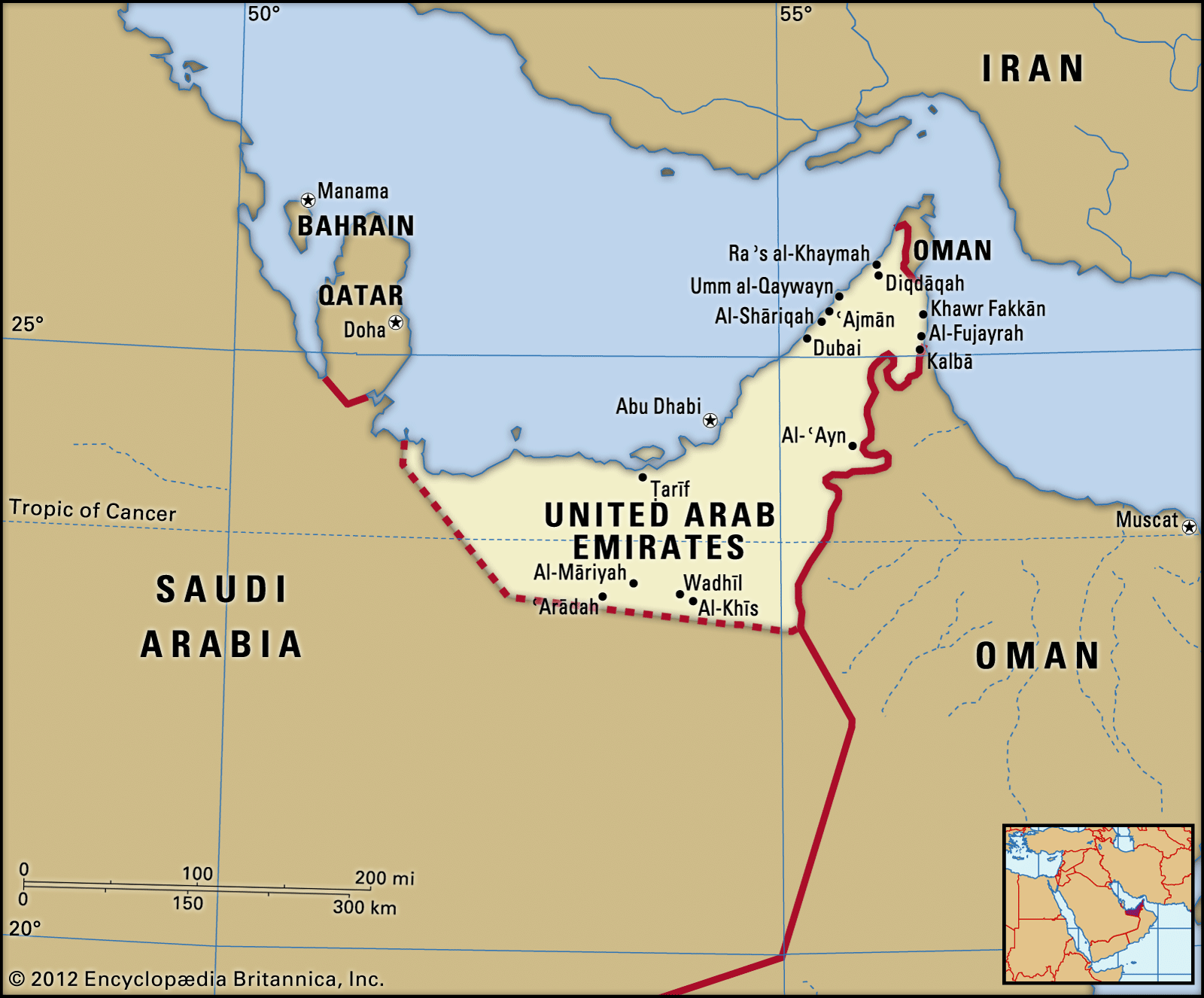
At the centre of Abu Dhabi’s plan is a major expansion of eastern ports along the Gulf of Oman, including Dibba, Fujairah, and Khor Fakkan all located outside the Strait of Hormuz.
These ports are expected to form the backbone of an alternative export corridor, allowing the UAE to bypass the chokepoint entirely. Plans also include the construction of at least one additional port on the eastern coastline, alongside an integrated network of pipelines, rail links, and highways connecting upstream oil and gas fields directly to export terminals.
The UAE already operates a pipeline system capable of transporting around 1.5 million barrels of crude per day to Fujairah, providing partial insulation from Hormuz related disruptions. However, officials have acknowledged that this capacity remains insufficient relative to the country’s export ambitions.
In May, authorities signalled acceleration of a second major pipeline project aimed at doubling crude export capacity through Fujairah by 2027. Parallel feasibility studies are also underway for a potential third pipeline, designed to expand capacity for petrochemicals, LNG, and other energy-linked exports.
While the government has not disclosed the overall cost or timeline, the scale of infrastructure expansion suggests investments running into tens of billions of dollars.
Limits of “Decoupling” from Hormuz
Despite its strategic ambition, a full decoupling from the Strait of Hormuz remains structurally complex.
Non-oil cargoes particularly LNG, aluminium, and diversified petrochemical exports are significantly harder to reroute compared to crude oil. Moreover, the UAE’s broader trade ecosystem remains heavily dependent on Gulf-facing logistics hubs, most notably Jebel Ali in Dubai, one of the world’s largest container transshipment ports.
This dual dependency highlights a central contradiction: while Abu Dhabi seeks to insulate its energy exports from geopolitical risk, its commercial economy is still anchored within the Gulf maritime system it is trying to partially bypass.
Even so, the strategic direction is clear. The UAE has repeatedly called for the uninterrupted flow of shipping through Hormuz, framing the strait as essential not only for regional stability but also for the global economy. Yet its infrastructure strategy increasingly reflects a hedging posture preparing for a scenario in which that stability can no longer be assumed.
A Broader Geopolitical Signal
The push to reduce reliance on Hormuz is not merely an energy logistics project. It is a geopolitical signal.
It reflects a Gulf state adapting to an era in which maritime chokepoints are once again central to great-power competition, and where regional conflicts can rapidly escalate into global supply shocks.
For the UAE, diversification away from Hormuz is both a defensive measure and a statement of strategic autonomy an attempt to reduce exposure to Iranian leverage over the strait, while also insulating its economy from the volatility of US-Iran tensions.
In effect, Abu Dhabi is not abandoning the Gulf system, but rather redesigning its vulnerability within it.