


Twenty-Seven Governments, Three Options on the Table, Still No Agreement on Which Button to Press
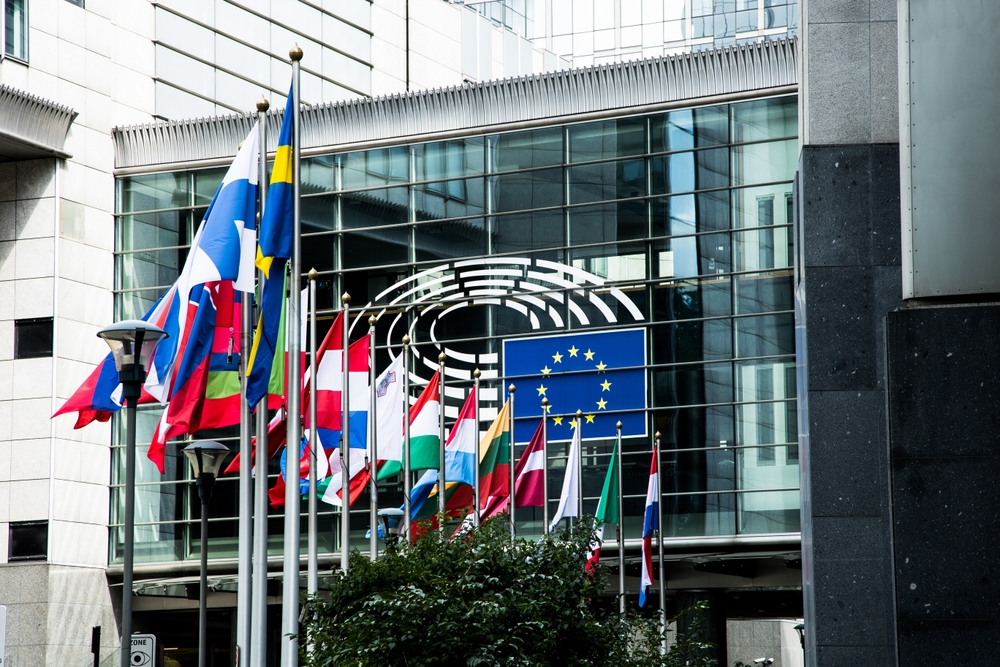
European Union foreign ministers meet in Brussels on Monday to test whether enough member states now support new trade restrictions on Israeli settlements in the occupied West Bank, working from a confidential European Commission paper that lays out three possible paths: an import licensing system, punishing tariffs, or an outright ban.
Diplomats briefed on the agenda say Monday’s session is designed to take the temperature of the bloc rather than produce a final decision. One senior EU diplomat described the goal simply: to get a discussion on the options going and see where everybody actually stands. No formal vote is expected. The paper itself was confirmed by European Commission spokesperson Paula Pinho, who declined to discuss its specific contents ahead of the meeting.
The bloc has struggled for years to agree on major Middle East policy, split largely along the same lines whenever Israel comes up. That split was on full display in April, when Spain, Ireland, and Slovenia formally pushed to suspend the broader EU-Israel Association Agreement over the conflict in Gaza and Lebanon, only to be blocked by Germany and Italy.
German Foreign Minister Johann Wadephul called the push inappropriate at the time, arguing any concerns should be raised through critical, constructive dialogue with Israel rather than punitive measures. Belgian Foreign Minister Maxime Prevot offered a blunter read of the math, saying a full suspension was probably out of reach given how divided European capitals remain.
Why have settlements specifically become the sharper edge of the debate?
Pressure over settlements in particular has intensified because of rising settler violence and continued settlement expansion under Prime Minister Benjamin Netanyahu’s government. Rights groups tracking the West Bank note that Israeli forces and settlers have killed dozens of Palestinians this year alone, with state-backed settler violence linked to the displacement of dozens of entire Palestinian communities since October 2023, and conviction rates for violent settlers reported by Israeli monitoring groups running in the low single digits. In May, the EU had already gone as far as sanctioning four entities and three individuals over what it called serious and systematic human rights abuses in the West Bank.
Much of the pressure traces back to a July 2024 advisory opinion from the International Court of Justice, which found Israel’s occupation of Palestinian territories, along with its settlements in the West Bank, to be unlawful, and said countries should take steps to avoid trade or investment relationships that help sustain that situation.
Human Rights Watch has argued that the opinion effectively creates an obligation for the EU to act, with the organisation’s EU advocacy director describing anything short of a ban as a failure to comply with international law. Israel rejects that framing entirely, treating the West Bank as disputed rather than occupied territory and pointing to a continuous Jewish presence there stretching back thousands of years. Foreign Minister Gideon Saar previously described European efforts to implement the ICJ opinion as shameful.
The fight over which rulebook even applies
A separate and more technical dispute is shaping how far Monday’s discussion can actually go. EU diplomats and the European Council’s own legal service argue that restricting settlement trade should be treated as an ordinary trade measure, which only needs a qualified majority of fifteen member states representing sixty five percent of the bloc’s population.
The Commission’s own paper, by contrast, suggests such a measure may require full unanimity, a far higher bar that would make any ban highly unlikely to pass. Critics have pointed out an apparent inconsistency in Germany’s position here, noting Berlin has pushed for years to abolish unanimity requirements in EU foreign policy generally, citing repeated Hungarian vetoes on Russia-related measures, yet now favours requiring unanimity specifically on the question of Israel.
The economic weight behind this debate is substantial. The EU remains Israel’s largest trading partner, with roughly seventy billion euros in two-way trade recorded for 2024.
A related investigation published by researchers this June found that products originating from illegal settlements have, in some cases, been sold across European markets labelled simply as Israeli goods, without indicating their true origin in occupied territory, a labelling gap that campaigners say has let settlement-produced goods move through EU supply chains largely unnoticed.
A separate track already being explored in parallel
Even as the settlement trade question remains unresolved, the Commission proposed in September suspending certain trade preferences under the wider Association Agreement, a measure Israel called morally and politically distorted at the time. France and Sweden have also circulated their own proposal calling for tariffs specifically on settlement goods, an idea EU foreign policy chief Kaja Kallas has said she will pass along to the bloc’s trade commissioner for further review.
Strip away the competing legal arguments and diplomatic manoeuvring, and a few things are settled facts. The European Commission has formally circulated a paper laying out three concrete options for restricting settlement trade, the International Court of Justice has already ruled that continued trade with the settlements conflicts with international law, and the EU’s own diplomats acknowledge that no formal decision is likely to emerge from Monday’s meeting regardless of how the discussion goes.
Everything else, from which voting threshold applies to whether Germany and Italy shift their long-standing positions, remains exactly where it has sat for over a year, unresolved and up for further debate.