


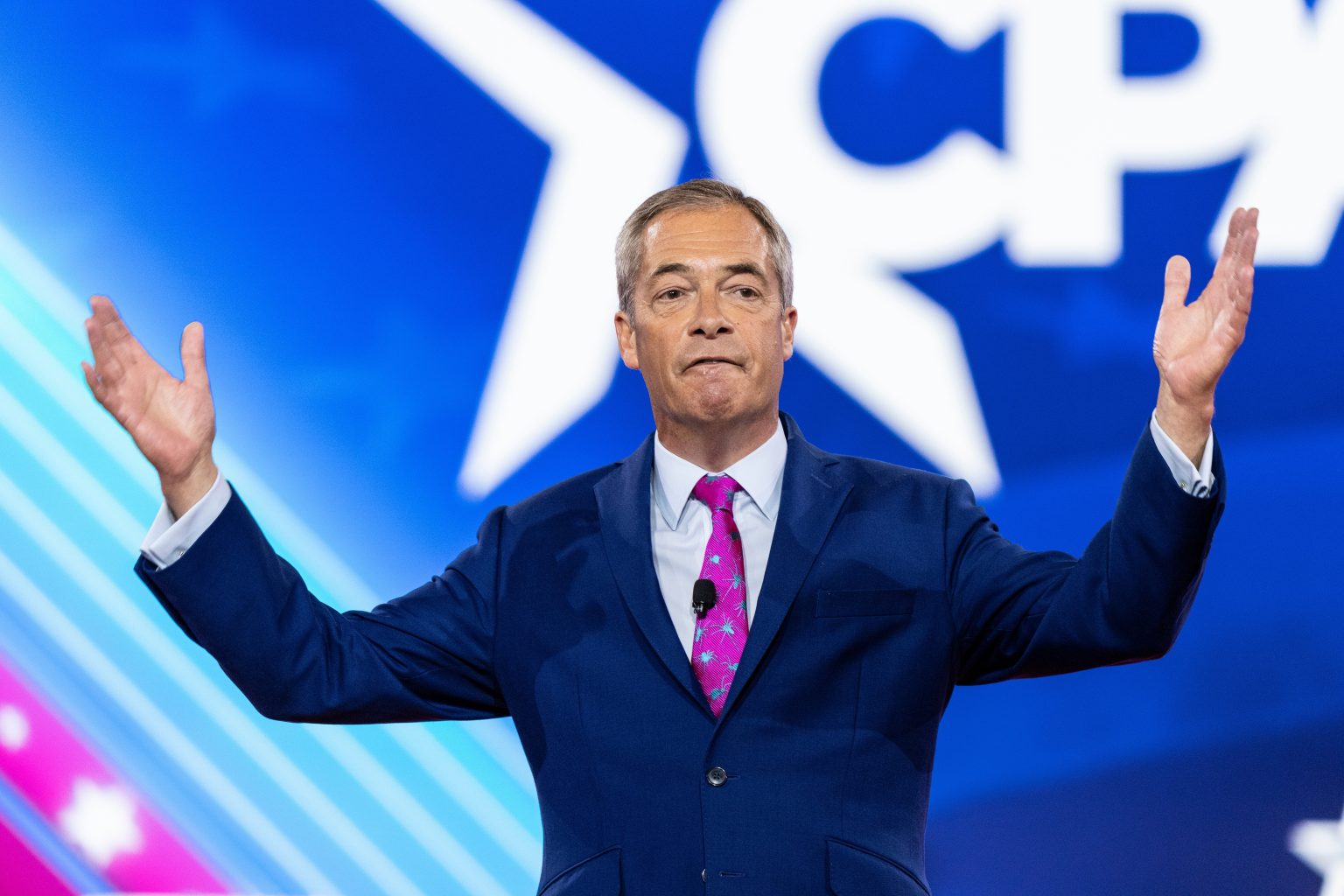


Speaking from the Reform UK party headquarters in Milbank, London, Nigel Farage revealed that he will be stepping down as MP for Clacton – only to stand again for the same seat. Farage referenced allegations about his finances and insisted that he has “done nothing wrong”. Academic experts examine the motivations behind this move.
Nigel Farage has never been a conventional politician, and his latest move is no exception. In one of the most dramatic moments in recent British politics, the Reform UK leader has resigned as the Member of Parliament for Clacton, only to announce that he will immediately seek re election in the by election his own departure has created.
On the surface, the decision appears extraordinary. MPs rarely resign voluntarily, particularly when they intend to contest the same seat again within weeks. Yet this is far more than an unusual political manoeuvre. It is a carefully calculated attempt to reshape the narrative surrounding Farage at a moment when he faces growing scrutiny over his financial affairs and questions about undeclared gifts.
Farage insists the contest should be seen as a battle between ordinary voters and what he describes as the British establishment. His critics argue that the move is designed to divert attention from ongoing investigations. Either way, the result will become a major test not only of Farage’s political future but also of the growing strength of populist politics in Britain.
The timing is no coincidence. Official investigations are examining whether Farage properly declared significant financial support received from wealthy backers before entering Parliament. Farage strongly denies wrongdoing and says every donation was lawful. Nevertheless, parliamentary authorities are examining whether existing disclosure rules were followed correctly. According to official statements and media reports, one investigation concerns a multimillion pound personal gift while another relates to services allegedly provided by a former associate.
Instead of waiting for investigators to complete their work, Farage has chosen to return directly to the electorate. Speaking after announcing his resignation, he argued that the people of Clacton should decide whether he deserves to remain in public office rather than parliamentary authorities or political opponents.
Turning scrutiny into political opportunity
This strategy reflects a familiar pattern that has characterised Farage’s political career for decades. Rather than allowing opponents to dictate the agenda, he has repeatedly transformed political pressure into campaigns centred on his own relationship with voters.
Security analysts and political experts describe the latest move as an attempt to replace a discussion about parliamentary standards with a wider debate about democracy, political elites and public trust. One political expert argued that a successful by election victory would allow Farage to claim that voters had already delivered their verdict, making any future criticism easier to portray as an attempt by established institutions to overturn the public will.
This approach fits neatly within the broader political style that has made Farage one of Britain’s most influential political figures despite never holding ministerial office. Throughout his career he has portrayed himself as an outsider fighting institutions that ordinary voters increasingly distrust. Whether campaigning for Brexit, opposing immigration policies or criticising Westminster, Farage has consistently framed politics as a contest between the people and an unaccountable establishment.
His resignation therefore reinforces an image he has spent years constructing.
At the same time, the gamble carries genuine risks.
Should he comfortably win the by election, Farage would almost certainly claim renewed democratic legitimacy. Such a victory could energise Reform UK ahead of future elections while strengthening his authority inside the party.
However, an unexpectedly narrow victory or lower turnout could expose weaknesses in Reform UK’s support. More importantly, legal and parliamentary scrutiny would not necessarily disappear. According to constitutional experts and parliamentary procedure, resignation does not automatically prevent investigations from continuing if authorities choose to pursue them.
The by election therefore cannot erase the underlying questions surrounding the investigations. Instead, it changes the political battlefield on which those questions will be debated.
Another striking feature of the episode is the response from Britain’s main political parties.
Rather than embracing the opportunity to challenge Farage directly, Labour, the Conservatives and the Liberal Democrats have all indicated they will not field candidates in the contest. Their calculation appears straightforward. Contesting the election could help Farage reinforce his preferred narrative that the political establishment is mobilising against him. By refusing to participate, they hope to deny him that platform.
Whether this strategy succeeds remains uncertain.
Farage has always proved remarkably effective at dominating political debate even without the backing of traditional institutions. His greatest strength has often been his ability to frame events in ways that force opponents onto defensive ground.
Beyond Clacton
Although the immediate contest concerns a single parliamentary constituency on England’s east coast, its wider significance stretches well beyond Clacton.
Britain is entering a period of political fragmentation unlike anything seen for generations. Public confidence in established parties has weakened after years of economic pressures, rising living costs, debates over immigration and continuing dissatisfaction with public services. Reform UK has benefited from that growing frustration, presenting itself as an alternative to both Labour and the Conservatives.
Farage remains central to that appeal.
Unlike many populist movements across Europe that struggle after their founding leaders depart, Reform UK continues to revolve almost entirely around Farage’s public profile. Opinion polling consistently suggests he remains significantly more recognisable than most senior politicians from Britain’s mainstream parties.
That personal dominance makes this by election unusually important.
A convincing victory would strengthen Farage’s argument that attacks from political opponents, parliamentary investigators and sections of the media actually reinforce his popularity among voters who believe traditional institutions no longer represent them.
Failure would produce the opposite effect. Political opponents would argue that the gamble exposed the limits of Farage’s appeal while weakening his claim to represent a growing national movement.
International observers are watching closely because similar political dynamics are unfolding across many Western democracies. Populist leaders increasingly seek direct public endorsement whenever institutional investigations or legal scrutiny intensify. Elections become not simply contests over policies but referendums on political legitimacy itself.
Britain has generally avoided some of the constitutional confrontations witnessed elsewhere in Europe and North America. Yet Farage’s decision reflects the same broader trend of challenging institutional authority through electoral mobilisation.
The constitutional system itself is also being tested.
British parliamentary democracy traditionally relies heavily on conventions, voluntary disclosure and standards enforced through parliamentary procedures rather than highly legalistic mechanisms. When politicians increasingly respond to investigations by appealing directly to voters instead of awaiting institutional processes, that balance becomes more complicated.
Supporters argue that elections represent the ultimate democratic test. Critics counter that electoral popularity should not replace independent scrutiny of financial transparency and parliamentary conduct.
Both arguments now collide in Clacton.
Farage clearly believes the political benefits outweigh the risks. He understands that every day of campaigning shifts attention away from technical questions surrounding parliamentary declarations and towards themes where he has historically performed strongest including national identity, political accountability and public distrust of Westminster.
Whether that calculation succeeds depends largely on how voters interpret his decision. If they see a politician unfairly targeted by powerful institutions, his campaign could emerge stronger than before.
If they instead conclude that resignation represents an attempt to escape difficult questions, the strategy could damage both his personal credibility and Reform UK’s broader ambitions.
Over the coming months the consequences will extend well beyond one parliamentary seat. The contest will provide an important measure of how British voters balance demands for political accountability against growing scepticism towards established institutions. It will also reveal whether Farage’s anti establishment message remains powerful enough to overcome sustained scrutiny of his personal conduct. In an increasingly volatile political landscape where personality often shapes politics as much as policy, the Clacton by election may become one of the defining tests of Britain’s evolving democratic culture.