




The relationship is not built on ideology or personal chemistry alone. It reflects a strategic calculation that could reshape NATO, the Middle East and the future of American alliances.
The relationship is not built on ideology or personal chemistry alone but reflects a strategic calculation that could reshape NATO, the Middle East and the future of American alliances
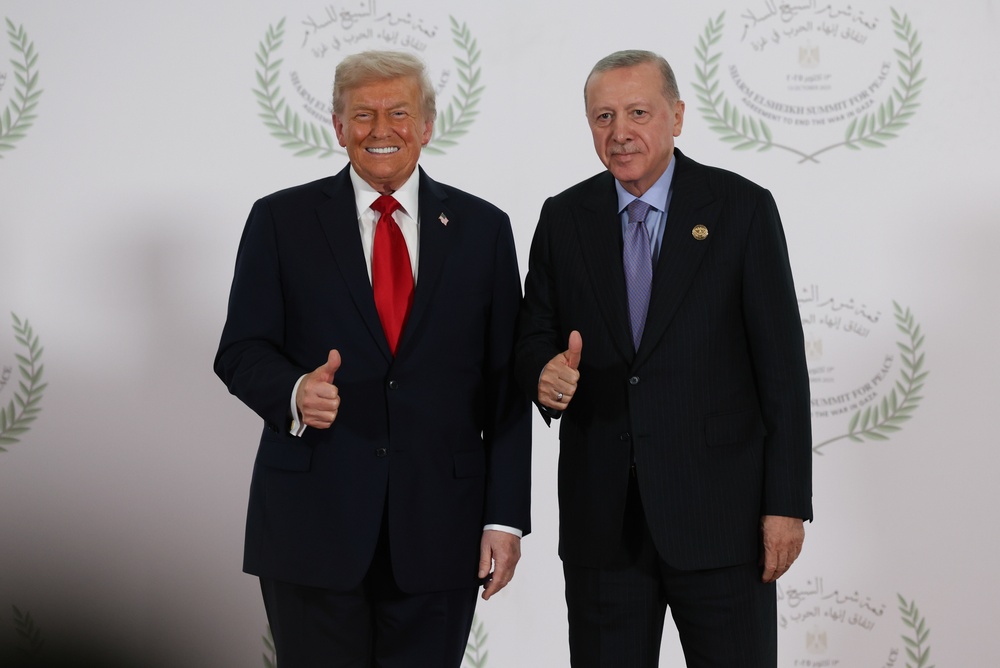
Donald Trump’s repeated praise for Turkish President Recep Tayyip Erdoğan has long puzzled diplomats in Washington and European capitals, especially given the deep structural tensions between the United States and Turkey over Syria, Russia, defence procurement and NATO cohesion, yet the durability of this political affinity reflects less personal chemistry than a convergence of strategic interests at a time when the global security environment is becoming more fragmented and transactional, and where traditional alliance logic is increasingly under strain.
Trump’s approach to foreign policy has consistently prioritised tangible outcomes over institutional loyalty, and within that framework Erdoğan emerges not as an ideological partner but as a highly effective geopolitical actor controlling territory and leverage that directly intersects with US interests across multiple theatres, from the Black Sea and Eastern Mediterranean to Syria, Iraq and the broader Middle East, meaning that Turkey’s geographic position alone places it at the centre of many of Washington’s most pressing security concerns.
Turkey’s control of the Bosphorus and Dardanelles straits under the Montreux Convention gives it decisive influence over naval access to the Black Sea, a factor that has become particularly significant since Russia’s full scale invasion of Ukraine, while its borders with Syria, Iraq and Iran position it at the frontline of regional instability, migration flows and counter terrorism operations, and its expanding diplomatic footprint across North Africa, the Gulf and Central Asia further amplifies its strategic relevance in ways that few NATO members can match.
Despite this structural importance, the US Turkey relationship has been repeatedly strained, particularly over Ankara’s purchase of the Russian S400 air defence system, which led to Turkey’s removal from the F35 programme due to concerns over intelligence security and interoperability within NATO systems, yet recent reporting indicates renewed discussions within Washington on selective defence cooperation with Ankara, reflecting a growing willingness to compartmentalise disputes in favour of pragmatic engagement where interests align.
At the same time, Turkey’s role within NATO has evolved from Cold War flank state to indispensable regional power, with the alliance relying on its second largest standing military, expanding defence industry and strategic geography, while Turkey increasingly leverages this position to shape NATO’s southern agenda, particularly through proposals to deepen engagement with Middle Eastern and North African partners, an approach that serves both Turkish regional ambitions and NATO’s need for broader stability management beyond Europe.
For Trump, this evolving strategic landscape aligns with a broader shift in American thinking about burden sharing within NATO, where European allies are expected to assume greater responsibility for continental defence while the United States focuses more heavily on global competition with China, and in that context Turkey’s growing military capabilities and regional autonomy are increasingly viewed not as a liability but as a useful extension of NATO’s operational reach, provided Ankara remains loosely aligned with Western strategic objectives.
European allies, however, remain more cautious, as concerns over democratic governance, judicial independence, media freedom and Turkey’s regional interventions continue to weigh on trust levels within the alliance, particularly in relation to Greece, Cyprus and Kurdish groups in Syria, where conflicting security priorities have repeatedly exposed the limits of NATO cohesion, and these divergences highlight a fundamental split in how Turkey is perceived, with Washington under Trump tending to prioritise strategic utility while European capitals place greater emphasis on political alignment and institutional norms.
The Kurdish issue in Syria remains one of the most persistent sources of friction, as US support for Kurdish led forces in the fight against Islamic State has directly conflicted with Turkey’s security concerns regarding the Kurdistan Workers Party, creating a structural disagreement that has proven resistant to diplomatic management and continues to shape military coordination in northern Syria, while Turkey’s broader relationship with Russia adds another layer of complexity given its simultaneous cooperation and competition with Moscow in energy, defence and regional conflicts.
The personal rapport between Trump and Erdoğan does play a facilitating role in this environment, particularly given both leaders’ preference for direct executive negotiation over bureaucratic process driven diplomacy, which allows for faster decision making and more flexible engagement on sensitive issues, yet this personal dimension should not obscure the deeper structural forces at work, since the relationship persists primarily because both countries derive distinct but overlapping benefits from continued cooperation despite recurring tensions.
Turkey’s growing defence industry, including its production of drones, armoured vehicles and missile systems, has also enhanced its strategic autonomy while increasing its value as a NATO partner capable of contributing to regional security operations without heavy reliance on external suppliers, and this industrial expansion further reinforces Ankara’s claim to be not just a consumer of Western security guarantees but a producer of security capacity within the alliance framework.
The Ankara NATO summit underscores these shifting dynamics, as discussions around defence spending, Ukraine support and regional security are increasingly accompanied by Turkey’s efforts to position itself as the key intermediary between NATO and its southern neighbourhood, a role that enhances its diplomatic leverage while also reflecting the alliance’s growing recognition that its security perimeter now extends well beyond Europe into interconnected zones of instability stretching across the Middle East and North Africa.
In this context, Trump’s apparent preference for maintaining close ties with Erdoğan reflects a broader recalibration of American foreign policy priorities, where strategic geography, military capability and regional influence are weighed more heavily than traditional alliance expectations or ideological convergence, and where Turkey’s ability to shape multiple security theatres simultaneously makes it an indispensable though often difficult partner.
Over the coming months, the durability of this relationship will depend less on personal rapport between leaders and more on whether practical cooperation can be sustained across key areas such as NATO burden sharing, Black Sea security, Syria policy and defence industrial integration, because while the political chemistry between Trump and Erdoğan may ease tensions at the top level, the underlying contradictions between their respective regional strategies remain unresolved and continue to define one of NATO’s most complex and consequential partnerships.